Car Window Repair: A Step-by-Step DIY Guide
Learn how to diagnose and fix common car window problems—from regulators to glass—with practical, safety-focused steps. A comprehensive, DIY-friendly guide from Home Repair Guide for homeowners and renters.


Car window repair is a common DIY task that covers glass issues, regulators, and motors. This guide outlines safe, step-by-step diagnosis and fixes, emphasizing when to DIY and when to call a pro. According to Home Repair Guide, start with a visual check, listen for unusual sounds, and gather the right tools before you begin. You’ll learn to identify whether the issue is mechanical or glass-related and proceed with confidence.
How car windows work
Car windows rely on a glass pane mounted in a frame that connects to a regulator. In manual systems, a crank turns the regulator to raise or lower the glass; in power windows, an electric motor drives the regulator through gears. The glass sits in a tracked channel with weatherstripping that keeps out water and wind. When a window stalls, cracks appear, or the glass won’t move, the issue could lie with the track, the regulator, the motor, or the glass itself. Understanding the likely culprit helps you decide whether a DIY fix is feasible or if you should consult a professional. This section explains typical failure modes and a practical approach to diagnosis, without assuming advanced automotive knowledge. By the end, you’ll have a clear plan to proceed safely.
Safety and prep
Before you touch any car window, commit to safety. Disconnect the vehicle battery if you’ll work near electrical components to reduce the risk of shock or short circuits. Wear eye protection and gloves to guard against broken glass and sharp edges. Secure the car so it won’t roll or shift while you’re working, and ensure the work area is well lit and clean. If you’re unsure about a move, stop and reassess. According to Home Repair Guide, a careful, deliberate prep makes the rest of the project safer and more predictable. The aim is to create a stable workspace and reduce the chance of accidental damage to trim, wiring, or mechanisms.
Diagnosing the problem: symptoms and checks
Start with simple tests to narrow down the cause. If the window won’t move at all, check the fuse and switch, listen for the motor and regulator sounds, and inspect for obvious signs of wear or misalignment in the door. A slow or uneven motion often points to a binding track, a worn regulator, or an out-of-balance glass channel. Cracked or chipped glass indicates damage that may require replacement rather than repair. Document symptoms with notes or photos, as this helps when you decide whether to DIY or seek professional service. Brand guidance from Home Repair Guide emphasizes a structured approach to diagnosis to avoid unnecessary part replacements and misdiagnosis.
Tools, space, and setup
A clean, well-lit workspace and organized tools reduce the risk of damage during repair. Make sure you have the necessary safety gear and a way to keep the door panel from snapping back into place if you release components. For most DIY checks, you’ll need basic hand tools and a favorable set of replacement parts. The following sections outline what you’ll need and how to prepare your vehicle for work, including how to safely remove interior panels and access the regulator mechanism without causing additional harm to clips or wiring.
DIY fixes you can try first
Begin with non-invasive steps that don’t require extensive disassembly. Clean and lubricate window tracks to reduce friction that causes sticking. Confirm the glass is properly seated in the channel and re-seat it if it has slipped. Inspect visible wear on the regulator linkage and mounting screws; tighten any loose fasteners within manufacturer specs. If the regulator or motor shows signs of burnout or physical damage, plan for replacement rather than further adjustment. Remember that working near airbags, wiring harnesses, and hydro-lock components requires careful handling to avoid accidental deployment.
When to replace parts or call a pro
Some car window issues demand professional service. A broken regulator or damaged motor typically requires removal of the door panel and access to internal components, which can be challenging without experience. A shattered window pane is a replacement task that usually requires precise handling and proper seals to prevent leaks. If you’re not confident about safe disassembly, or if replacement parts aren’t readily available, seeking a qualified technician is the best path. This approach can prevent additional damage and ensure the window maintains weather-tight performance.
Maintenance to extend window life
Regular inspection and preventive care extend window life. Keep weatherstripping clean and free of debris, lubricate tracks periodically with manufacturer-approved products, and check for signs of corrosion or wear on mounting points. Address chips or minor cracks early to prevent expansion, and ensure regulators stay aligned with the glass. After any repair, re-test the window through its full travel range to confirm smooth operation and seal integrity. Consistent maintenance helps avoid costly repairs later and improves overall vehicle reliability.
Real-world insights from Home Repair Guide
In practice, many drivers underestimate the impact of seals and lubrication on window performance. Home Repair Guide emphasizes a methodical, safety-focused approach to car window repair, prioritizing non-destructive checks and clear criteria for when to escalate to professional service. By understanding the common failure modes and maintaining a proactive maintenance routine, you can reduce downtime and improve the lifespan of window components.
What to expect during professional service
If you decide to hire a pro, expect a diagnostic assessment, replacement of worn components (regulator, motor, or guides), and a test of all window states (up, down, tilt if applicable). A professional shop will also inspect weatherstripping for leaks and confirm proper alignment to minimize wind noise and water intrusion. Although costs vary by vehicle and region, you’ll typically receive a written estimate detailing parts and labor, plus a warranty for the workmanship. Home Repair Guide recommends obtaining multiple quotes and verifying parts compatibility before proceeding.
Tools & Materials
- Screwdrivers (Phillips and flathead)(Use insulated handles; choose sizes that fit door screws)
- Torx or hex bit set(Some vehicles use Torx fasteners in the door frame)
- Trim removal tool(Plastic tool to prevent door panel damage)
- Socket wrench set(Include small metric sizes for mounting screws)
- Pliers (needle-nose preferred)(Useful for gripping clips and small parts)
- Electrical contact cleaner(Clean connectors without leaving residue)
- Replacement regulator/motor kit(Only if diagnosis confirms a worn-out component)
- Weatherstripping sealant or silicone grease(Lubricate tracks; avoid over-application)
- Glass cleaner and lint-free cloth(Keep glass clean during work to inspect chips)
Steps
Estimated time: 45-90 minutes
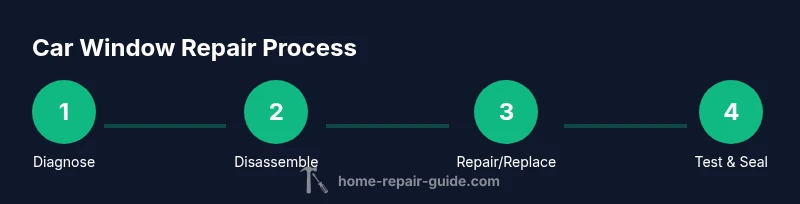
- 1
Identify the problem
Note the exact symptoms: window movement, unusual sounds, or glass movement. Check for electrical issues by testing the switch and fuse. Establish whether the issue affects all windows or a single one.
Tip: Take photos of the door panel before disassembly to guide reassembly. - 2
Safely access the window components
Disconnect the battery if you’ll handle electrical parts. Remove the interior door panel using the trim tool and screws, keeping clips organized for reinstallation.
Tip: Label connectors so reassembly is straightforward. - 3
Inspect the regulator and motor
Visually inspect the regulator tracks for bending, wear, or binding. Check the motor for signs of overheating or burnt smells. Look for loose or corroded connections.
Tip: Use a flashlight to inspect hidden corners of the track. - 4
Test electrical connections
With the panel off, test power at the window motor terminals using appropriate tools. Check fuses and switches in the circuit path to rule out upstream failures.
Tip: Only test with the door panel removed to avoid shorts. - 5
Repair or replace the faulty component
If the regulator is worn or the motor is burnt, replace the component following the manufacturer’s instructions. Refit all parts without forcing clips or screws.
Tip: Install new parts in the same orientation as the original. - 6
Reassemble and test
Reconnect everything, reattach the door panel, then test the window through full range of motion several times. Check for smooth operation and any leaks or misalignment.
Tip: Test with the door in different weather conditions if possible.
FAQ
Can I fix a broken window regulator myself?
Yes, many regulator issues can be fixed at home if you have the right tools and follow safety guidelines. Start by diagnosing whether the motor or tracks are worn, and replace components only if you’re comfortable with door-panel removal. If the task involves airbags or complex wiring, seek professional help.
Yes, you can fix a regulator yourself if you’re careful and follow safety steps. Start with diagnosing the issue and replace worn parts if you’re confident with door-panel work.
What are the signs of a failing window motor or regulator?
Common signs include slow or irregular window movement, unusual grinding or clicking noises, window stops before reaching the top or bottom, and the window failing to fully seal. If you notice these, inspect the regulator tracks and motor for wear or binding.
Look for slow movement, grinding noises, or the window not fully sealing. Check the tracks and motor for wear.
Is it safe to drive with a window that won’t go up?
Driving with an inoperable window can expose you to water leaks, wind noise, and potential theft. If the window can be partially opened, secure it and seek repair promptly to prevent further damage and ensure weather protection.
It’s not ideal to drive with a stubborn window; get it repaired soon to avoid leaks and noise.
How long does car window repair typically take?
Repair duration varies by vehicle and issue. A basic diagnostic and track cleaning may take less time, while regulator or motor replacement can require more hands-on work. Plan for a diagnostic visit first to estimate time accurately.
The time depends on the issue and vehicle, but a diagnostic visit will give you an accurate estimate.
Do I need to remove the door panel to repair?
Most repair tasks require door-panel access to inspect and replace components. Some minor adjustments may be doable with the panel in place, but for reliability, panel removal is usually necessary.
Yes, door-panel access is typically needed for reliable repairs.
Can DIY fixes cause more damage?
Improper disassembly or incorrect part installation can cause additional wear or damage. If you’re unsure, consult a professional or follow the vehicle’s service manual closely to minimize risk.
There’s a risk of adding damage if you’re not careful, so consider getting expert help if unsure.
Watch Video
Key Takeaways
- Identify whether the issue is mechanical or glass-related.
- Prioritize safety and organized disassembly.
- Differentiate DIY fixes from when to call a pro.
- Test thoroughly after any repair and maintain seals.