Car Window Motor Repair: Step-by-Step Guide for DIYers
Learn how to diagnose, prepare, and safely repair a car window motor. This in-depth guide covers common failure modes, essential tools, step-by-step instructions, and safety tips for homeowners who want to fix power windows themselves.


Goal: diagnose and repair a car window motor and regulator, verify power at the switch, and safely complete a repair or replacement. You’ll need basic hand tools, a secure work area, and a multimeter. According to Home Repair Guide, many power-window failures stem from regulators or switches rather than the motor itself.
Understanding the car window motor system
Car window operation is a small but crucial electrical/mechanical system in nearly every vehicle. When you press the window switch, a signal travels through the wiring harness to a door module or directly to the motor. The motor turns a gear train that moves a regulator, which raises or lowers the glass. Regulators can be cable-type or scissor-type; either way, the motor and regulator must work in harmony for smooth operation. In many vehicles, the regulator houses a track and a pulley, with the glass riding inside guided channels. If the glass stalls, hums, or moves slowly, the problem could lie with the motor—but more often it’s a worn regulator, a dirty track, or a faulty electrical connection. For car window motor repair, you must diagnose the exact part responsible before buying parts. Start with a careful exterior inspection of the door panel, the switch, and the wiring. Look for corrosion, loose connectors, and damaged fuses in the power window circuit. If you find nothing obvious, perform targeted electrical tests with a multimeter and check for voltage at the motor terminals when the switch is pressed. Some vehicles also use an electronic module that stores window position data; if you encounter a fault code, you may need a scan tool or specific software to reset it after repair. This section lays the groundwork for identifying likely culprits and setting up a safe, effective repair plan. In 2026, a well-documented approach like this helps avoid unnecessary parts replacements.
Diagnosing common causes of window failure
Window faults can stem from multiple sources, and a methodical approach saves time and money. Start with the simplest explanations before diving into more complex repairs. A blown fuse or a tripped circuit breaker is a common first culprit; locate the power window fuse in the vehicle’s fuse box and inspect the rating and continuity. If the fuse is intact, test the switch by swapping it with a known-good unit from another window or using a multimeter to verify that voltage is present when pressed. Wiring harness damage, corrosion at connectors, or a loose ground can manifest as intermittent operation or no operation at all. The regulator, which translates motor rotation into glass movement, is another frequent failure point: a worn pulley, bent track, or frayed cable will cause binding, skipping, or uneven movement. When the motor hums but the glass doesn’t move, the regulator or track is a likely suspect. Finally, consider the motor itself: a seized or burned-out motor will stall and heat up quickly. A controlled bench test or direct power application (with appropriate safety precautions) can confirm motor health. According to Home Repair Guide analysis, the most frequent culprits are regulators and switches rather than the motor itself. Quick tests save you from buying unnecessary parts and guide replacement decisions.
Preparation and safety considerations
Before you touch any part of the electrical system, prepare your workspace and protect yourself. Disable the vehicle’s electrical system by disconnecting the negative battery terminal to prevent accidental short circuits, arcing, or airbag-related hazards in adjacent panels. Wear eye protection and gloves, especially when prying apart door panels or handling sharp-edged trim. Work in a well-lit, dry area on a stable surface. Keep screws and small parts organized with labeled containers or magnetic trays. If you’re working in a hot climate or a cramped vehicle cabin, take breaks to avoid heat exhaustion and tech fatigue. A clean, deliberate approach reduces the risk of misplacing components or damaging connectors. Finally, document every step with photos or notes; this makes reassembly straightforward and helps you explain the repair to others if needed. In 2026, following a careful safety-first protocol remains essential for any DIY automotive repair project.
Understanding replacement options: repair vs replacement
When the window stops functioning, you have two broad paths: repair the existing motor and regulator assembly or replace one or both components. Repairing the motor often involves cleaning and lubricating the regulator hardware, replacing worn cables or pulleys, and re-seating connectors. Replacement may be necessary if the motor is seized, the regulator is visibly damaged, or the cost of parts approaches or exceeds the vehicle’s value. Consider the age of the car, the availability of part numbers, and labor time when deciding. A repair that extends the life of the existing parts can keep repair costs down and preserve the original window alignment. In contrast, a full replacement may offer better long-term reliability, may come with a warranty, and can minimize diagnostic guesswork. Always compare the total effort, time, and likely success rate before committing. Home Repair Guide emphasizes doing a pragmatic cost-benefit analysis and selecting the option that yields the most reliable operation over time.
What you’ll do in the repair journey (overview of steps)
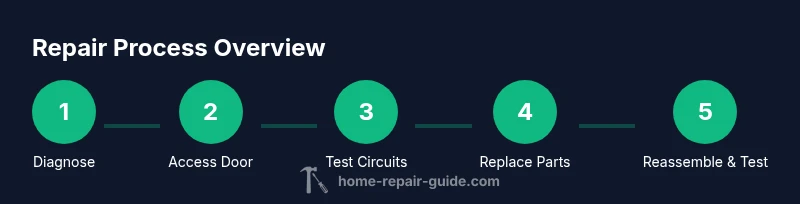
This section provides a high-level map of the repair journey so you can plan your work without getting lost in the details. Begin with a precise diagnosis of which component is failing, then gather the necessary parts and tools. Next, you’ll remove the door panel to access the motor and regulator, disconnect electrical connectors, and perform any required tests off the car. If you’re replacing parts, install the new regulator and motor in the correct orientation, reconnect the wiring, and test the system before reassembling the door. Finally, reinstall the door panel, ensure the glass aligns correctly, and run multiple up/down cycles to confirm smooth operation. Throughout the process, verify that all fasteners are secure and that no trim pieces are loose. This overview should be used as a roadmap to keep you organized and reduce the chance of rework.
Authority sources and further reading
For deeper understanding and safety guidelines, consult recognized authorities and major publications. These sources provide general electrical safety concepts, automotive service best practices, and consumer guidance that complement hands-on repair work.
- NHTSA (National Highway Traffic Safety Administration): https://www.nhtsa.gov/
- OSHA (Occupational Safety and Health Administration): https://www.osha.gov/
- Consumer Reports or other major publications: https://www.consumerreports.org/car-repairs/
Note: These sources are for safety principles and best practices; always follow your vehicle manufacturer’s service manual for model-specific instructions.
Tools & Materials
- Basic socket and ratchet set(Include metric and SAE sizes; 1/4" drive is common for interior panels)
- Trim removal tools(Plastic tools to avoid door panel scratches)
- Screwdriver set (Phillips and flat-head)(Magnetic tip recommended)
- Torx drivers(Some vehicles use torx fasteners inside the door)
- Multimeter(For voltage and resistance checks in the window circuit)
- Electrical contact cleaner(Clean connectors before reassembly)
- Replacement regulator and/or window motor(Only purchase after confirming fault; stock parts or aftermarket options vary by model)
- Electrical tape and zip ties(Neaten and secure wiring harnesses after work)
- Safety gloves and eye protection(Protect hands from sharp edges and springs)
Steps
Estimated time: Total time: 60-120 minutes
- 1
Disconnect power and prepare workspace
Park the car, turn off the ignition, and disconnect the negative battery terminal to prevent shorts. Remove any nearby trim that might obstruct access to the door panel. Gather all tools and lay out fasteners in labeled containers.
Tip: Label connectors as you disconnect them to simplify reassembly. - 2
Remove the interior door panel
Use trim tools to detach plastic clips without cracking the panel. Carefully lift the panel away, keeping wires attached to avoid stressing harnesses. If the moisture barrier is present, gently peel it back without tearing.
Tip: Take photos from multiple angles before removal to guide reassembly. - 3
Access the window motor and regulator
Locate the motor and regulator assembly inside the door. Disconnect any electrical connectors and remove mounting screws or bolts holding the unit. Inspect for obvious damage or misalignment before further testing.
Tip: Support the glass to prevent it from dropping during removal. - 4
Test electrical supply and motor health
With the panel off, test voltage at the motor connectors using a multimeter while triggering the window switch. If voltage is present but the motor is silent, the motor may be seized. If voltage is absent, investigate wiring or the switch.
Tip: Test with the door at mid-position to avoid pinch hazards. - 5
Replace or repair components
If the motor is seized or the regulator worn, replace the faulty component. If only the regulator shows wear, you may replace just the regulator. Re-seat all connectors and apply a light lubricant on moving parts as needed.
Tip: Lubricate moving tracks with a silicone-based product; avoid heavy grease that can attract dust. - 6
Reassemble and test
Reconnect the door panel, reattach the vapor barrier, and reinstall trims. Reconnect the battery, test the window operation through multiple cycles, and listen for smooth movement without grinding or stalling.
Tip: Run the window through full travel several times to confirm reliability. - 7
Final check and cleanup
Check for loose screws and verify that wiring is tucked away and protected. Clean up your workspace, store tools, and document the repair steps for future reference.
Tip: Keep a simple notes sheet with part numbers and dates for future DIY repairs.
FAQ
What are common signs that the car window motor needs repair?
Common signs include the window staying in place, slow movement, intermittent operation, or a burning smell near the door. If you hear a motor hum but the glass doesn’t move, the regulator or track is often the issue. Always test for voltage at the switch first to rule out wiring problems.
Common signs include slow or stuck windows, intermittent operation, or a buzzing motor. Check the switch and wiring first, then inspect the regulator or motor for wear.
Can I replace the window motor myself?
Yes, many enthusiasts can replace a window motor with basic hand tools and proper safety precautions. However, some vehicles have complex door assemblies or specialized fasteners. If you’re unsure, consult your service manual or seek professional help for model-specific steps.
Yes, but some cars have tricky door assemblies. Follow the manual and take your time to avoid damaging panels.
Will replacing the motor fix issues caused by a worn regulator?
Replacing the motor may not fix issues stemming from a worn regulator or damaged track. Inspect the regulator first; if it shows wear or binding, replace it. If the regulator is fine, a motor replacement could restore function.
If the regulator is worn, replace it before or along with the motor. A motor alone might not solve the problem.
What tools do I need for this job?
You’ll need a basic tool set, trim removal tools, a multimeter, electrical cleaner, and possibly a replacement motor or regulator. Having labeled containers and a camera helps with reassembly.
A basic toolkit, trim tools, a multimeter, and replacement parts if needed.
How long does a typical car window motor repair take?
Most DIY repairs take 1-2 hours, depending on vehicle access and panel complexity. More complex models may require additional time, especially if you encounter stubborn fasteners or a non-standard door layout.
Around one to two hours for a typical job, more for tricky cars.
Are there safety concerns with airbags when working near doors?
Yes. When working near door panels, be mindful of side airbags. Disconnecting the battery reduces risk, but consult your vehicle’s service manual for model-specific safety instructions and airbag system precautions.
Yes—be aware of airbags and follow the manual. Battery disconnect helps, but check the manual for specifics.
Watch Video
Key Takeaways
- diagnose first, replace later to avoid unnecessary parts
- prioritize safety: battery off, eye protection, dry workspace
- inspect regulator and switch before motor
- document steps for easier future repairs
- test thoroughly after reassembly