Can You Repair Windows Instead of Replacing? A Practical Guide
Learn whether you can repair windows instead of replacing, with practical fixes, cost considerations, and when replacement makes sense. Home Repair Guide provides a data-driven approach for homeowners and renters.


TL;DR: You can typically repair windows instead of replacing for minor frame damage, glazing wear, or worn hardware. More extensive rot, warped sashes, or poor energy performance often favors replacement. According to Home Repair Guide, weigh upfront costs, long-term durability, and potential energy savings to decide the best path.
Why can you repair windows instead of replacing? A practical overview
Repairing windows instead of replacing is often a sound first step when damage is localized to hardware, glazing, or surface coatings, and the structural frame remains solid. The common question can you repair windows instead of replacing hinges on the extent of rot, water intrusion, and the window’s age. According to Home Repair Guide, repairing can preserve the original aesthetic and minimize construction waste while offering a faster turnaround. If you catch issues early—such as loose sashes, deteriorating weatherstripping, or brittle glazing compound—the fixes are typically simple and inexpensive. However, if rot penetrates the sill or structural members, or if the framing has shifted, repairs may only provide a temporary improvement. The goal is to balance cost, expected lifespan, and energy performance so you aren’t trading one problem for another. A disciplined assessment helps you answer can you repair windows instead of replacing with confidence.
Evaluating repair viability: frame, glass, sash, and hardware
A systematic check covers four subsystems: frame, sash, glazing, and hardware. The frame is the backbone; deep rot, cracks, or warping compromise stiffness and safety, making repairs less reliable. Sashes should move smoothly; if balances, rollers, or tracks are broken beyond repair, replacement parts may be scarce. Glass issues—chips, cracks, or failed seals—can often be fixed with reglazing or pane replacement when the rest of the unit remains sound. Hardware like hinges, locks, and weatherstripping impact security and efficiency; these parts are frequently replaceable at modest cost. Finally, energy performance matters: if leaks persist after repair, the unit’s overall efficiency might still be suboptimal, reducing savings.
Common repair options and limits
Window repair options range from cosmetic to structural. Reglazing and replacing putty can restore a seal on older wood frames, while weatherstripping and sealing can cut drafts without touching glass. Sash restoration—repairing or replacing cords, balances, and channels—can revive function in worn units. Minor wood rot can sometimes be treated with epoxy fillers and reinforced with new trim. In contrast, when rot extends into the sill, frame corners, or a vinyl/aluminum window has degraded beyond repair, replacement is often more reliable. For insulated or double-glazed units, repairs may improve function but energy performance can still lag behind a new, properly installed window. The key limit is the remaining life of the frame and the feasibility of achieving a durable seal after repair.
Cost considerations and value over time
Cost is a central factor when deciding can you repair windows instead of replacing. Repairs generally cost less upfront than full replacement, especially when you source hardware, glazing, and weatherstripping components locally. However, some repairs may require specialized labor or custom parts, which can raise prices toward replacement territory. Long-term value depends on frequency of maintenance, expected lifespan extension, and energy savings from improved sealing. In practice, a well-executed repair can add several meaningful years to a window’s life, delaying the need for replacement while reducing waste. Home Repair Guide emphasizes evaluating maintenance needs and projected energy bills to gauge true value across years.
When replacement is the wiser choice
Replacement becomes more favorable when damage is widespread, as in extensive rot that undermines structural integrity or when energy performance remains poor despite repairs. If panes are single-glazed and upgrading to double-glazing yields significant savings or comfort, replacement is advantageous. Also, if the window size or opening is obsolete, or the frame materials have degraded beyond repairable limits, replacement aligns with long-term durability and security goals. In historic homes, replacement should be considered only after evaluating whether modern materials can mimic original aesthetics without sacrificing performance. In short, serious rot, chronic drafts, or costly ongoing maintenance guide the decision toward replacement.
Step-by-step assessment you can perform
- Inspect exterior and interior for soft wood, cracks, or water damage; 2) Check sash movement, balance systems, and hardware for smooth operation; 3) Perform a leak test by directing air at seams and noting drafts; 4) Examine glazing seals, putty, and weatherstripping for wear; 5) Gather at least two professional quotes and compare warranties; 6) Run a cost-vs-benefit calculation that includes energy savings and maintenance frequency. Document findings visually with photos and measurements. This methodical approach helps you decide can you repair windows instead of replacing with evidence.
DIY vs professional repair: risks and rewards
DIY repairs can cover weatherstripping, glazing, and minor hardware replacements with basic tools and safety precautions. The risks include improper sealing, air leaks, and potential warranty voidance if you perform disallowed work. Professional repair offers a warranty-backed outcome, access to specialized tools, and precise assessments of rot and structural integrity. For can you repair windows instead of replacing, a pro can reliably identify hidden issues like hidden rot or misaligned sashes and propose durable fixes. Balance your comfort level, safety concerns, and the potential long-term savings when choosing between DIY and professional work.
How to evaluate energy performance after repair
Energy performance hinges on air sealing, glazing quality, and frame integrity. After a repair, re-test for air leaks around edges using a smoke pencil or infrared camera if available. Improvements such as weatherstripping, low-emissivity (low-E) glazing, or storm windows can substantially boost efficiency. If the result falls short of your goals, you may want to consider upgrade options or, in some cases, replacement to achieve a meaningful energy-saving return. Document any gains for future reference and resale considerations.
How to document repairs for warranties and resale
Keep all receipts, parts lists, and photos of before-and-after conditions. Note the date of service, the exact parts replaced, and the contractor or technician who performed the work. If a licensed professional completed the repair, save the contract and warranty terms. For resale, compile a concise summary of improvements, including energy performance and maintenance history. This documentation helps you prove can you repair windows instead of replacing was a viable choice and can support future pricing or audits.
Authority sources and credible guidance
For evidence and best practices, consult established guidelines on window performance and repair. Key resources include credible government and university sources and national energy programs. See external guidance from government agencies and recognized energy-efficiency programs for deeper context and technical details that support practical decisions. These sources help ensure your repair strategy aligns with safety standards and energy targets.
Common myths about repairing vs replacing windows
Myth: Repairs are always cheaper than replacement. Reality: Costs depend on rot extent, parts availability, and labor; sometimes replacement is more cost-effective in the long run. Myth: All windows can be repaired the same way. Reality: Each window type and frame material requires a tailored approach. Myth: Repairing hurts energy efficiency. Reality: Properly executed repairs can improve sealing and reduce drafts, but large efficiency gains often require upgrades or replacement when performance is poor.
Sustainability and waste reduction through repair
Repair-driven decisions minimize waste by extending the life of existing materials and reducing the demand for new frames. When feasible, repairing preserves historic value and reduces landfill contribution from discarded windows. Combine repairs with weatherproofing measures to maximize durability and energy savings. If you choose replacement later, you can still capitalize on the prior repairs by documenting improvements and ensuring proper disposal or recycling of old units. A thoughtful, data-backed approach aligns with sustainable home improvement practices.
Comparison
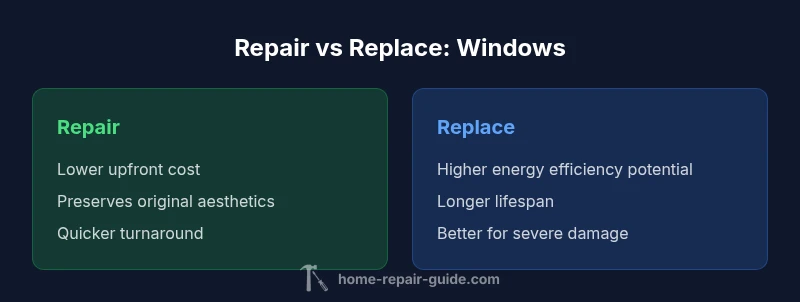
| Feature | Repair Windows (Patch/Restore) | Replace Windows (New Window) |
|---|---|---|
| Initial cost | Lower upfront cost | Higher upfront cost |
| Long-term cost | Variable; maintenance can add up | Typically lower maintenance if well-sealed |
| Energy efficiency impact | Depends on upgrades; good seals can help | Often highest with new units and proper installation |
| Timeline | Faster turnaround for simple fixes | Longer lead times for ordering, installation, and permits |
| Best for | Minor damage, cost-conscious scenarios, historic preservation | Major rot, energy upgrades, or redesign needs |
Upsides
- Lower upfront costs and quicker fixes
- Preserves original materials and aesthetic
- Reduces construction waste
- Potentially DIY-friendly for simple tasks
- Faster overall turnaround in many cases
Disadvantages
- Limited lifespan; may require ongoing maintenance
- Hidden rot or structural issues may persist
- Energy performance gains depend on repairs and upgrades
- Some repairs may affect warranties if not done properly
Repair wins when damage is localized and energy goals are modest; replacement wins with extensive rot or clear energy upgrades.
For most homes, repairing is the prudent first step. Reserve replacement for structural rot or when performance demands justify it. A pro assessment helps ensure you choose the most durable, cost-effective path.
FAQ
Is it cheaper to repair windows than replace?
In many cases, yes, particularly for minor issues. Significant rot or complex upgrades may push costs toward replacement. It’s best to compare quotes and consider long-term energy savings.
Sometimes repairing is cheaper, but major rot can make replacement more sensible. Get quotes to compare long-term costs.
Can all windows be repaired?
Not all windows are repairable. Structural rot, frame degradation, and certain hardware failures can limit viable repairs. A professional assessment helps determine feasibility.
Not all windows can be repaired; a pro can tell you if structural issues make replacement necessary.
What fixes are common for windows?
Common fixes include weatherstripping, glazing, sash balance repairs, hardware replacement, and epoxy repairs for minor rot. More severe rot typically requires replacement.
Weatherstripping, glazing, and hardware fixes are common; severe rot usually means replacement.
How long does a window repair take?
Simple repairs can take a few hours; more complex jobs or custom parts may require a day or two. Scheduling depends on part availability and weather conditions.
Most repairs are quick, but complex jobs may need a couple days.
How do I know if window rot is serious?
Look for soft wood, crumbling edges, and visible gaps. If rot reaches load-bearing members, or if there’s widespread deterioration, replacement is likely warranted.
If the wood is soft and the rot is extensive, replacement is usually wiser.
Should I hire a pro or DIY?
DIY is suitable for simple tasks like weatherstripping or minor glazing. For structural rot, seals, or complex hardware, hire a pro to ensure safety, warranty protection, and lasting results.
Do simple repairs yourself; for structural issues, call a pro.
Key Takeaways
- Inspect frame integrity before deciding
- Weigh long-term energy savings against repair cost
- Prioritize weatherproofing and seals first
- DIY fixes for simple issues; hire pros for structural work
- Document improvements for resale and warranties