Brake Service and Repair: A Practical 2026 Guide
Step-by-step brake service and repair guide for homeowners. Learn inspection, parts replacement, bleeding, and braking tests to keep your vehicle reliable.


By following this guide, you will perform basic brake service and repair tasks safely, inspect critical components, and restore reliable stopping power. You'll need core tools, replacement parts, and basic safety gear, plus a trusted service manual. If brake symptoms persist after basic service, consult a professional for advanced repairs.
Why Brake Service and Repair Matters\n\nBrake systems are the most important safety feature of any vehicle. Regular brake service helps maintain stopping power, reduces the risk of rotor warping, and extends component life. In this guide, Home Repair Guide explains how to inspect, service, and repair common brake issues with steps homeowners can perform safely. Before you begin, ensure you have a clean workspace, proper lighting, and the right tools. According to Home Repair Guide, neglecting brakes can lead to reduced braking efficiency, longer stopping distances, and expensive repairs later. This article covers what to check, how to replace worn components, the correct bleeding procedures, and when to seek professional help. You’ll learn how to identify symptoms like squealing, soft pedal, grinding, or pulling to one side, and what each symptom means for your next repair. With patience and methodical testing, you can restore confidence in your vehicle’s braking performance.
What You Need to Know Before You Start\n\nBefore getting hands-on with brake components, understand the basic principles of how braking works, the difference between front and rear brake wear patterns, and the signs that indicate when service is required. Budget for common wear items like pads and rotors and acknowledge that hydraulic systems (pads, fluids, lines) influence pedal feel and stopping distance. Home Repair Guide emphasizes that safe work practices matter as much as knowledge; a slip could injure you or damage the vehicle. If you’re unsure about rotor thickness specifications or rotor runout limits, defer to the vehicle’s service manual and seek professional help when in doubt.
Tools, Materials, and Safety Gear\n\nA well-prepared brake project begins with the right tools and safety equipment. You’ll need a floor jack and jack stands, a lug wrench or impact tool, a torque wrench, a C-clamp or brake caliper tool, brake cleaner, a brake fluid type compatible with your system, and replacement pads or rotors if necessary. Keep nitrile gloves and eye protection handy. Organization matters: label removed parts, note torque specs, and set aside old hardware if advised by the manufacturer. Always wear protective gear, work on a stable surface, and never crawl under a vehicle supported only by a jack. Improper support can lead to serious injury.
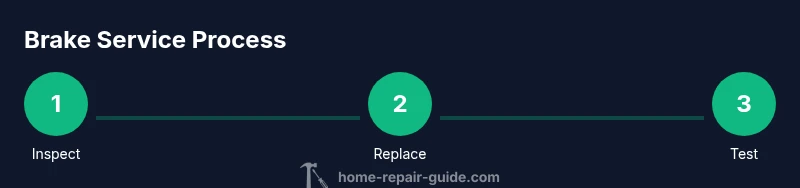
Step-By-Step Process Overview\n\nThis overview maps the main actions you'll perform, from initial preparation to road testing. Start by securing the vehicle, loosening lug nuts, and lifting the car with proper supports. Then remove the wheel to access the brake caliper, inspect pads and rotors for wear, and replace components as needed. Bleeding fluid is only required if you’ve opened the hydraulic line or replaced a caliper. Finally, reassemble, torque fasteners to spec, lower the vehicle, and perform a cautious test in a safe area. Following these steps helps ensure a safe, methodical repair without unnecessary guesswork.
Common Pitfalls and Safety Precautions\n\nBrake work carries safety risks. Common mistakes include not supporting the vehicle securely, mixing up brake fluid types, reusing worn rotors, and neglecting to re-tighten caliper bolts to the manufacturer’s torque values. Always wear eye protection and gloves, work in a well-ventilated area, and dispose of used fluids properly. If you smell burning brakes, hear grinding, or notice a spongy pedal, stop and reassess. When in doubt, consult the vehicle’s service manual or a qualified technician to prevent brake failure.
Authority Sources\n\nFor deeper understanding and standards, refer to these reputable sources:\n\n- https://www.nhtsa.gov/road-safety/brakes\n- https://www.nhtsa.gov/recalls-defects\n- https://www.consumer.ftc.gov/articles/0130-car-safety-and-vehicle-maintenance\n\nHome Repair Guide analysis shows that regular brake maintenance reduces risk and overall repair costs.
Tools & Materials
- Floor jack(Rated to support the vehicle weight; use jack stands.)
- Jack stands(Place on solid, level surface; never rely on the jack alone.)
- Lug wrench or impact wrench(For removing and torquing lug nuts to spec.)
- Torque wrench(Used to tighten fasteners to manufacturer specs.)
- Brake caliper tool or C-clamp(Compress caliper piston to install new pads.)
- Brake cleaner(Clean components; avoid contaminating pads.)
- New brake pads(Replace if worn beyond limits.)
- New rotors(Replace if scoring or below minimum thickness.)
- DOT 3/4 brake fluid(Bleeding only if you opened hydraulic lines.)
- Nitrile gloves(Protect hands from chemicals.)
- Safety goggles(Eye protection is essential.)
Steps
Estimated time: Estimated total time: 2-3 hours
- 1
Prepare workspace and safety gear
Clear an area in a well-lit garage. Gather tools and PPE, and set aside a clean workspace for fasteners. This initial setup reduces the risk of losing parts and keeps you safe throughout the job.
Tip: Wear eye protection and nitrile gloves from the start to avoid contact with brake dust and fluids. - 2
Loosen lug nuts while the car is on the ground
Before lifting, slightly loosen the lug nuts so wheels can spin freely when raised. Do not remove them yet; this prevents the wheel from turning during lifting and keeps you stable.
Tip: Loosening on the ground saves time and reduces the chance of the wheel slipping when you lift. - 3
Lift the vehicle and secure with jack stands
Position the jack under the recommended lift point. Raise the vehicle and slide jack stands under solid support points on both sides. Lower the jack slowly until the car rests securely on the stands.
Tip: Always use a second support and never rely on the jack alone. - 4
Remove the wheel to access the brake caliper
Finish removing the lug nuts and slide the wheel off. Inspect the caliper area for signs of leakage or damaged hardware. take care not to yank on hoses or lines.
Tip: Take photos during disassembly to reference when reassembling. - 5
Inspect pads and rotors for wear
Check pad thickness and rotor surface condition. Look for grooves, scoring, or warping. Measure rotor thickness against the manufacturer’s minimum specification if available.
Tip: If rotors show deep grooves or runout beyond spec, replace them for safety. - 6
Replace pads/rotors if needed
Remove old pads and caliper brackets if required, install new pads, and replace rotors if the thickness is below minimum. Reapply anti-squeal grease only where recommended by the manufacturer.
Tip: Compress the caliper piston evenly to avoid binding the caliper when reassembling. - 7
Bleed brakes if you opened hydraulic lines
If you touched hoses or replaced a caliper, bleed the brake system to remove air. Use a proper sequence and collect old fluid in a container. Refill to the correct level and avoid overfilling.
Tip: Follow the vehicle’s bleed order and use fresh fluid to prevent moisture ingress. - 8
Reassemble, torque, lower, and test
Reinstall the wheel, tighten lug nuts to spec, and lower the vehicle. Torque to manufacturer specifications in a crisscross pattern. After installation, pump the brake pedal to seat the pads and perform a cautious test in a safe area.
Tip: Take a short test drive in a low-traffic area to verify braking response before normal use.
FAQ
Do I need to bleed the brakes after replacing pads?
Bleeding is usually required only if you opened hydraulic lines, replaced a caliper, or observed a spongy pedal after work. If you bleed, follow the manufacturer’s sequence and use fresh fluid.
Bleeding brakes is needed when you opened lines or replaced a caliper, or if the pedal feels spongy afterward.
Can I reuse old rotors if they look okay?
Rotors can sometimes be reused if they’re within thickness specs and show no glazing or deep scoring. If in doubt, measure with a micrometer or consult the service manual.
You might reuse rotors if they’re thick enough and undamaged, but replacement is safer if unsure.
What are signs I need brake service soon?
Look for squealing, grinding noises, reduced pedal feel, pulling to one side, or longer stopping distances. Any of these indicate wear or hydraulic issues requiring inspection.
Squealing, grinding, soft pedal, or pulling indicate brake wear or hydraulic problems.
Is it safe to drive with a soft or spongy pedal?
A soft pedal is a warning sign and should not be ignored. It usually means air in the system or fluid loss and requires prompt inspection.
A soft pedal is a warning; stop and inspect or seek professional help.
When should I replace brake fluid?
Brake fluid absorbs moisture over time and loses performance. Replace it according to the manufacturer’s schedule, typically every 2-3 years, or when moisture is detected.
Replace brake fluid per manufacturer schedule or if moisture is detected.
What if the car pulls to one side after repair?
A pull can indicate unequal pad wear, caliper sticking, or brake line issues. Recheck caliper and rotor measurements and bleed as needed.
Pulling after repair often points to caliper issues or uneven wear; recheck components.
Watch Video
Key Takeaways
- Inspect brakes regularly and document wear.
- Use the correct torque specs for all fasteners.
- Bleed brakes only when needed and with proper technique.
- Test braking performance in a safe area after service.