Repair Brake Booster: Step-By-Step Guide
Learn to repair a brake booster with a practical, safety-first guide from Home Repair Guide. Tools, steps, and testing for reliable braking.


Quickly replace or service a failing brake booster by safely confirming vacuum supply, inspecting the booster for vacuum leaks, and testing pedal feel. This guide shows a step-by-step approach, required tools, and safety checks to ensure you can repair or replace the brake booster with a high-confidence outcome. Follow the steps carefully and consult a professional if the system shows leaks or brake failure.
What a brake booster does and how it affects braking
According to Home Repair Guide, a brake booster uses engine vacuum to amplify the force a driver applies to the brake pedal. This makes braking easier and more consistent, especially at low speeds or when the car is heavily loaded. A healthy booster helps the pedal feel firm yet responsive; a failing booster can cause the pedal to feel soft or stiff and may allow the engine to stall or run poorly if the vacuum line leaks. Common failure modes include vacuum leaks in the hose, a damaged check valve, a cracked booster diaphragm, or a loose mounting. Diagnosing the booster often requires checking for vacuum pressure and listening for a distinct hissing noise when the engine is running. If the booster is severely compromised, you may notice the pedal sinking to the floor or requiring excessive pedal travel to stop the vehicle. Addressing brake booster issues promptly is essential for safe operation and reliable stopping performance.
Diagnosing a failing brake booster
Symptoms of a failing brake booster can include a hard or soft brake pedal, increased pedal travel, or a noticeable hiss when the engine is running. Start with a simple check: with the engine off, press the brake pedal several times to push fluid into the master cylinder, then press and hold the pedal while starting the engine. If the pedal drops slightly, the booster is pulling vacuum; if it stays stiff, there may be a vacuum leak or a faulty check valve. Inspect vacuum hoses for cracks, disconnections, or oil contamination; check the booster’s check valve for smooth operation. Finally, if you suspect the booster is at fault, compare pedal feel on a different vehicle of similar make/model or consult a professional for a pressure test. The goal is to confirm that the booster, not the master cylinder or ABS system, is the primary fault.
Safety considerations before you begin
Working on brake components can be dangerous if you skip safety steps. Always park on a flat surface, apply the parking brake, and place wheel chocks before jacking up the vehicle. Wear eye protection and gloves, and disconnect the negative battery lead to reduce the risk of electrical shorts while handling the booster. Support the car with quality jack stands on a solid frame, never rely on a jack alone. If you must work near the master cylinder, protect the brake fluid reservoir to prevent contamination. Finally, verify there is no residual vacuum in the booster system before disconnecting any lines to avoid sudden pops or fluid spray.
Tools and parts you'll need
Before you begin, assemble the essential tools and parts. Required tools: a socket wrench set, torque wrench, screwdrivers (flat and Phillips), pliers, and a flashlight. A clean rag and brake fluid compatible with your system are helpful. Essential parts: a replacement brake booster (if performing a full replacement), a new vacuum hose and check valve, and sealant or gaskets as specified by your vehicle’s service manual. Optional but recommended: a vacuum gauge to verify pressure, a brake bleeding kit if you must separate the master cylinder, and a repair manual for your make/model. Having everything ready reduces the risk of leaving the job incomplete or unsafe.
Step-by-step overview
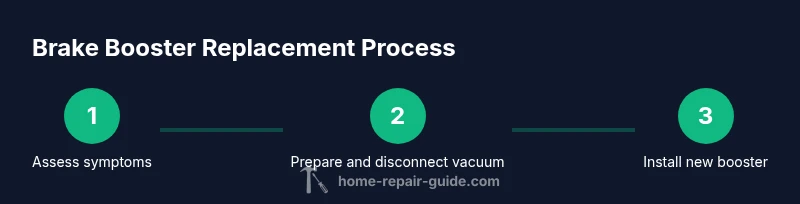
This section provides a high-level view of the typical process for repairing or replacing a brake booster. It includes safety checks, disassembly, inspection, installation, and testing. The exact steps can vary by vehicle, so refer to your service manual. The core idea is to remove the booster from the firewall, attach a compatible unit with correct orientation, reconnect the vacuum line and check valve, reattach the master cylinder, restore fluid levels, and verify pedal feel through a controlled test drive. Expect the entire process to take about an hour or two, depending on access to components.
Replacing vs repairing: when to choose
In many cases, a booster develops cracks or leaks that make repair impractical. If the check valve is stuck or the diaphragm has failed, replacement is typically the safer, longer-lasting option. Repairs may be possible for minor hose leaks or loose vacuum connections, but they should only be attempted if you have the correct tools and is comfortable with precise torque specs. Always weigh the vehicle’s safety and your own capabilities, and consult a professional if you’re uncertain.
Post-repair testing and adjustments
After reinstalling the booster, fill and bleed the brake system only if required by your sub-assembly work. Reconnect the battery, start the engine, and monitor vacuum behavior. Test the brake pedal in a safe, controlled environment: at idle, at low speed, and with a light brake application to confirm consistent pedal feel. If the pedal remains inconsistent or the car pulls to one side, recheck hose connections and mounting, and consider a professional inspection.
Maintenance and prevention tips
To extend booster life, regularly inspect vacuum hoses for cracks and oil contamination, replace worn hoses promptly, and ensure the check valve is sealing correctly. Maintain clean fluid in the master cylinder and avoid letting the brake fluid level drop. If you notice unusual pedal feel, repeat the diagnostic steps and verify vacuum supply. Scheduling periodic visual inspections as part of a maintenance routine can prevent unexpected failures.
Authority sources and further reading
- National Highway Traffic Safety Administration (NHTSA): https://www.nhtsa.gov/
- Popular Mechanics: https://www.popularmechanics.com/cars/
- Car and Driver: https://www.caranddriver.com/
These sources provide context on braking systems, safety considerations, and general automotive repair guidance. Always cross-check with your vehicle manufacturer’s service manual for model-specific instructions.
Common mistakes to avoid
- Skipping safety steps or rushing the job can lead to injury or improper installation.
- Reusing old gaskets or hoses without inspection can cause leaks.
- Not verifying the master cylinder alignment after installation can lead to poor pedal feel.
- Failing to bleed only when necessary can introduce air into the brake lines.
- Neglecting to test the system under safe conditions before road use.
Tools & Materials
- Vehicle service manual (make/model)(For torque specs, routing, and diagrams.)
- Jack and jack stands(Use on a flat surface; never rely on a jack alone.)
- Wheel chocks(Place to prevent rolling while lifted.)
- Socket set and torque wrench(To remove/install booster mounting bolts to spec.)
- Flat and Phillips screwdrivers(For hose clamps and panel screws.)
- Pliers and clamps(For hoses and check valve handling.)
- Replacement brake booster(Only if replacing the unit.)
- New vacuum hose and check valve(Replace worn parts to ensure seal.)
- Brake fluid(Top off reservoir after work.)
- Vacuum gauge (optional)(For verifying vacuum pressure.)
- Repair manual for your vehicle(Model-specific instructions.)
- Safety gear (glasses, gloves)(Protective equipment for all steps.)
Steps
Estimated time: 60-120 minutes
- 1
Prepare the vehicle and safety measures
Park on a level surface, apply the parking brake, and chock the wheels. Gather all tools and read the service manual for your specific make/model. This initial setup reduces risk and clarifies the scope before you touch the braking system.
Tip: Always wear safety glasses and gloves before starting any work. - 2
Disconnect the battery and locate the booster
Disconnect the negative battery cable to avoid shorts. Locate the brake booster at the rear of the master cylinder and trace the vacuum hose and check valve to confirm components before disassembly.
Tip: Note hose routing to avoid reassembly mistakes. - 3
Relieve vacuum and separate master cylinder
With the engine off, disconnect the vacuum hose from the booster and cap the line to prevent debris. If your vehicle uses a pressurized master cylinder, carefully detach it from the booster while keeping fluid contained.
Tip: Keep brake fluid away from paintwork and use rags to catch drips. - 4
Unbolt the booster from the firewall
Remove the mounting bolts that secure the booster to the firewall. Support the booster as you free it to avoid sudden movement that could damage components.
Tip: Have a helper hold the booster during removal. - 5
Inspect the mounting area and wiring
Check the firewall for cracks, inspect the master cylinder mating surface, and verify the vacuum check valve is accessible. Replace worn gaskets if necessary.
Tip: Replace any cracked gaskets to prevent leaks. - 6
Install the new booster or service the old one
If replacing, position the booster and bolt it to the firewall per the manual. If repairing, address leaks or broken diaphragm as appropriate.
Tip: Ensure correct orientation for the push rod alignment. - 7
Reconnect vacuum lines and master cylinder
Attach the vacuum hose and check valve, ensuring snug connections. Reassemble the master cylinder to the booster if you removed it, using the manufacturer torque specs.
Tip: Avoid overtightening to prevent hose damage. - 8
Replenish fluids and prepare for test
Refill brake fluid to the recommended level. If you bled the system, complete the bleed procedure as required. Check for leaks around fittings.
Tip: Wipe any spills immediately to prevent corrosion. - 9
Test pedal feel and perform a controlled road test
Start the engine and listen for a hiss; depress the pedal with the engine running to verify booster assistance. Do a slow, controlled test drive in a safe area, checking for consistent pedal feel and stopping response.
Tip: If the pedal feels spongy or sinks, recheck connections or seek professional help. - 10
Final verification and cleanup
Inspect all fasteners, store tools properly, and note any anomalies for future maintenance. Record the work in your maintenance log.
Tip: Document parts replaced and torque specs for future service.
FAQ
Can a failing brake booster cause the brakes to feel spongy or require more pedal travel?
Yes, a defective brake booster can reduce pedal feel and increase pedal travel. Symptoms include a soft or spongy pedal and, in some cases, a hard pedal if there is vacuum loss. A proper diagnosis should check vacuum lines, the check valve, and booster operation.
A bad brake booster can make the pedal feel soft or hard. Check the vacuum line and valve before replacing the booster.
Should I replace the brake booster myself or hire a professional?
Replacing a brake booster is feasible for experienced DIYers with the right tools, but it involves brake system safety risks. If you’re unsure about torque specs, alignment, or master cylinder compatibility, consult a professional.
If you’re comfortable with car repairs and have the right tools, you can do it; otherwise, a pro is safer.
What are the safety steps before starting brake booster work?
Park on a flat surface, engage the parking brake, block the wheels, and disconnect the battery. Use jack stands and wear protective gear. Keep fluids contained and avoid contaminating braking components.
Safety first: flat surface, parking brake, wheel chocks, and gloves.
How long does a brake booster repair typically take?
Most booster repairs or replacements take about 60 to 120 minutes, depending on access to components and whether the master cylinder must be removed.
Plan for about one to two hours, depending on your experience and vehicle access.
What are common symptoms of a brake booster problem besides pedal feel?
Other signs include a hissing noise near the firewall, a hard pedal, or a slow braking response. Vacuum leaks or a faulty check valve are common culprits.
Look for hissing noises, hard pedal, or slow response.
Watch Video
Key Takeaways
- Maintenance-first approach prevents failures
- Verify vacuum supply before dismantling the booster
- Replace worn hoses and valve to ensure seal integrity
- Test in a safe area before road use