Car Repair and Maintenances: A Practical How-To Guide
A comprehensive, step-by-step guide to car repair and maintenance for homeowners and renters. Learn safety, essential tools, a maintenance schedule, DIY tasks, and when to call a pro.


By following this guide, you can tackle basic car maintenance and identify common repair needs before they worsen. Start with a safety-first mindset, a clean workspace, and a simple toolkit. For complex diagnostics or high-risk tasks, consult a certified mechanic. This approach saves money, extends vehicle life, and reduces unexpected breakdowns.
Why Car Repair and Maintenance Matter
Regular car repair and maintenance matter for safety, reliability, and value. A well-kept vehicle is less likely to break down on the highway, reduces the risk of sudden failures, and helps you catch minor issues before they become major costs. The Home Repair Guide team emphasizes that a proactive approach to maintenance is easier and more affordable than waiting for breakdowns. This is true for homeowners who want to extend their vehicle’s life, minimize downtime, and avoid inconvenient trips to the shop. By developing a routine, you gain confidence in diagnosing common problems and understanding the car’s rhythms—sounds, smells, and performance cues become useful signals rather than mysteries. A practical maintenance routine starts with a clean workspace, a checklist, and the right tools, all of which empower you to take control of your car’s health. In this guide, you’ll learn where to start, how to organize tasks, and how to adapt the plan to your vehicle’s age and usage. The aim is not to replace a professional mechanic but to empower you to perform safe, basic maintenance and to know when to escalate issues to a trusted shop. According to Home Repair Guide, preventive maintenance saves time and money by catching issues early and reducing surprise breakdowns.
Essential Tools and Materials for DIY Car Care
Before you start, assemble a basic set of tools and consumables. The list below covers most common tasks and is safe for beginners when used with care. Essential items are marked with a check.
- Socket set (required) — metric and SAE, 3/8 in drive cover a wide range of fasteners.
- Wrench set (required) — combination wrenches in common sizes.
- Flathead and Phillips screwdrivers (required) — include small and medium sizes.
- Oil drain pan and funnel (required) — to catch and pour used oil safely.
- Dipstick, rags, and degreaser (required) — for oil checks and cleanup.
- Jack with stands and wheel chocks (required) — for safe under-vehicle access.
- Torque wrench (optional but handy) — ensures correct bolt tightness.
- Tire pressure gauge (required) — for accurate readings.
- OBD-II scanner (optional) — quick diagnostic codes for DIY checks.
- Owner’s manual or vehicle service guide (recommended) — for model-specific specs.
Safety First: Preparing Your Workspace and Personal Gear
Safety should guide every task. Park on level ground, engage the parking brake, and chock the wheels. Work in a well-ventilated area and keep a fire extinguisher nearby. Wear eye protection and gloves, and never place your hands near moving parts. If a task involves hot fluids or pressurized systems, allow the engine to cool and consult the owner’s manual. Keep tools organized to avoid accidentally knocking components. By building a safe routine, you minimize risk and create a solid foundation for all upcoming maintenance activities.
Maintenance Schedule: What to Do Monthly, Seasonally, and Annually
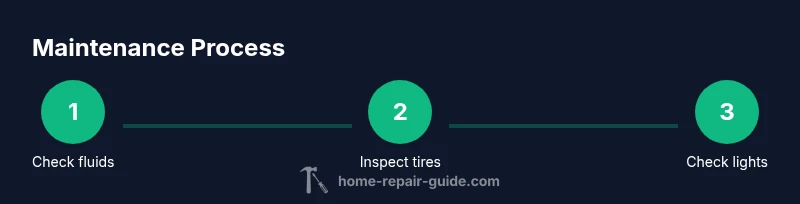
A practical maintenance plan divides tasks into frequency bands. Monthly checks include reading the oil level, inspecting fluids, testing lights, and verifying tire pressure. Seasonally, focus on cooling system health, belt and hose condition, and windshield wipers. Annually, replace air and cabin filters, review brake fluid condition, and assess the battery. Keep a simple log to track completion dates and observed changes in vehicle performance. This schedule keeps you ahead of issues and supports a longer vehicle life, a goal shared by Home Repair Guide readers.
Common DIY Maintenance Tasks You Can Do
Cleaning, inspecting, and topping up fluids are safe, repeatable tasks for most hobbyists. Start with the basics: check oil and coolant levels, inspect hoses for cracks or leaks, and ensure tires are properly inflated. Replace air filters when they look dirty and inspect the cabin air filter for debris. Replace wiper blades that streak, and verify washer fluid is topped up. For electrical items, keep battery terminals clean and corrosion-free. Remember: if you notice grinding brakes, abnormal vibrations, smoke, or a strong chemical smell, stop and seek professional help. Consistent, careful attention reduces urgent repairs and keeps you driving with confidence.
Troubleshooting and When to Call a Pro
DIY fixes work for simple issues, but some problems require professional diagnostics. If the car fails to start, stalls intermittently, or shows persistent warning lights, consult a technician. Unusual noises, smoke, burning smells, or fluid leaks demand immediate attention. Always refer to the owner’s manual for safety guidelines and torque specs. When in doubt, budget time to get a formal inspection; early escalation can prevent costly damage and protect you from unsafe driving conditions.
Authority Sources
- National Highway Traffic Safety Administration (NHTSA): Vehicle safety and maintenance basics. https://www.nhtsa.gov/road-safety/maintenance
- U.S. Department of Energy Fuel Economy maintenance basics. https://www.fueleconomy.gov/feg/maintain.jsp
- Consumer Reports Car Maintenance guide. https://www.consumerreports.org/car-maintenance/
Following these sources helps validate your DIY approach and aligns with professional maintenance standards. As you proceed, refer to these authorities to stay informed about best practices and safety protocols.
What to Expect Next
This guide continues with a practical, step-by-step workflow that you can adapt to your car’s make, model, and age. Use the quick start as a launching point, then build a routine that fits your schedule. Always prioritize safety and never hesitate to seek professional help for tasks beyond your comfort level.
Authority Sources (Additional Reading)
For more in-depth information and model-specific guidelines, consult the official owner’s manuals and recognized safety organizations. These resources provide a structured view of maintenance tasks and safety precautions that complement your DIY efforts.
Tools & Materials
- Socket set(Metric and SAE, 3/8 in drive is a good starting range)
- Wrench set(Combination wrenches in common sizes)
- Flathead and Phillips screwdrivers(Multiple sizes for various fasteners)
- Oil drain pan(To safely collect used oil)
- Funnel(For clean oil transfer)
- Dipstick, rags, and degreaser(Oil checks and cleanup)
- Jack with stands and wheel chocks(Safe access beneath the vehicle)
- Torque wrench(Helpful for correct bolt tightness)
- Tire pressure gauge(Accurate readings for safety)
- OBD-II scanner(Optional for quick diagnostic codes)
- Owner’s manual or service guide(Model-specific specs and procedures)
Steps
Estimated time: 2-3 hours
- 1
Prepare workspace and safety
Park on level ground, apply the parking brake, and place wheel chocks. Gather tools and wear eye protection. Confirm the engine is cool before touching fluids or belts.
Tip: Double-check that the vehicle is stable before getting underneath or removing any components. - 2
Check engine oil level
Warm the engine slightly, turn off, and wait a few minutes. Pull the dipstick, wipe, reinsert, then pull again to read. Top up with the correct grade if low.
Tip: Use the vehicle’s manual to confirm the recommended oil grade and capacity. - 3
Inspect coolant and hoses
Look at the coolant level in the reservoir or radiator, and inspect hoses for cracks or bulges. Refill only with the correct coolant if level is low after cooling.
Tip: Never open a hot cooling system; pressure can cause burns. - 4
Check tires and brakes
Measure tire tread depth and ensure even wear. Check tire pressure to match door placard specs. Visually inspect brake pads and rotors for wear.
Tip: If you notice uneven wear, consider a professional alignment check. - 5
Replace air and cabin filters
Open the air filter housing, remove the old filter, and install a new one following orientation arrows. Do the same for the cabin filter if accessible.
Tip: Hold off on forcing filters into place; they should slide in smoothly. - 6
Test electricals and lights
Check battery terminals for corrosion and ensure clean connections. Test headlights, tail lights, and turn signals; replace bulbs as needed.
Tip: Disconnect the battery before swapping heavy electrical components to avoid shocks.
FAQ
How often should I perform basic car maintenance?
Most cars benefit from monthly checks and seasonal tasks, but always follow the owner's manual for intervals.
Most cars benefit from monthly checks and seasonal tasks, but follow your owner's manual for intervals.
Can I change the oil myself?
Yes, if you have the right tools, a safe area, and proper disposal methods. If unsure, have a pro do it.
Yes, with the right tools and safety, but ensure proper disposal.
What safety gear do I need?
Gloves, eye protection, and sturdy footwear are essential. Keep a fire extinguisher nearby when working on electricals.
Wear gloves and eye protection, and have sturdy footwear.
Is an OBD-II scanner worth buying?
A scanner can save time by diagnosing codes yourself, but interpret cautiously; use professional consultation for uncertain codes.
A scanner helps diagnose codes, but consult a pro for ambiguous codes.
What should I do if a fluid is leaking?
Stop driving, locate the source, and call a shop. Leaks can indicate major issues.
If you see a leak, stop driving and get it inspected.
When should I call a professional?
If you lack tools, encounter complex electrical, brake, or transmission issues, or feel unsafe.
Call a professional if the task seems complex or unsafe.
Watch Video
Key Takeaways
- Create and follow a maintenance checklist.
- DIY tasks are safe when limits are known and safety is prioritized.
- Know when to escalate to a professional.
- Document maintenance to extend vehicle life.