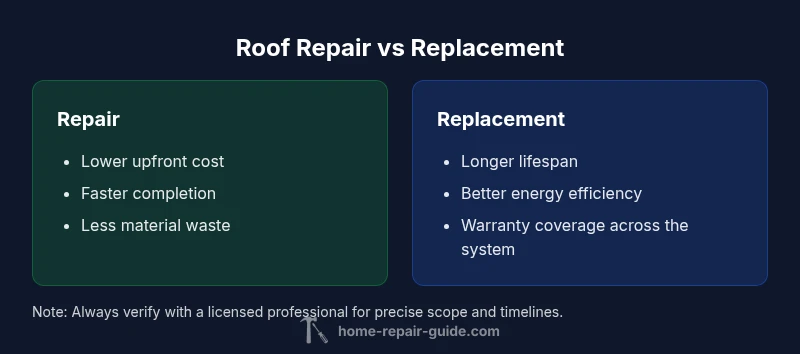
Roof Repair vs Replacement: A Practical Comparison for Homeowners
Compare roof repair and replacement to decide the best long-term option for durability, cost, and energy efficiency. This analytical guide from Home Repair Guide covers when to repair, when to replace, and a practical decision framework.


Roof repair vs replacement is a common homeowner decision. In most cases, repairs are best for minor leaks or damaged shingles, while replacement makes sense for widespread wear, structural issues, or when energy efficiency is a goal. The Home Repair Guide team recommends weighing current condition, budget, and long-term goals to choose the right path.
Key differences between roof repair vs replacement
Choosing between repairing a roof and replacing it hinges on the extent of damage, the roof's age, and long-term goals for durability and energy efficiency. For many homes, a targeted repair can restore function and extend life without the disruption of a full replacement. However, as damage becomes widespread or the roof nears the end of its expected life, replacement often delivers greater value and fewer headaches over time. According to Home Repair Guide, homeowners should assess current condition, remaining life expectancy, and the potential for hidden issues (like decking damage or ventilation problems) before deciding. This section lays out the core criteria you should use to differentiate repair-worthy problems from replacement-driven scenarios.
Key indicators favoring a repair include: isolated leaks, a handful of damaged shingles, localized flashing wear, and solid roof decking with good ventilation. Indicators favoring replacement include: extensive shingle failure across the roof, multiple leaks that recur after repairs, sagging or structural concerns, widespread moisture intrusion, and a roof near or beyond its anticipated lifespan. A repair can be a smart bridge to the next phase if it buys you several good seasons while you budget for a replacement. When the roof is simply past its prime, a replacement tends to offer better long-term value and reliability.
From a reliability standpoint, the decision is not purely cosmetic—sound roof structure, proper ventilation, and effective insulation all influence indoor comfort, utility bills, and home value. The Home Repair Guide team emphasizes that a repair-focused approach should still address underlying issues (like improper attic airflow) to avoid repeating the same problems after repair. While cosmetic fixes may be tempting, structural concerns almost always push toward replacement. A careful assessment by a licensed pro can confirm whether a repair can stop the immediate leak without masking larger vulnerabilities.
When roof repair makes sense: practical scenarios
Repair-oriented decisions are common when the damage is limited in scope and the roof’s core structure remains sound. Minor leaks around flashing, a small patch of damaged shingles, or a localized shingle blow-off can often be remedied quickly and at a fraction of the cost of a full replacement. If the roof is relatively young, well ventilated, and the underlying decking is intact, a repair can restore performance and extend life without major disruption. The key is to ensure the repaired area is watertight and that the fix does not simply relocate the problem to a new location.
Another scenario favoring repair is weather-related or budget-driven urgency. If a storm caused a few shingles to fail but the overall system remains healthy, a rapid repair can secure the roof while homeowners save for a larger project. Insurance considerations may also support selective repairs when damage is limited or deductible economics favor patchwork fixes. In these cases, prioritize high-quality flashing, proper sealants, and a thorough evaluation of attic ventilation to prevent future moisture buildup. Regular inspection after a repair helps confirm that the fix is holding and that there are no new leaks developing nearby.
When roof replacement is the smarter choice: long-term value
Replacement becomes the more prudent option when damage is widespread, the roof is aging rapidly, or structural elements show signs of failure. A new roof eliminates repeated patchwork and provides a clean slate for improved energy efficiency, weather resistance, and home ventilation. If the existing roof has multiple leaks, extensive shingle loss, curling or cupping shingles, or soft decking, replacement is often the most reliable path forward. A full replacement also opens opportunities to upgrade underlayment, ventilation, and insulation, which can yield meaningful reductions in heating and cooling costs over time.
From the standpoint of value, a new roof is typically accompanied by a fresh warranty that covers material defects and installation quality for a defined period. It may also bolster curb appeal and home resale value. While upfront costs are higher, homeowners frequently realize longer-term savings through fewer repairs, better climate control, and reduced energy waste. If your roof is past its peak performance, replacement not only fixes current problems but also future-proofs the home against further weather-related damage.
In assessing whether to replace, consider the roof’s age, the extent of visible wear, and the likelihood of concealed issues. A professional inspection can reveal hidden rot, compromised decking, or failed ventilation pathways that would undermine a repair. If those elements require attention, replacement often becomes the most efficient route to a durable, energy-efficient roof.
Cost considerations and budgeting for roof decisions
Budgeting for roof repair vs replacement requires balancing upfront costs with long-term value. Repairs typically carry lower initial costs than a full replacement, making them attractive when funds are tight or when you want to preserve the roof’s existing character. However, persistent leaks or recurring issues can drive up the total expense over time, eroding the perceived savings of patchwork fixes. Homeowners should also factor in material choices, labor rates, and the potential need for additional work such as flashing replacement or decking repairs.
A replacement involves higher upfront expenditure but often yields greater long-term savings through improved energy efficiency, fewer future repairs, and a longer warranty period. When budgeting, consider not only the price tag but also the disruption to daily life, temporary housing if needed, and the long-term maintenance schedule. Obtain multiple, itemized bids to compare scope and pricing, and verify what is included in each quote (underlayment type, flashing, venting improvements, and disposal costs). A well-documented estimate helps prevent scope creep and ensures you’re choosing a realistic option aligned with your goals.
Material choices and roof type implications
Material selection drives both cost and performance for roof repair vs replacement. Asphalt shingles offer a favorable balance of cost, ease of installation, and reliability for many homes, making repairs an attractive option for localized damage. Metal roofs deliver excellent durability and energy efficiency but may require more specialized repair work; large-scale metal replacements can be costlier upfront but often pay back in energy savings and longer lifespan. Tile and slate roofs provide aesthetic appeal and impressive longevity, yet repairs on these systems can be specialized and expensive, and extensive damage may justify a full replacement.
For any roof type, the choice of underlayment, flashing materials, and attic ventilation affects durability. Upgrading these components during replacement can yield measurable comfort and efficiency gains. When repairing, ensure that the same materials and compatible flashing are used to maintain continuity and avoid mismatch problems that can lead to leaks. Ultimately, the decision should reflect both current needs and anticipated climate exposure (heat, wind, precipitation) for your location.
Condition assessment: signs to look for and how to test
Evaluating whether to repair or replace begins with a thorough condition assessment. Look for signs such as widespread shingle damage, curling, cupping, missing granules, or visible sagging. Inspect the attic for signs of moisture intrusion, staining, or mold, along with ventilation adequacy. Check the decking from the attic or crawl space; soft, rotten, or warped boards indicate structural issues that often warrant replacement rather than patching. A professional inspection provides an objective assessment of roofing system integrity, attic ventilation, and insulation values.
Testing methods include a comprehensive exterior inspection (roof surface, flashing, penetrations) and an interior inspection of decking and attic spaces. If the assessment reveals multiple problems—rotted decking, compromised underlayment, and inadequate ventilation—your best option may be replacement. Conversely, if damage is localized and the rest of the roof is sound, targeted repairs may suffice. Always request a written condition report and a clear scope of work before committing to any repair or replacement plan.
Weather, climate, and seasonal timing considerations
Seasonal timing can influence the cost and feasibility of roof repair vs replacement. For many regions, dry, mild weather windows are ideal for installation because they reduce the risk of leaks during work and improve material performance. Extreme heat, cold, or heavy rainfall can complicate both repairs and replacements, potentially increasing labor time and the chance of weather-related delays. If you’re balancing a tight schedule, a repair may be completed quickly, while replacement typically requires longer scheduling and preparation for disposal of old materials.
Climate-specific considerations matter as well. In areas with high humidity or heavy rainfall, ensuring a watertight transition during repair is crucial, and replacement may offer superior long-term moisture control. In dry climates with intense sun, upgrading to a roofing material with better UV resistance can extend service life. Always coordinate with local weather forecasts and your contractor’s availability to optimize timing for both cost and durability.
Warranties, permits, and insurance implications
Warranties and permits play a significant role in the roof decision. Repairs may be covered under a workmanship warranty or manufacturer warranty for the repaired components, but coverage is usually limited to the patched area. A full replacement typically comes with a longer, more comprehensive warranty covering materials and installation across the entire roof. Depending on your location, permits may be required for a replacement, and failing to obtain them can lead to fines or insurance issues if problems arise later. Insurance coverage for roof repair vs replacement varies by policy and damage cause—document all damage with photos and obtain a professional assessment to support your claim.
Before proceeding, confirm warranty terms, permit requirements, and how your insurer views both repair and replacement. Ensure that the selected contractor provides clear documentation of materials, labor, and post-project inspections to protect your investment.
A practical decision framework: a step-by-step checklist
Use this framework to guide your decision on roof repair vs replacement. Step 1: perform a professional inspection to determine condition, age, and hidden issues. Step 2: categorize damage as localized or widespread. Step 3: weigh short-term costs against long-term value and energy efficiency gains. Step 4: consider remodeling and ventilation improvements that could accompany replacement. Step 5: obtain multiple quotes with a detailed scope and warranty terms. Step 6: consult your insurer about coverage options and claim viability. Step 7: decide based on your budget, disruption tolerance, and expected lifespan of the roof. This structured approach helps avoid emotional decisions and aligns with long-term home performance goals.
Case studies: when repair beat replacement and when replacement wins
Case studies illustrate how real homes fare with each option. In one example, a shallow leak from damaged flashing was resolved with a targeted repair, minimizing disruption and keeping costs under control while the rest of the roof remained structurally sound. In another scenario, widespread shingle failure, signs of decking deterioration, and poor attic ventilation led to a replacement that delivered a more reliable roof for decades. These examples demonstrate that the best choice depends on condition, age, and future goals—whether you’re prioritizing immediate cost savings or long-term protection and energy efficiency.
Authoritative sources and further reading
For homeowners seeking deeper context, consult reputable sources that discuss roof durability, installation standards, and energy efficiency implications. These references complement the guidance from Home Repair Guide and provide a foundation for informed decisions:
- https://www.energy.gov/ (Energy efficiency and building envelope guidance)
- https://www.nrca.net/ (National Roofing Contractors Association guidelines)
- https://www.osha.gov/ (Safety practices during roofing work)
The sources offer general industry standards and safety considerations that support a careful repair-or-replacement decision.
Comparison
| Feature | Repair | Replacement |
|---|---|---|
| Longevity | Short to mid-term stability depending on localized issues | Long-term durability with coverage for the full roof system |
| Upfront cost | Lower upfront cost for targeted fixes | Higher upfront cost for full replacement |
| Disruption and timeline | Less disruption, faster completion | More disruption, longer project timeline |
| Impact on energy and insulation | Minimal or moderate improvements depending on patch quality | Potential for substantial energy efficiency gains with updated underlayment and ventilation |
| Warranty and codes | Patchwork warranty on repaired area | Full roof warranty on materials and installation |
Upsides
- Lower upfront cost with repairs
- Faster turnaround for small issues
- Less material waste and dumpster hours
- Keeps existing roof aesthetics when damage is minor
- Quicker fix can bridge to a planned replacement
Disadvantages
- Potentially higher lifetime cost due to recurrent repairs
- Repair may not address underlying issues across the roof system
- Limited warranty horizon on patched areas
- Past a certain point, repairs may not restore full performance
Repair for localized damage; replacement for widespread wear or aging roofs
Choose repair when damage is isolated and the roof has remaining life. Choose replacement when there is extensive deterioration, decking concerns, or a desire for improved energy efficiency and a long warranty.
FAQ
What factors determine whether roof repair is enough?
Repair is typically sufficient for localized damage with solid decking and good ventilation. If leaks are isolated, and the overall roof is relatively young, a targeted repair can restore function and extend life. If there are multiple problem areas or structural concerns, replacement is usually wiser.
Repair is often enough when the damage is limited and the roof deck is sound. If you see leaks in several spots or the roof is aging, replacement is usually the better option.
How long does a roof replacement typically take?
A typical roof replacement can take from a few days to a week depending on size, weather, and material. Scheduling, permitting, and removing old material contribute to the timeline. A reputable contractor will provide a clear start date and milestones.
Most replacement projects wrap in a few days to a week, weather permitting, with a detailed schedule from your contractor.
Will my homeowner's insurance cover roof repairs or replacement?
Coverage depends on the cause and policy. If storm damage or sudden impact caused leaks, a claim may be possible. Routine wear and age-related deterioration are usually not covered. Always document damage and consult your insurer for guidance.
Insurance varies by policy and cause. Document damage and talk to your insurer about coverage before starting work.
How do I know if damage extends to decking or structure?
Indicators include visible sagging, soft or rotten boards in the attic, or persistent moisture. A professional inspection is essential to confirm decking integrity and determine whether repair or replacement is required.
Look for sagging or wet, soft decking in the attic. A licensed pro can confirm structural damage and recommend the best path.
What maintenance steps can extend a roof's life?
Regular inspections, clean gutters, trim overhanging branches, and ensure proper attic ventilation. Address flashing and sealants promptly to prevent leaks. Proactive maintenance reduces the risk of costly repairs and extends roof life.
Keep gutters clear, trim branches, and ensure attic ventilation; address leaks early to protect the roof longer.
Which option is best for energy efficiency?
Replacement often enables upgraded underlayment, ventilation, and insulation, improving energy efficiency. Repair can improve comfort if the relevant issue is fixed, but a full replacement provides a more comprehensive efficiency upgrade.
Replacement typically offers the strongest energy efficiency gains, with upgraded materials and venting.
Key Takeaways
- Assess roof condition with a professional inspection
- Prioritize replacement if decking or ventilation are compromised
- Weigh upfront costs against long-term savings and energy gains
- Check warranties, permits, and insurance coverage
- Use a structured decision framework to avoid emotion-driven choices