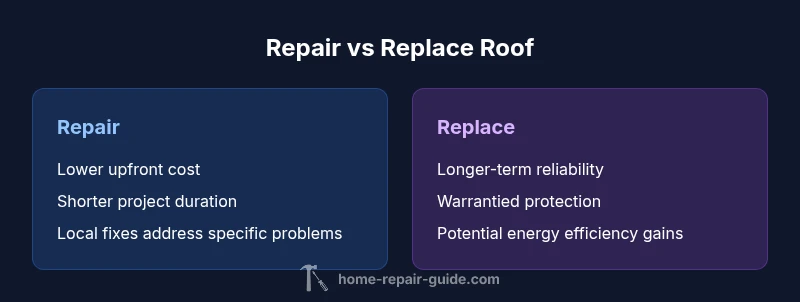
Repair or Replace Roof: A Practical Side-by-Side Guide
Analytical, evidence-based comparison of repairing vs replacing a roof. Learn factors, costs, warranties, and contractor tips to choose the best long-term solution for your home.


Facing roof issues? repair for localized damage and minor leaks, but replacement is often the smarter long-term move when the roof is old or has widespread damage. Use a structured decision framework to balance upfront costs with long-term value. Consider warranty, climate, and contractor reliability as part of the final call.
Understanding the repair or replace roof decision
Making a call about whether to pursue repair or replace roof begins with a clear view of current condition, age, and goals. According to Home Repair Guide, most homeowners want a durable solution that protects the interior, preserves value, and fits the budget. Start by documenting visible damage, leaks, and shingle condition, then assess whether localized fixes will extend life or if a full replacement is warranted. This first step sets the tone for a data-driven decision rather than a reactive panic reaction. By framing the decision around performance, cost, and risk, you lay a foundation for a choice you can defend to family, insurance, and neighbors. The Home Repair Guide team often notes that the best outcome balances reliability with reasonable disruption to daily living.
How to evaluate roof condition: age, materials, and damage patterns
To decide between repair or replace roof, begin with a structured assessment of age, material quality, and damage patterns. Look for curling shingles, granule loss, and irregular flashing, which signal aging or ongoing trouble. Material type matters: some systems tolerate repair well for a time, while others wear unevenly and may require more extensive fixes. Consider roof deck integrity and ventilation, as these influence how well any repair holds up over seasons. A cautious approach is to document all issues and create a repair plan with a realistic timeline. Home Repair Guide recommends a staged evaluation so you can compare short-term fixes against the prospect of broader replacement in the near term.
Localized damage and when repair makes sense
Localized damage such as a handful of damaged shingles, small leaks, or isolated flashing wear is usually a strong case for repair. Repairs can buy time and preserve intact sections of the roof without major disruption. When repair is pursued, prioritize fixes that address root causes—missing shingles, deteriorated sealant, or compromised flashing. Always verify that the underlying decking is solid before patching; if rot or mold is present, repair may be insufficient. A careful patch job backed by a warranty creates confidence that the repair will endure a season or two without reoccurring problems. The key is avoiding short-term fixes that simply mask deeper issues.
When replacement is the smarter move
Replacement becomes attractive when the roof shows widespread damage, the structure shows signs of compromise, or the roof is nearing the end of its expected life. Major leaks across multiple areas, extensive shingle failure, or persistent mold are red flags. Replacement also makes sense when the cost of repeated repairs approaches or exceeds the cost of a new roof, especially if insulation or ventilation has degraded. In such cases, a full replacement can restore energy efficiency, support new warranty terms, and reduce ongoing maintenance. Homeowners should compare the total cost of ongoing repairs with the upfront and long-term value of replacement.
A framework for a smart roof decision
Develop a simple, repeatable framework to guide your decision. Step 1: document all issues with photos and notes. Step 2: estimate immediate repair costs and inspect the integrity of the deck. Step 3: assess the roof’s age and expected remaining life. Step 4: consider energy efficiency and insulation impact. Step 5: request bids for both repair and replacement from qualified contractors. Step 6: compare warranties, permits, and potential disruptions. Step 7: make a decision that aligns with your budget, risk tolerance, and long-term home goals. This framework helps you avoid emotion-driven choices and select a plan that protects your home.
Costs, warranties, and long-term value
Budgeting for a roof decision requires thinking beyond the initial invoice. Repairs are typically lower upfront but may lead to more frequent costs, while replacement carries a higher upfront price with the potential for long-term savings through improved insulation and fewer leaks. Warranties vary by contractor and product; ensure you understand what is covered and for how long. A new roof can also influence energy bills, indoor comfort, and resale value. Home Repair Guide emphasizes weighing long-term value against the immediate burden, and documenting warranty terms to protect your investment.
Insurance, permits, and contractor selection
Insurance considerations can influence the decision, especially if damage qualifies as an insured event or affects dwelling coverage. Permitting requirements vary by location and roof type, so confirm with local authorities and your contractor. When selecting a contractor, prioritize licensed, insured professionals with proven track records, transparent bids, and clear timelines. Ask for before-and-after photos of similar projects, references, and a written warranty. A trustworthy team that communicates openly reduces risk and helps you navigate the repair or replace roof decision with confidence.
Roof types and how material choice affects the decision
Roof material and design influence both repair and replacement strategies. Asphalt shingles, metal, tile, and membrane systems each respond differently to patching and patch longevity. Some materials tolerate precise repair work and retentions well, while others perform best with a full system replacement to ensure proper flashing, underlayment, and ventilation. When selecting a material for replacement, consider climate, roof pitch, attic insulation, and local building codes. The right choice balances durability, maintenance needs, and long-term energy performance.
Step-by-step decision framework you can use today
Create a one-page decision memo that wires together condition, age, and costs. List observed issues, mark priority repair areas, and outline replacement scenarios with approximate timelines. Then rate each option on criteria such as reliability, disruption, and cost over time. Use this memo in contractor discussions to anchor bids and ensure both sides compare equivalent scopes. A structured memo makes it easier to justify the final choice to insurance, lenders, or a real estate professional if you plan to sell.
Common myths about roof repairs and replacements
Myth 1: If a roof leaks, you must replace it immediately. Reality: localized leaks can sometimes be repaired without replacing the entire roof. Myth 2: Replacement is always more expensive than repair. Reality: While upfront costs are higher, long-term savings can make replacement cheapest over the roof life. Myth 3: All warranties cover every type of damage. Reality: Warranties vary; read the fine print to understand what is protected. Myth 4: A contractor cannot provide useful information before inspecting. Reality: A qualified estimator can note potential issues and present realistic options even before work begins.
Comparison
| Feature | Repair | Replace |
|---|---|---|
| Material condition and deck integrity | Localized damage, solid deck in most cases | Extensive wear, rot, or compromised decking |
| Upfront cost perception | Lower upfront cost with focused fixes | Higher upfront cost for full system renewal |
| Long-term value | Moderate impact on longevity; may require future repairs | Maximizes lifespan, energy efficiency, and warranties |
| Labor disruption | Shorter, less invasive | Longer project window and more preparation |
| Warranty and support | Limited warranty on repairs | New roof with manufacturer/contractor warranty |
| Ideal scenario | Minor leaks, surface damage, good attic health | Aging roof, widespread issues, poor insulation |
Upsides
- Lower upfront cost for targeted fixes
- Quicker turnaround and less disruption
- Preserves existing roof structure when feasible
- Can extend life with quality repairs
Disadvantages
- May lead to recurring problems if root causes aren’t addressed
- Shorter overall lifespan than a full replacement
- Potentially higher lifetime costs if repairs accumulate
- Risk of patchwork failing under severe conditions
Replacement is often the better long-term choice for aging or widespread roof damage
If the roof shows extensive wear or age, replacement offers durability and warranty benefits. For localized issues, repair can be cost effective but may transfer risk to future problems. Use a structured decision framework to balance upfront costs with long-term value.
FAQ
Should I repair or replace roof if only a few shingles are damaged?
In many cases a localized repair is appropriate when damage is limited to a small portion of the roof. Ensure the underlying deck is sound and address any underlying causes to prevent repeat failures. If damage is spreading or the roof is aging, replacement may be a wiser long term choice.
If only a few shingles are damaged, repair is often enough, but check the deck and age of the roof to avoid future problems.
Can I get a bid for both repair and replacement from the same contractor?
Yes, ask for side by side bids with the same scope of work. Have the contractor explain how they would address underlying issues and how warranties differ. This makes it easier to compare value and choose confidently.
Ask for side by side bids to compare repair versus replacement.
What signs indicate structural damage beyond surface repairs?
Look for sagging, ceiling stains, large cracks, or noticeable roof deck rot. These signs suggest that the structure and insulation may be compromised, making replacement a more reliable option.
Sagging or large cracks mean structural damage may be present.
Does roof type affect whether to repair or replace?
Yes. Some materials handle repairs well, others require full replacement to guarantee performance and durability. Consult a roofer about the best approach for your specific material and climate.
Material type matters for the repair versus replacement decision.
Will a new roof improve home value or energy bills?
A new roof can improve resale value and energy efficiency, especially if paired with updated insulation and ventilation. Insist on a comprehensive energy assessment when considering replacement.
A new roof can boost energy efficiency and home value.
What permits or approvals are usually required for roof work?
Permits vary by locality and project scope. Your contractor should verify requirements and ensure the work complies with building codes and HOA rules if applicable.
Check local permits and code requirements before starting.
Key Takeaways
- Assess roof age and damage thoroughly
- Choose repair for localized issues; replacement for widespread damage
- Compare warranties, permits, and contractor reliability
- Obtain multiple bids and verify contractor credentials
- Consider long-term energy savings and resale value
- Document issues with photos for insurance and bids