Roof Repair Contractor Near Me: A Practical Hiring Guide
Need a roof repair contractor near me? Learn how to vet licenses, compare bids, and secure durable repairs with a practical, data-driven hiring guide from Home Repair Guide.


Choosing the right roof repair contractor near me starts with verifying licenses and insurance, then getting written estimates. Look for a detailed scope, clear warranty terms, and a proven track record with local projects. Compare at least three bids, check references, and avoid cash-only offers. Schedule a quick on-site assessment to confirm materials and timing.
Why local matters when hiring a roof repair contractor near me
A local contractor typically understands regional weather patterns, building codes, and permit processes better than a distant firm. This can translate into more accurate assessments, faster scheduling, and fewer surprises once work begins. As you search, remember that proximity also facilitates easier follow-up if warranty work is needed. According to Home Repair Guide, prioritizing local experience helps ensure quicker communication and accountability. The Home Repair Guide team found that homeowners often report smoother coordination and shorter wait times when working with nearby roofers who have a solid local reputation.
Vetting credentials: licensing, insurance, and safety
Licensing confirms that a contractor meets minimum regional standards, while insurance protects you from liability if a incident occurs on your property. Require a current license number and proof of general liability and workers’ compensation insurance. Check status with the state or local licensing board, and call the insurer to verify coverage. Independent safety records or certifications (where applicable) can add confidence. The National Roofing Contractors Association (NRCA) recommends screening for both licensing and insurance as part of any hiring process. By following these steps, you reduce the risk of shoddy work and financial exposure.
Scoping the project: written estimates and warranties
Always demand a written estimate that outlines scope, materials, labor, and a clear timeline. The estimate should include payment milestones, permit responsibilities, and any contingencies for weather or material delays. Warranty terms matter just as much as price: look for workmanship warranties that cover installation defects and material warranties from manufacturers. Home Repair Guide analysis shows that written contracts with explicit scope and warranty details correlate with higher customer satisfaction and fewer post-repair disputes.
Reading and comparing bids: what to look for beyond price
A bid is only as good as the scope it covers. Compare bids for the same scope of work, including shingle type, underlayment, flashing, and venting. Watch for differences in tear-off requirements, disposal methods, and ladder or access provisions. Ensure each bid references relevant codes and permits. If a bid is dramatically lower, probe for hidden costs or skipped steps. A thorough bid should present a logical sequence of work, material specifications, and a realistic timeline.
Common roof issues and repair approaches
Leaks often occur at flashing seams, around chimneys, or where shingles have worn away. Damaged or lifted shingles require replacement, and underlying underlayment may need inspection. Improperly sealed penetrations, vent stacks, and valleys are frequent leak sources. A reputable contractor will diagnose the root cause, not just patch symptoms, and will explain whether repairs or partial roof replacement is appropriate. A careful approach reduces the chances of recurring leaks and extends roof life.
Warranty, maintenance, and long-term durability
Workmanship warranties typically cover installation quality for several years, while manufacturer warranties apply to materials. Ask about coverage for both repair and replacement, and whether exclusions apply in cases of improper maintenance. Regular maintenance—clean gutters, inspect for damaged flashing, and address minor issues promptly—preserves roof integrity and reduces costly emergencies. The Home Repair Guide team emphasizes committing to a maintenance plan as part of the engagement.
Red flags and scams to avoid
Be cautious of contractors who demand large upfront payments, refuse to provide written estimates, or pressure you to sign without inspection. High-pressure sales tactics, generic bids with missing details, and promises to complete work in a single day should raise concern. Verify physical business address, check online reviews, and request a lien waiver upon final payment to protect yourself from future claims. NRCA guidelines stress transparency and documented scope as protective practices.
DIY vs professional roof repairs: when to call a pro
Roof work involves safety risks and specialized tools. Minor cosmetic fixes might be within DIY comfort, but structural issues, extensive leaks, or damaged decking require licensed professionals. If unsure about the extent of the damage, schedule an on-site assessment. The decision to hire should prioritize safety, code compliance, and warranty eligibility. When in doubt, consult a qualified roofer who can provide a scope and confirm if a replacement is more cost-effective than repairs.
Roof repair project benchmarks
| Aspect | Typical Range | Notes |
|---|---|---|
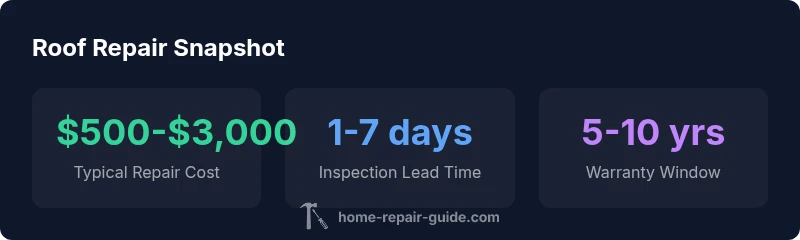
| Lead Time to Schedule Inspection | 1-7 days | Weather & crew availability affect timing |
| Repair Duration (per job) | Half-day to 2 days | Depends on size & complexity |
| Warranty on Repairs | 5-10 years | Workmanship vs material coverage |
FAQ
How do I verify a contractor's license and insurance?
Request the license number and insurer names, then check status with the appropriate state board and the insurance provider. Confirm the policy covers workers' compensation and general liability before you sign.
Ask for license and insurance details, then verify with the state board and insurer.
Should I get three bids?
Yes. Three bids help you compare scope, materials, and timelines. Look for consistency across bids and ask for clarifications on any discrepancies.
Yes—gather three bids to compare scope, materials, and timing.
What questions should I ask about warranties?
Ask about both workmanship and material warranties, their duration, what damages are covered, and how warranty work is administered if issues arise.
Ask about workmanship and material warranties, duration, and process for claims.
How long does a typical roof repair take?
Most repairs take half a day to a few days, depending on damage extent, weather, and roof complexity.
Most repairs finish in a half-day to a few days, depending on damage.
What payment practices indicate red flags?
Avoid contractors who demand full payment upfront or refuse written contracts. Use milestone payments tied to progress and a lien waiver at completion.
Avoid upfront-only payments; use milestones and written contracts.
Can I do any roof repair myself?
Some minor maintenance tasks are doable, but most roof repairs require training, safety gear, and permits. For leaks or structural work, hire a licensed professional.
Some maintenance is DIY, but leaks and structural work need a pro.
“Thorough vetting and clear documentation are essential for durable roof repairs. The Home Repair Guide Team recommends obtaining written estimates, verifying licenses and insurance, and reviewing warranty terms before any work begins.”
Key Takeaways
- Verify licenses and insurance before signing.
- Get written estimates with explicit scope.
- Compare at least 3 bids and check references.
- Prioritize warranties and long-term durability over price.