RV hot water heater repair: A practical, step-by-step guide
Learn how to diagnose and fix common rv hot water heater problems with safe, practical steps for gas and electric units. This comprehensive guide covers troubleshooting, maintenance, and when to call a professional.


This guide helps you safely diagnose and repair an rv hot water heater, covering gas and electric units, common failure modes, and practical fixes you can perform yourself. From safety isolation to testing components and deciding when to replace, you’ll gain a reliable, step-by-step approach to restore hot water while protecting your RV. According to Home Repair Guide, safety-first checks help you identify the right fix quickly.
RV water heater basics: how it works in an RV
RVs use compact storage water heaters that heat water for showers and sinks. Most travel trailers and motorhomes rely on a propane (gas) burner with an electric back-up, though some systems are electric-only. A typical unit contains a storage tank, a thermostat, a heating element or burner assembly, a vent stack, a T&P relief valve, and access panels. In practice, these systems are designed for intermittent use and space efficiency, so heat recovery and insulation matter more than in a home heater. According to Home Repair Guide, understanding the basic flow of cold water in, hot water out, and the gas/electric heat source helps you pinpoint where failures most often crop up.
Safety first: hazards and preparation
Before touching any RV water heater, shut off all energy sources and relieve system pressure. For gas units, close the propane valve and allow the unit to cool. For electric units, disconnect the shore power or switch off the battery setup, and verify there is no current at the access panel with a non-contact tester. Because space is tight in RV compartments, keep the area well-ventilated and have a bucket and towels ready for minor leaks. Safety gear such as eye protection and gloves reduces the risk of burns or gas exposure.
Tools and materials you'll need
A compact toolkit is enough for most at-home repairs: a Phillips and flat-head screwdriver, a 1/4"- and 3/8"-drive set, a multimeter, adjustable wrench, pliers, rags, and a bucket. For parts, keep a replacement thermostat, heating element, and a T&P valve handy, plus PTFE tape and silicone sealant if you’re resealing connections. If you’re flushing the tank, have a floppy hose and a drain pan ready to manage sediment.
Common failure modes in RV water heaters
Common RV water heater issues include no hot water, insufficient heat, leaks at fittings, improper thermostat settings, and slow recovery. Sediment buildup in a gas unit reduces efficiency and can block the burner, while a faulty thermocouple prevents the burner from staying lit. Electric units may fail due to burned-out heating elements or faulty thermostats. In the field, wear and age are typical contributors; however, proper venting and water quality also matter. Based on Home Repair Guide analysis, most issues stem from aging thermostats, sediment buildup, or faulty gas valves.
Diagnosing issues: symptoms and meanings
Start with symptoms: no hot water, lukewarm water, leaking valves, or strange odors. Check for gas supply and the igniter or pilot status on gas units; on electric units, test the heating element with a multimeter and verify thermostat readings. Listen for burner ignition noises and inspect the vent for proper exhaust. Pressure relief valve leaks indicate overpressure or faulty valve seals. Always inspect cold-water inlet and heating outlets for blockages or kinks that impair flow.
Step-by-step repair procedures for common fixes
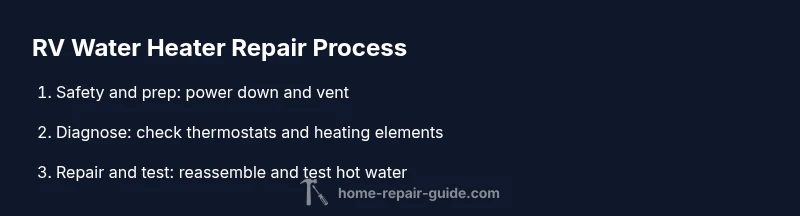
- Shut off power and gas; 2) Access the control panel and locate thermostats and heating elements; 3) If the thermostat reads out of range, replace or recalibrate; 4) For electric tanks, disconnect power, drain the tank, and test heating elements with a multimeter; 5) For gas units, clean or replace the thermocouple, verify gas valve operation, and ensure proper pilot flame; 6) Flush the tank to remove sediment and then refill; 7) Reconnect power and test heat output. Each step is short and precise to minimize guesswork. Tip: take photos of wiring before changing anything.
Maintenance to prevent future problems
Schedule periodic flushing, inspect the anode rod if accessible, and verify the T&P valve operation on a regular interval. Use filtered water when possible to reduce mineral buildup and ensure proper anode protection. Seal any loose fittings with PTFE tape and replace worn hoses as needed.
Cost, timing, and deciding between repair and replacement
RV water heater repairs generally save money when issues are minor, but replacement becomes sensible when major components fail or the tank shows signs of extensive corrosion, leaks, or repeated failures. Prices vary by model and region; budget for parts, labor (if you hire help), and potential tank replacement. Consider the unit’s age, efficiency, and your RV usage pattern when deciding whether to repair or replace.
When to call a professional and safe shutdown procedures
If you smell gas, hear a hissing leak, or notice persistent fuel odors, stop and evacuate. Gas-related repairs should be handled by a licensed technician. For any electrical work or major leaks, contact a professional. When finishing, recheck for leaks, ensure the access panel is sealed, and restore power carefully.
Authority sources
For reliable background and safety guidance, consult authoritative resources from government and university outlets. See Energy.gov (https://www.energy.gov), National Renewable Energy Laboratory (https://www.nrel.gov), and the Environmental Protection Agency (https://www.epa.gov). These sources provide general guidance on energy efficiency, safety precautions, and maintenance practices for home and mobile appliances, including RV water heaters.
Tools & Materials
- Phillips head screwdriver(General service screws)
- Flat-head screwdriver(For stubborn screws and tabs)
- Adjustable wrench(To loosen fittings)
- Multimeter(Test heating elements and thermostats)
- Non-contact voltage tester(Check for live power safely)
- PTFE tape(Seal water connections)
- Drain pan and towels(Contain spills during drain/flush)
- Replacement thermostat(Only if the existing unit tests bad)
- Replacement heating element(Only for electric units with a failed element)
- Bucket and hose(Flush and drain safely)
- Sealant or silicone(For sealing after service)
Steps
Estimated time: 60-90 minutes
- 1
Shut off power and gas
Power off the shore power or battery and disconnect the gas supply. Confirm there is no voltage at the unit before touching any wiring. This step prevents shock and ignition.
Tip: Use a non-contact tester to verify no live current. - 2
Access the control panel and identify unit type
Open the access panel and locate the thermostat and heating element or burner. Note layout, labeling, and how wires connect to components.
Tip: Take a photo for reference before disconnecting anything. - 3
Test electrical supply and fuses
With the power off, inspect fuses or breakers and then re-verify voltage when testing elements. Look for signs of corrosion or loose wiring.
Tip: If a fuse is blown, replace with the same amperage. - 4
Inspect the T&P valve and drainage
Check the pressure-relief valve for leaks or corrosion and drain the tank to remove sediment. Spitting water indicates a clogged valve or mineral buildup.
Tip: Do not block the valve outlet during testing. - 5
Test gas burner/pilot and thermocouple
On gas units, verify the pilot flame and test the thermocouple for heat-generated voltage. Replace if dead or weak.
Tip: Keep a spare thermocouple on hand. - 6
Test heating element and thermostat (electric)
On electric units, remove the access panel and test the element with a multimeter. Replace if resistance is outside spec and verify the thermostat reads correctly.
Tip: Never touch live terminals. - 7
Flush, drain, and refill the tank
Drain the tank to remove sediment and refil with clean water. Run the hot water tap to bleed air and verify flow.
Tip: Use a proper hose and collect discharged water safely. - 8
Reconnect power and test heat output
Reconnect power, reassemble panels, and run a test cycle to confirm hot water at desired temperature. Check for leaks and verify that the T&P valve operates.
Tip: Set thermostat to a safe 120-130°F (49-54°C) initially.
FAQ
What are the most common RV hot water heater problems?
No hot water, insufficient heat, leaks at fittings, and pilot or burner ignition failures are typical RV water heater issues. Electrical elements and thermostats are common failure points on electric units.
Common RV water heater problems are no hot water, leaks, and ignition failures—especially with older electric elements or thermostats.
How do I reset a gas RV water heater?
Turn off the gas, wait a few minutes, then re-light the pilot according to the manufacturer’s instructions. If the unit won’t stay lit, inspect the thermocouple and gas valve for proper operation.
To reset, shut off gas and power, wait, then relight the pilot following the manual. If it keeps failing, check the thermocouple.
Why is there no hot water in my RV after wiring changes?
Wiring changes can disrupt power to electric elements or the control board. Double-check all connections and ensure the correct voltage is reaching the heater. If unsure, revert changes and consult a professional.
If there’s no hot water after wiring, recheck connections and voltage. If uncertain, seek professional help.
Can I flush the RV water heater myself?
Yes, flushing involves draining the tank and flushing with water to remove mineral buildup. Follow the manufacturer’s steps and use a proper hose. If you’re unsure about the tank’s drain valve, hire help.
Flushing is doable yourself; follow the manual and use a proper hose. If in doubt, hire a pro.
When should I replace vs repair?
Consider age, repair cost, and efficiency. If the tank leaks, the burner or elements are repeatedly failing, or the unit is old, replacement may be more cost-effective in the long run.
If leaks persist or parts fail repeatedly, replacement may be best.
What safety steps are essential before starting work?
Always power down, use gas shut-off when applicable, and ventilate. Wear safety goggles and gloves, and keep a bucket handy for leaks. If you smell gas, stop and call for help.
Power down, ventilate, wear safety gear, and call for help if you smell gas.
Watch Video
Key Takeaways
- Identify whether the unit is gas or electric and locate controls.
- Always shut off power and gas before starting any work.
- Flush sediment to restore efficiency and flow.
- Decide repair vs replacement based on age and cost.
- Call a professional if you detect gas leaks or major damage.