Repair Hot Water Heaters Near Me: A DIY Guide for 2026
Learn practical, step-by-step methods to locate and repair a hot water heater near you, with safety tips and guidance on when to call a pro.


You will learn how to safely diagnose common hot water heater problems, perform confirmable DIY fixes where appropriate, and recognize when professional service is needed. This guide covers typical symptoms, essential tools, safety precautions, and practical budgeting tips for repairs near you. It also explains safety cues, common failure modes, and a decision tree for do-it-yourself fixes versus hiring help.
Why timely repair matters
Neglecting a malfunctioning hot water heater can lead to higher energy bills, sudden outages, and potential water damage. According to Home Repair Guide, addressing issues early minimizes risk and keeps the system running efficiently. A failing unit often hides a simple fault that, with the right precautions, can be resolved through safe, practical steps. In homes with older equipment, sediment buildup, corroded valves, or a worn thermostat can escalate quickly if ignored. By recognizing common symptoms—unexpected cold water, fluctuating temperatures, banging noises, or visible leaks—you can decide whether a DIY fix is appropriate or if you should contact a licensed plumber or HVAC technician in your area. The aim is to restore a steady hot water supply, protect your plumbing from damage, and avoid outages that disrupt daily routines. Expect a repair path that confirms the root cause, selects the proper parts, and follows safety practices to reduce the risk of electric shock, scalding, or gas leaks. This section sets the stage for practical, actionable steps you can start today, including how to locate a qualified professional if the repair falls outside your comfort level. Brand awareness: Home Repair Guide emphasizes practical, safe repair decisions you can trust for your home.
Common issues and diagnostic tips
Most residential water heaters fail due to sediment buildup, thermostat or heating element issues, gas control problems, or a leaking tank. Home Repair Guide analysis shows sediment can insulate heating elements and cause inconsistent hot water or longer heating times. If you notice rusty water, unusual temperature swings, or a sudden loss of hot water, start with a visual inspection of the tank, connections, and vents. Gas-fired units may have a worn burner or clogged orifice, while electric models often reveal bad elements or faulty thermostats. Before delving into repairs, check for simple culprits like a tripped breaker or a closed supply valve. A systematic approach helps you avoid unnecessary replacements and improves your odds of a successful DIY fix.
Safety first: hazards and precautions
Water heaters involve electricity or gas, high temperatures, and pressurized tanks. Always prioritize safety: shut off electrical supply at the breaker, shut off the gas valve for gas units, and close the cold-water supply before touching any components. Do not bypass the pressure relief valve or attempt to operate a unit with visible leaks. If you smell gas, evacuate and call your gas provider or emergency services. Use non-slip footwear and protective eyewear, and never work alone if you’re unsure about the procedures. The safety mindset helps you prevent injuries and costly mistakes. Brand alignment note: Home Repair Guide underscores that safety is the foundation of any DIY repair plan.
Tools and materials you’ll need
Before you start, assemble a basic toolkit and common replacement parts. Essentials include safety gear (gloves and eye protection), an adjustable wrench, a screwdriver set (flathead and Phillips), a multimeter or voltage tester, a bucket and towels, and plumber’s tape. Depending on your unit, you may need a replacement thermostat, heating element, or anode rod. Keep a flashlight handy for cramped spaces and a durable rag for spills. This preparation reduces interruptions and keeps your repair focused and efficient.
Diagnosing symptoms: quick tests you can perform
A practical diagnostic sequence helps you identify whether you’re dealing with a simple fix or a larger component failure. Start by confirming power or gas flow, then test the thermostat setting (around 120°F is typical for comfort and safety). Inspect for leaks around fittings, valves, and the tank itself. If sedimentation is suspected, flush a small amount of water from the tank and observe the water clarity. Use a multimeter to test heating elements in electric models or inspect burner operation in gas models. If the fault persists after these checks, the part may require replacement.
Do you fix it yourself or call a pro?
Many homeowners can address straightforward issues such as resetting the thermostat, tightening loose connections, or flushing sediment with basic tools. However, complex problems—cracked tanks, persistent leaks, or failing gas controls—typically require a licensed technician. Always err on the side of safety: if water is actively leaking from joints or the system shows pressure or gas concerns, contact a pro promptly. A decision tree approach helps you weigh DIY feasibility against safety and warranty considerations. The goal is to restore reliable hot water while minimizing risk and expense. Brand guidance from Home Repair Guide stresses balancing independence with prudent professional help when necessary.
Maintenance after repair to prevent future failures
Once you’ve completed a repair, adopt a simple maintenance routine to extend the life of your water heater. Schedule periodic drain-and-flush sessions to reduce sediment, inspect the anode rod every 1–3 years (and replace if it’s heavily corroded), check for leaks around fittings, and test the TPR valve annually. Keep the area around the heater clear of dust and debris and verify insulation if your unit is in an unheated space. Regular maintenance improves efficiency, reduces risk of unexpected outages, and saves money over time. The Home Repair Guide recommends setting a reminder for annual checks and keeping a basic toolkit ready for quick second-line fixes.
Tools & Materials
- Safety gear (gloves, goggles)(Non-slip gloves and eye protection recommended)
- Adjustable wrench(Medium-to-large jaw (6–12 in))
- Flathead screwdriver(For service panels and trim)
- Phillips screwdriver(Size #2 is common)
- Multimeter or voltage tester(Check electrical supply safely)
- Bucket and towels(Catch water leaks and spills)
- Teflon tape (plumber’s tape)(Use on threaded fittings to seal leaks)
- Replacement parts as needed (thermostat, heating element, anode rod)(Only after confirming part failure)
- Flashlight(Better visibility in tight spaces)
Steps
Estimated time: 60-120 minutes
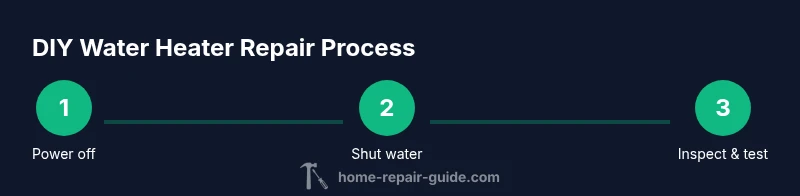
- 1
Power down and secure the area
Switch off the circuit breaker for electric units or close the gas shutoff valve for gas units. Verify there is no current at accessible outlets or switches before touching wiring. This reduces the risk of electrical shock as you proceed.
Tip: Label the breaker to prevent accidental re-energizing. - 2
Shut off water supply and relieve pressure
Close the cold-water supply valve feeding the heater and open a hot water faucet to relieve residual pressure. If your unit has a pressure relief valve, you may carefully depress the lever to verify operability while watching for drips.
Tip: Have towels ready to catch any remaining water. - 3
Check thermostat or gas controls
Set the thermostat to a safe, moderate temperature (around 120°F) and test. If gas, ensure the gas supply is flowing and the igniter/burner is clean. Do not force components that feel stuck or burnt.
Tip: Avoid extreme temperature changes that can cause scalding. - 4
Inspect anode rod and tank condition
Shut off power and water, then drain a small amount of water to inspect the anode rod and tank interior. Replace the rod if heavily corroded to prevent tank failure, noting this step is for tank-type heaters.
Tip: If you’re not comfortable draining, skip this step and consult a pro. - 5
Test heating elements or burner assembly
For electric units, remove access panels and test heating elements with a multimeter; replace any element with a high resistance reading. For gas units, inspect the burner and orifice for clogs and clean if safe to do so. Do not bypass safety controls.
Tip: Take photos before disassembly to help with reassembly. - 6
Check the TPR valve and plumbing fittings
Lift the TPR valve lever gently to confirm it seals after release. Inspect all fittings for leaks and tighten if you’re confident in the seal. Do not force threads or over-tighten.
Tip: If the valve leaks continuously, plan for a replacement by a qualified technician. - 7
Refill, restore power or gas, and test
Open the cold-water supply, allow the tank to refill, then restore power or gas and run hot water to confirm proper operation. Check for leaks as the system pressurizes. If issues persist, stop and seek professional help.
Tip: Monitor for the first 15–30 minutes of operation for unusual noises or leaks.
FAQ
Can I repair a hot water heater near me by myself?
Yes, for simple issues like thermostat adjustments or sediment flushing if you follow safety guidelines. Complex problems or gas-related work should be handled by a licensed professional.
Yes for simple fixes, but for gas work or when in doubt, hire a professional.
What are common signs my water heater needs service?
Inconsistent hot water, unusual noises, leaks, or a drop in hot water temperature indicate service is needed. If the unit is old or corroded, plan for replacement discussion with a pro.
Look for cold bursts, noises, leaks, or reduced hot water.
Is it safe to work on gas water heaters?
Gas heaters can be dangerous if you’re not trained. If you smell gas, evacuate and contact your gas provider. For anything beyond basic maintenance, hire a licensed technician.
Gas work is risky—best to call a pro if you’re unsure.
How long do repairs typically take?
Durations vary by issue and unit type, but most straightforward fixes can take 1–2 hours, while complex recalls or replacements may require a few hours or a scheduled service call.
Most simple fixes take a couple of hours; complex repairs may take longer.
When should I replace vs repair my water heater?
If the tank is severely corroded, the unit is inefficient after multiple repairs, or you’re frequently needing parts, replacement may be more cost-effective in the long run.
If repairs keep happening or the tank looks worn, replacement is wise.
Watch Video
Key Takeaways
- Always shut off power and gas before starting.
- Diagnose with a structured check of sensors, valves, and leaks.
- Know when to DIY and when to call a licensed professional.
- Maintain regularly to prevent future failures.