Repair for Air Conditioner: Step-by-Step Guide
Learn safe, practical steps for diagnosing and repairing common air conditioner issues. This Home Repair Guide tutorial covers tools, step-by-step actions, safety, maintenance, and when to call a pro to extend your cooling season.


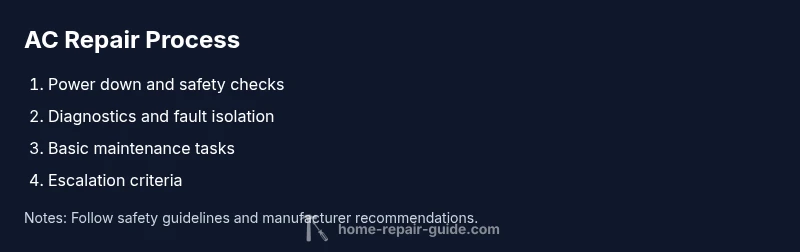
This guide provides a concise, action-oriented overview for diagnosing and safely repairing common air conditioner issues using basic tools, with clear safety cautions and guidance on when to call a professional.
Understanding how air conditioners work
For homeowners, repairing an air conditioner begins with a basic understanding of how the system functions. Most residential units rely on four main subsystems: the compressor and refrigerant circuit, the air handler and evaporator coil, the outdoor condenser, and the control system (thermostat and relays). When you think about repair for air conditioner, start by distinguishing symptoms that point to a comfort issue (insufficient cooling, ice on lines, or strange noises) from maintenance problems (dusty filters, dirty coils). This knowledge helps you triage safely, allocate time, and determine whether you can solve the issue with simple steps or if professional involvement is needed. Under normal operation, refrigerant cycles, heat exchange, and airflow work together to remove heat from the indoor space. If any part of this chain is blocked or malfunctioning, comfort and efficiency suffer. By recognizing these subsystems, you’ll troubleshoot more efficiently and reduce the guesswork that can lead to unnecessary repairs.
Common causes of AC trouble
A wide range of issues can trigger poor cooling or breakdowns. Dirty or blocked air filters restrict airflow and force the system to work harder, shortening component life. Condenser coils clogged with dirt reduce heat rejection and can cause the unit to overheat. Thermostat mismatches or failed sensors lead to incorrect cooling signals. A malfunctioning contactor or capacitor in the outdoor unit can prevent the compressor from starting. Low refrigerant due to leaks causes weak cooling and may produce a hissing sound. Electrical connections that are loose or corroded create unsafe operating conditions and intermittent performance. Understanding these common causes helps you decide whether a fix is something you can handle with basic tools, or if you should call a licensed HVAC technician for more complex problems like refrigerant handling or sealed-system testing.
Safety first: before you begin
Working on an air conditioner can expose you to electrical hazards, sharp metal edges, and refrigerants that require handling by licensed professionals. Always power down the system at the breaker panel, and confirm zero voltage at the service access with a non-contact tester before touching wires. Use insulated tools and wear eye protection. If your unit is outdoors, be mindful of weather and avoid stepping on wet surfaces. Never attempt refrigerant work yourself unless you are properly certified; even small mistakes can vent refrigerant to the atmosphere and harm the environment. If a component feels hot to the touch or you smell burning insulation, stop and unplug the unit. Adopting a safety-first mindset reduces the risk of injury and ensures you follow regulations when performing a repair for air conditioner. For renters, check your lease and building rules before starting any home repair project.
Diagnosing the problem: symptoms and checks
Start with the simplest checks before disassembling anything. Verify that the thermostat is set correctly and that the unit is receiving power from a dedicated circuit. Inspect and replace or clean the air filter; a clogged filter is the most common cause of reduced cooling. Listen for abnormal sounds such as squealing, grinding, or buzzing, which can indicate a failing fan motor or loose components. Look for ice on the refrigerant lines; ice forms when airflow is blocked or when refrigerant pressure is off. Check the outdoor condenser for debris and ensure the fan is turning freely. If you can safely reach the electrical panel, inspect for loose wires or scorched connectors. Document the symptoms you observe with notes and photos; this helps when you consult a pro or search for targeted how-to guides.
Performing safe repairs you can handle
Not all repairs require a pro. Routine maintenance tasks often fix many problems. Replace dirty filters every 1–3 months depending on usage and air quality. Clean the evaporator and condenser coils using a soft brush or spray bottle with a gentle cleaner designed for HVAC coils, taking care to avoid bending fins. Clear the condensate drain line with a recommended cleaner and flush with water if necessary to prevent water damage. If you notice a loose electrical connection on a control board outside your comfort zone, stop and call a technician. For components like capacitors or contactors in the outdoor unit, only replace if you are comfortable and have proper replacement parts. Document model numbers and part details to simplify future repairs and warranty considerations. Remember: electricity and refrigerants require caution, and missteps can reduce efficiency or cause further damage.
When to call a professional
There are clear signs that a repair for air conditioner falls outside DIY safety. If refrigerant appears low or you suspect a leak, only a licensed HVAC technician should handle it due to environmental and legal requirements. If the compressor is running but not delivering cooling, it may indicate a sealed-system issue or refrigerant problem that needs specialized tools. Frequent tripping of the breaker or persistent electrical faults indicate wiring or control issues that require diagnostic equipment. If basic maintenance tasks do not restore performance after you have checked filters, coils, and airflow, a pro can perform a professional inspection and provide a detailed repair plan. A quick rule of thumb: if you are unsure about any step, stop, and contact a qualified technician. This protects your home and ensures compliance with local codes.
Maintenance to prevent future failures
Preventive care extends the life of an air conditioner and reduces the likelihood of major repairs. Schedule routine professional checkups at least once a year, ideally before peak cooling season. Clean or replace filters regularly, and keep outdoor coils free of debris. Use a programmable thermostat to maintain consistent temperatures and reduce strain on the system. Check ductwork for air leaks and seal gaps to improve efficiency. Keep the area around the outdoor unit clear of plants and debris to maintain proper airflow. Consider a basic seasonal tune-up that includes refrigerant level checks, electrical connection inspection, and system diagnostics. By building a simple maintenance habit, you curb energy waste and maintain comfort while avoiding costly repairs.
Quick-reference troubleshooting checklist
Keep this checklist handy during a repair for air conditioner. Start with safety steps, confirm power is off, and inspect the filter. If the unit still isn't cooling properly, verify airflow at supply vents, inspect outdoor unit for debris, and listen for unusual sounds. Use a simple decision tree: if the issue is airflow, address filters and coils; if there are electrical noises, check connections and capacitors only if you are trained. For renters, focus on maintenance tasks you can perform without opening electrical panels. This approach helps you triage, document findings, and decide whether the problem is best solved with DIY steps or professional service.
Tools & Materials
- Multimeter(Measures voltage, continuity, and resistance)
- Screwdriver set (Phillips and flat-head)(For access panels and fasteners)
- Soft brush or coil cleaning brush(Gently cleans evaporator/condenser coils)
- Coil cleaner safe for HVAC(Follow product directions)
- Fin comb(Straightens bent condenser fins)
- Replacement air filters(Match unit size (e.g., 16x20 inches))
- Non-contact voltage tester(Confirm power is off before touching wires)
- Gloves and safety goggles(Personal protective equipment)
- Vacuum or compressed air canister(Debris removal from components)
- Spray bottle with mild detergent(For coil cleaning rinse)
Steps
Estimated time: 60-90 minutes
- 1
Power down and verify safety
Turn off the HVAC circuit at the breaker. If accessible, unplug the outdoor unit and test the panel with a non-contact tester to confirm zero voltage before touching any wires.
Tip: Take a photo of wiring connections before disconnecting anything - 2
Check thermostat and settings
Set the thermostat to COOL with a comfortable target temperature and verify the indicator shows the system is engaged. If you use a smart thermostat, confirm the app shows active cooling.
Tip: If the thermostat is located far from the unit, consider a separate thermistor check - 3
Inspect and replace air filter
Remove the access panel, extract the old filter, and replace with a new one of the correct size. Ensure the airflow arrows point the right direction.
Tip: Keep spare filters on-site and label the current one - 4
Inspect outdoor unit and coils
Clear leaves, grass, and debris from the outdoor condenser. Gently clean coils with a soft brush; avoid bending fins and never use high-pressure water that can damage fins.
Tip: Use a fin comb if you notice bent blades - 5
Check electrical connections and safety components
With power off, inspect the control board, contactor, and capacitor connections for signs of looseness or burning. If you detected a swollen capacitor or burnt smell, stop and call a technician.
Tip: Discharge capacitors only if you are trained and authorized - 6
Test operation and document results
Restore power and run the system for 10–15 minutes. Observe cooling performance, airflow, and any unusual noises. Record temperature drop and notes for future reference.
Tip: If cooling remains weak, escalate to a professional with your notes
FAQ
Can I repair an air conditioner myself?
Yes for basic maintenance and simple fixes like filter replacement and coil cleaning; refrigerant handling and sealed-system work should be done by a licensed technician.
DIY is fine for simple maintenance, but refrigerant work should be left to a licensed technician.
What tools are essential for a DIY AC repair?
A basic multimeter, insulated screwdrivers, a coil brush, replacement filters, a non-contact tester, gloves, and safety goggles cover most entry-level tasks.
Essential tools include a multimeter, insulated screwdrivers, and fresh filters.
How often should I replace air filters?
Typically every 1–3 months, depending on usage, pets, and air quality. More frequent changes help maintain airflow and cooling efficiency.
Replace filters every 1–3 months depending on usage.
Is refrigerant handling a DIY task?
No. Refrigerant work requires licensing and specialized equipment due to environmental and safety regulations.
Refrigerant work is not a DIY task.
When is maintenance enough and replacement needed?
If cooling remains weak after maintenance, it may be time to call a pro for an inspection or consider component replacement.
If performance doesn't improve after maintenance, call a pro.
What signs indicate a professional should be called?
Ice on lines, refrigerant leak signs, burning smells, and frequent electrical trips are strong indicators to contact a licensed technician.
Call a pro for refrigerant leaks or electrical hazards.
Watch Video
Key Takeaways
- Prioritize safety during any repair for air conditioner
- Most AC issues start with maintenance tasks you can DIY
- Know when to call a professional for refrigerant or sealed-system work
- Regular maintenance reduces future repairs and energy waste
- Document observations to aid future troubleshooting