Radiator Repair Automotive: A Practical Step-by-Step Guide
Learn safe, practical radiator repair automotive guidance for homeowners and renters. This step-by-step tutorial covers diagnosing leaks, flushing coolant, choosing repairs, and essential safety tips.


This guide teaches you how to diagnose common radiator problems in cars, perform a safe coolant flush, and complete basic radiator repairs at home. You’ll learn how to identify leaks, test pressure, choose repair options, and when to call a professional. Gather essential tools, fresh coolant, distilled water, a catch pan, protective gloves, and eye protection before you begin.
How the radiator cooling system works in modern vehicles
A vehicle's cooling system is a closed loop designed to keep the engine operating within an optimal temperature range. The radiator acts as the heat exchanger, where hot coolant releasing heat from the engine is cooled by air flowing through the radiator fins. A water pump circulates coolant, while the thermostat regulates flow based on engine temperature. The radiator cap maintains system pressure, which raises the boiling point of the coolant and prevents vapor pockets. A cooling fan helps remove heat when the vehicle isn’t moving fast enough for natural airflow. Understanding these basics is essential for any radiator repair automotive project and helps you diagnose overheating and leaks more accurately. As you begin, keep in mind that even small leaks or a clogged radiator can dramatically affect performance and longevity.
According to Home Repair Guide, routine inspection of hoses, clamps, and the cap is a smart first step in preventive maintenance, reducing the chance of major failures later on.
Common problems signaling radiator trouble
Leaks are the most obvious symptom of radiator issues, but overheating, sweet or smoky exhaust, and a sweet coolant smell can also indicate trouble. Pinhole leaks in the radiator core, corroded tanks, or damaged hoses allow coolant to escape, which lowers cooling capacity and can cause engine damage. A clogged radiator reduces coolant flow, increasing pressure and leading to overheating. A failing radiator cap can cause the system to lose pressure, causing boiling and air pockets that air-block the bleed process. If you notice coolant puddles under the car or a sudden rise in temperature gauge, inspect the radiator, hoses, and clamps promptly. Home Repair Guide analysis shows that early detection reduces repair costs and downtime, so regular checks are worth the effort.
Diagnostic approach for radiator issues
Start with a visual inspection of the radiator fins, hoses, clamps, and the reservoir. Check coolant color for contamination and verify coolant level when the engine is cool. Perform a pressure test to force the cooling system to reveal leaks that are not obvious at a glance. Inspect for oil in the coolant, which can signal more serious engine problems. Run the engine to operating temperature and listen for gurgling sounds that indicate trapped air. For DIY diagnostics, use a flashlight, mirror, and a clean rag to inspect hard-to-see areas behind hoses and toward the radiator core. If the leak is slow or you’re unsure of the source, consult a repair professional rather than attempting risky fixes.
Repair vs replacement: choosing the right path
Minor leaks from hoses or clamps, or a faulty radiator cap, can often be repaired or replaced with basic tools. A pinhole in the core typically requires professional attention and radiator replacement in most cases; temporary patch kits can slow the leak but are not a permanent fix. If you diagnose corrosion, severe corrosion on the radiator tanks, or recurrent overheating after repairs, replacement is usually the safer, more reliable option. Consider the vehicle’s age, availability of replacement cores, and cost-benefit when deciding between DIY fixes and professional radiator repair automotive services. The Home Repair Guide team recommends weighing safety and reliability first.
Safe DIY steps you can perform today
Before starting any work, ensure the engine is completely cool. Use a drain pan to catch old coolant and wear gloves and eye protection. Inspect the radiator cap and replace if worn or damaged. Check radiator hoses for cracks, bulging, or soft spots; replace as needed. A simple coolant flush can be done with a flush kit or a garden hose-and-bucket method, but follow the product instructions and environmental disposal guidelines. Always dispose of used coolant at a recycling center.
Flushing, refilling, and bleeding the cooling system
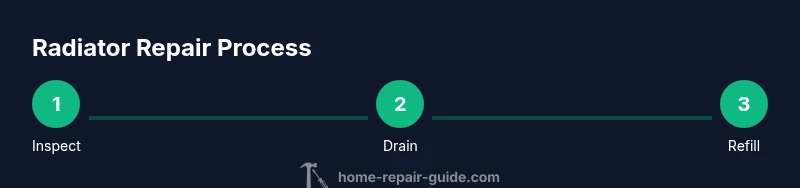
A proper coolant flush clears contaminants, restores proper flow, and helps prevent deposits that reduce cooling efficiency. After draining, flush the system with distilled water until the discharge runs clear. Refill with a 50/50 mix of coolant and distilled water unless your vehicle requires a different ratio per the owner’s manual. Bleed the air by running the engine with the radiator cap off (carefully) and topping off as air escapes. Recheck the level after the engine cools, then perform a final test drive to confirm temperatures stay within the normal range.
Post-repair checks and maintenance schedule
After completing radiator-related work, inspect for steady temperature readings and no additional leaks during a test drive. Recheck coolant level and top off if necessary. Create a simple maintenance schedule: inspect hoses twice a year, replace coolant every 2-3 years or per manufacturer guidance, and perform a visual check for leaks monthly. Keeping a log helps you catch issues early, saving money and preventing breakdowns. Remember to keep dangerous chemicals away from children and pets.
Authority resources and further reading
To deepen your understanding, consult authoritative sources such as government and major publications that cover vehicle maintenance and cooling system fundamentals. These resources offer safety guidelines, maintenance checklists, and best-practice recommendations for radiator care and overheating prevention. For a clear, developer-friendly overview, see the following external sources: NHTSA maintenance guidelines, Energy.gov articles on cooling systems, and Consumer Reports’ maintenance guides. These references provide independent validation and practical context for DIY radiator repair automotive projects.
Putting it all together: a practical, safe plan
A well-planned approach combines diagnosis, selective repairs, and preventive maintenance. Start with a clean, careful assessment, replace worn components, flush and refill coolant if needed, and schedule regular inspections. By following a structured process, you minimize downtime, extend engine life, and avoid costly emergency repairs. This approach aligns with Home Repair Guide’s emphasis on practical, durable improvements that you can perform with confidence.
Tools & Materials
- Coolant (pre-mixed 50/50 or concentrate with water)(Check vehicle specification in owner’s manual; use the same type as in the system.)
- Distilled water(For mixing and flushing; avoid tap water which may contain minerals.)
- Catch pan(Large enough to hold several quarts of coolant.)
- Funnel(Avoid spills during refilling.)
- Gloves and eye protection(Chemical protection and splash safety.)
- Rag or shop towels(Clean spills and wipe clamps and hoses.)
- Screwdrivers and socket set(For clamps, hoses, and drain plug removal if needed.)
- Pliers and hose clamp pliers(Optional, useful for stubborn clamps.)
- Radiator cap (new if needed)(Inspect; replace if worn or gasket is damaged.)
- Drain pan valve or lower radiator hose (if applicable)(Some vehicles require hose draining rather than a drain plug.)
- Coolant flush kit (optional)(Can simplify the flushing process.)
- Thermometer or IR thermometer (optional)(Helpful for monitoring operating temperature during tests.)
Steps
Estimated time: 60-120 minutes
- 1
Prepare and safety-check
Ensure the engine is completely cool, then disconnect the battery if you’ll be near electrical components. Put on gloves and eye protection, gather your tools, and place the catch pan beneath the radiator drain or lower hose. This step reduces burn risk and prevents spills.
Tip: Never open the radiator cap when the engine is hot; hot coolant can cause severe burns. - 2
Drain old coolant
Place the catch pan under the drain valve or lower radiator hose. Open the drain plug or loosen the hose clamp to allow coolant to flow out. Let it drain completely before proceeding.
Tip: If your vehicle has a heater core drain or a dedicated drain, use both to remove as much old coolant as possible. - 3
Inspect and replace components
Visually inspect radiator, hoses, clamps, and the cap for cracks, bulges, or corrosion. Replace worn hoses and the radiator cap as needed before flushing.
Tip: Look for rust around the radiator neck or debris lodged in the core; these indicate maintenance that should not be delayed. - 4
Flush the cooling system
Install a flush kit or carefully flush with distilled water until the discharge runs clear. This removes sediment and deposits that hinder cooling.
Tip: Follow product instructions if using a chemical flush; dispose of used solution according to local regulations. - 5
Refill with coolant and bleed air
Mix coolant and distilled water as required, then fill the system through the radiator or reservoir. Run the engine with the cap off to let air escape, topping off as needed until the level stabilizes.
Tip: Bleed the system gradually and never overfill; air pockets can cause overheating. - 6
Test and monitor
Reinstall the cap, run to operating temperature, and monitor for leaks. Check for a steady temperature gauge and confirm no new drips appear after a road test.
Tip: Keep a log of temperatures during the test drive for future reference. - 7
Final check and maintenance
After cooling, recheck coolant level and top off if necessary. Schedule routine checks every few months and document any issues.
Tip: Record the date of service and the coolant type used to simplify future maintenance.
FAQ
Can I drive my car with a radiator leak?
Driving with a radiator leak is risky. It can lead to engine overheating and severe damage. If you notice dripping coolant or rising temperature, pull over safely and assess the issue or seek professional help.
You should not drive long distances with a radiator leak. Overheating can severely damage the engine; call for roadside assistance if needed.
Is a radiator cap replacement a legitimate DIY fix?
Yes, replacing a worn radiator cap is a common DIY fix that can restore proper pressure. Ensure you select the correct cap for your vehicle model and install it firmly.
Replacing the coolant cap is often a simple DIY fix and can fix pressure-related overheating if the cap was faulty.
When should I flush the cooling system?
Flushing is recommended when there is heavy corrosion, coolant contamination, or after a radiator repair. Follow manufacturer guidelines on interval and coolant type.
Flush the cooling system if you notice sludge or if you recently repaired the radiator; always use the correct coolant.
Can I patch a radiator leak at home?
Temporary patching is sometimes possible for very small leaks, but it is not a permanent fix. A failed core usually requires professional replacement.
Patching leaks is usually a temporary measure; for lasting results, a proper repair or replacement is needed.
What are signs the thermostat is failing?
Common signs include persistent overheating after a thermostat is stuck closed, or the engine staying cold longer than normal. A faulty thermostat can mimic radiator problems.
If the engine never warms up or overheats quickly, the thermostat could be the culprit and should be checked.
Do I need to replace coolant after a flush?
Yes, after a flush the system should be refilled with fresh coolant. Check the color and level and dispose of the old coolant properly.
After flushing, refill with fresh coolant and monitor levels; dispose of old coolant responsibly.
Watch Video
Key Takeaways
- Inspect cooling system components regularly to prevent overheating.
- Differentiate minor hose issues from core radiator leaks before DIY repairs.
- Bleed air after refilling to restore proper coolant flow and pressure.
- Seek professional radiator replacement when core corrosion is evident.