Motorhome Furnace Repair: A Practical Guide for DIYers
A comprehensive, safety-focused guide to diagnosing, repairing, and maintaining motorhome furnaces. Learn common RV furnace failure points, safety precautions, step-by-step diagnostics, and maintenance routines to keep warm and safe on the road.


By following this motorhome furnace repair guide, you will learn how to safely diagnose and repair common RV furnace problems. The guide covers ignition, thermostat, blower, and venting issues, plus routine maintenance to prevent future failures. Expect clear, tool-supported steps that emphasize safety and durability on the road. According to Home Repair Guide, proactive maintenance reduces the risk of unexpected breakdowns in remote locations.
Why motorhome furnace repair matters
A reliable motorhome furnace is essential for comfort and safety on the road. When a furnace falters, you risk cold nights, moisture buildup, and CO exposure if venting or combustion is compromised. This guide covers diagnostics, safe repairs, and routine maintenance that prevent breakdowns and extend equipment life. According to Home Repair Guide, regular inspection and proactive maintenance reduce the risk of unexpected failures in remote locations. Home Repair Guide analysis shows that neglecting simple checks leads to clogged burners and inefficient combustion. Before you begin, ensure you have CO detectors functioning, clear access to the furnace, and a known shut-off path for gas and power. If you smell gas or detect CO, evacuate and call emergency services. With proper technique and planning, you can complete many repairs safely and avoid expensive service calls.
Common problems in motorhome furnaces
Most RV furnace issues fall into a few categories: ignition and flame problems, burner cleanliness, gas supply and safety devices, and airflow. Ignition failures can leave the unit cold or cycling without producing heat, often due to a worn or dirty igniter or a faulty flame sensor. Burners may accumulate soot or corrosion, reducing efficiency or causing incomplete combustion. Thermostats wander, misreport, or fail, causing the furnace to run longer or never start. A clogged air filter and blocked vents restrict airflow, raising temperatures and triggering protective shutdowns. Electrical connections can loosen after vibration on trips, leading to intermittent startup. Regular inspection and a calibration check can catch these issues early. In addition, ensure exterior vents are clear of leaves or dust, and that the furnace compartment remains dry to prevent water intrusion that corrodes metal parts.
Safety considerations and when to call a pro
RV heating systems operate with combustible gas and electricity in a compact space, so safety is non-negotiable. Never bypass safety devices or connectors, and always shut off the gas and power before inspecting any component. Install and maintain working CO detectors and ensure proper ventilation when testing the system. If you notice a gas smell, faint hissing, or any CO alarm activation, leave the vehicle immediately and contact emergency services. Some repairs are straightforward for a capable DIYer, but others require licensed technicians, especially gas line work, propane appliance service, or complex electrical rewiring. The Home Repair Guide team recommends seeking professional help for persistent ignition problems, fuel supply concerns, abnormal odors, or if you are unsure about the diagnosis. Before pursuing paid service, document symptoms, dates, and any error codes from the furnace control board to speed up diagnosis.
Routine maintenance to prevent failures
A proactive maintenance routine is the best defense against unexpected breakdowns. Start with a thorough visual inspection of the furnace housing, venting, and gas lines for signs of wear, corrosion, or leaks. Test the ignition sequence monthly to ensure reliable startup and verify that the flame remains steady and blue. Replace air filters every 1-3 months depending on usage and environment, and clean the blower housing to remove dust buildup. Check the thermostat calibration and ensure the control board indicators align with real temperatures. Keep the combustion chamber clean and free of debris; a test-run after cleaning verifies safe operation. Schedule an annual professional inspection to catch wear that DIY checks might miss and to recalibrate the system for efficiency. As you travel, keep a spare set of gaskets and an electrical contact cleaner for routine maintenance without heavy downtime.
Tools & Materials
- Propane or natural gas detector(Install and test before starting any repair; alerts you to leaks)
- Digital multimeter(Check voltage and continuity on control circuits)
- Screwdriver set (Phillips and flathead)(Access panels and mounting screws)
- Non-contact voltage tester(Quick safety check for live circuits)
- Soft brush or cloth for cleaning(Remove dust without scratching components)
- Replacement filter (RV size)(Maintain airflow and efficiency)
- Replacement igniter or flame sensor (if advised by manual)(Only if worn or damaged)
- Gloves and safety glasses(Personal protective equipment)
Steps
Estimated time: 60-90 minutes
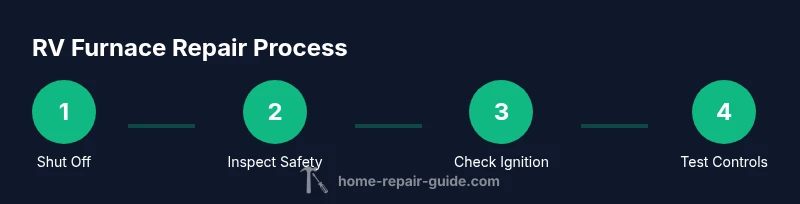
- 1
Shut off power and gas safely
Power down the furnace circuit at the panel and close the propane supply valve. Wait at least five minutes to let residual gas clear before touching any components. This prevents accidental ignition during inspection.
Tip: Label the valve and keep children away from the furnace area. - 2
Verify power and safety indicators
Check the main breaker or fuse for continuity and test the CO detector to confirm it has fresh batteries and good operation. A steady green light on the furnace control board generally indicates readiness, while a flashing code may point to a fault.
Tip: Use a non-contact tester to confirm no live circuits before touching wires. - 3
Inspect the ignition system
Open the burner access panel and visually inspect the igniter for cracks or buildup. If the igniter shows wear or glazing, replace it. A dirty or damaged igniter can prevent reliable ignition.
Tip: Handle ceramic igniters with care to avoid cracking. - 4
Check the flame sensor and burners
Remove any soot or oxidation from the flame sensor with a soft brush or alcohol-free cleaner. Inspect burner ports for blockages and clean as needed. A weak or yellow flame indicates improper combustion.
Tip: Do not bend sensor pins or apply harsh chemicals that could damage the sensor. - 5
Test thermostat and control wiring
With the thermostat in heat mode, listen for a call for heat and verify that the control board lights respond. Inspect wiring for loosened connectors or chafed insulation and reseat or replace as necessary.
Tip: Take photos before disconnecting wires so you can reconnect correctly. - 6
Reassemble and run a test cycle
Reconnect all panels, restore power and gas, and run a brief heat cycle. Observe ignition, flame stability, and blower operation for 3–5 minutes. If codes appear, consult the user manual before proceeding.
Tip: Document any error codes and symptoms for future reference.
FAQ
What is the most common RV furnace problem?
Ignition and flame sensor issues are the most common RV furnace problems, often accompanied by dirty burners or thermostat drift. Regular checks help catch these issues early.
The most common RV furnace problem is ignition or flame sensor failure, which you can often spot with a quick inspection and maintenance.
Is it safe to repair an RV furnace myself?
Basic maintenance and minor repairs are generally safe if you follow proper safety steps, shut off gas and power, and use protective gear. Avoid gas-line work or electrical rewiring unless you’re qualified.
Yes, basic maintenance is usually safe if you follow safety steps, but avoid gas lines or complex wiring if you’re not trained.
How often should I service my motorhome furnace?
Aim for an annual professional inspection and monthly DIY checks like cleaning filters and testing safety devices. More frequent use or harsh environments may require more frequent attention.
Have a yearly professional check, plus simple monthly DIY maintenance.
What tools do I need for DIY RV furnace maintenance?
Essential tools include a multimeter, screwdriver set, non-contact tester, soft brush, replacement filters, and safety gear. A propane detector is helpful for leak checks.
You’ll want basic tools like a multimeter, screwdrivers, a brush, and a new filter.
What are warning signs of a dangerous problem?
Gas smells, CO detector alarms, yellow or orange flame, or furnace overheating are red flags. Stop testing, evacuate if needed, and seek professional help.
Gas smells or CO alarms are serious; stop and get help.
Can I upgrade to a more efficient RV furnace?
Upgrades are possible but require professional assessment of venting, space, and fuel compatibility. A technician can advise on efficiency gains and installation requirements.
You can upgrade, but you’ll need a pro to assess venting and compatibility.
Watch Video
Key Takeaways
- Inspect ignition and flame sensor regularly
- Never bypass safety devices or operate with a gas leak
- DIY fixes work for basic issues but seek pro help for gas lines/electrical rewiring
- Document symptoms and codes to speed up professional service
- Schedule annual professional inspections for optimal efficiency