Heating Service Repair Near Me: Your Local Pros Guide
Find reliable heating service repair near me with expert guidance from Home Repair Guide. Learn to evaluate contractors, verify licenses, and request clear estimates for maintenance.


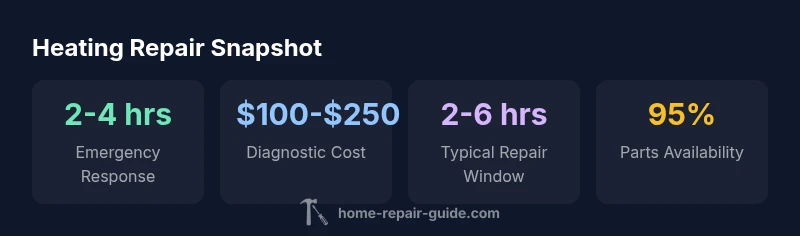
Finding reliable heating service repair near me starts with defining your system type, noting the age of the equipment, and checking local licenses. According to Home Repair Guide, reputable pros typically respond within 2-4 hours for emergencies and provide clear, written estimates with warranty details before any work is performed.
Understanding the local heating service repair landscape
When your heat goes out or your system starts acting up, the phrase "near me" takes on real meaning. Local repairs are not just about finding someone who services your brand; they involve evaluating a contractor’s responsiveness, familiarity with your specific equipment, and ability to source parts quickly. For homeowners, this often means balancing speed with quality. In practice, a good local provider will offer diagnostic visits, transparent pricing, and a clear plan for repairs. You’ll also want to consider seasonal demand: winter calls tend to spike, which can affect availability and pricing. The goal is to establish a relationship with a trusted technician or company that can respond rapidly, communicate clearly, and deliver durable solutions rather than quick fixes that fail again during a cold snap.
Key factors affecting repair quality
Quality heating repairs hinge on several factors that you can evaluate before inviting a technician into your home. First, credentials matter: a licensed mechanic with current certifications is far more reliable than someone without proof of qualifications. Second, the use of OEM or manufacturer-approved parts improves longevity and reduces the likelihood of recurring issues. Third, the diagnostic process should be thorough: a proper inspection of burners, heat exchangers, safety controls, and thermostat calibration prevents misdiagnosis. Fourth, warranties on parts and labor are a practical measure of confidence; reputable pros will stand behind their work with defined coverage. Finally, consider the service model: some providers offer flat-rate diagnostic fees, while others bill hourly with transparent caps on time spent.
Emergency vs routine maintenance: timing and decision criteria
Deciding between emergency repair and routine maintenance hinges on safety, comfort, and cost. Emergencies typically involve a sudden loss of heat in cold weather, unusual gas odors, faulty CO detectors, or alarming furnace sounds. If there is any risk of carbon monoxide exposure or if the system cannot be safely shut down, treat it as an emergency and call a licensed professional immediately. For routine maintenance, a scheduled annual or biannual tune-up can catch problems early, improve efficiency, and extend the system’s life. Proactive maintenance often yields better energy bills and reduces the risk of expensive, last-minute repairs when temperatures drop.
Common heating system types and their typical issues
Residential heating takes several forms, each with its own common repair concerns. Forced-air furnaces (gas or electric) frequently encounter ignition, flame sensor, or blower motor issues. Boilers may suffer from low pressure, air in the system, or valve faults that disrupt heat delivery. Heat pumps can face defrost control, reversing valve, or refrigerant-related problems, especially in shoulder seasons. Ductwork leaks and poor air balance are universal culprits across systems, reducing efficiency and raising costs. Understanding your system type helps you tailor questions for contractors, estimate potential repairs, and avoid unnecessary parts replacements. A basic familiarity with these categories also helps you interpret diagnostic reports and warranty terms.
How to vet a local contractor quickly
A practical vetting checklist can save you time and reduce risk. Start by confirming licensing status with your state or local authority, and request current liability and workers’ compensation insurance. Read recent customer reviews, focusing on similar heating systems and service outcomes. Request multiple written estimates that break down parts, labor, and any diagnostic fees; beware vague quotes. Ask about warranties on both parts and labor, and confirm whether they use OEM parts for your brand. Finally, verify their response time and availability, particularly during peak heating seasons, and ask for a timeline that minimizes downtime.
What to expect during a service visit
On arrival, technicians should perform a thorough safety check, including carbon monoxide detectors and gas line assessments if applicable. They will inspect electrical connections, thermostats, heat exchangers, ignition systems, and airflow to identify root causes. Expect a diagnostic report that outlines findings, recommended repairs, and an itemized quote. If a part replacement is needed, discuss options, lead times, and warranty coverage. A quality visit also includes post-repair testing, confirming heat delivery and stability of system controls. Finally, schedule follow-up maintenance to ensure long-term reliability.
Maintenance tips to minimize future repairs
Preventive care is cheaper than emergency fixes. Replace filters every 1-3 months, depending on usage and filter type. Schedule annual tune-ups to clean burners and lubrication points, check safety devices, and verify thermostat accuracy. Clean and inspect ductwork for leaks and blockages; ensure vents are unobstructed. Consider sealing or insulating ducts, especially in attics or basements. Keep an eye on unusual noises, smells, or reduced heat output, and address them promptly. Implementing a routine maintenance calendar reduces downtime and extends equipment life.
Cost considerations and budgeting for heating repairs
Heat system repairs vary by system type, fuel, and regional labor rates. Typical repair projects can involve minor component replacements or more comprehensive overhauls. To budget effectively, anticipate diagnostic fees (often a flat rate), labor hours, and the cost of parts. It’s prudent to set aside a contingency for unexpected issues discovered during service. When evaluating quotes, compare itemized costs rather than total estimates, and ask about potential long-term energy savings from recommended upgrades. The goal is a balanced plan that maintains reliability without overspending on unnecessary parts.
Safety, compliance, and best practices
Safety remains paramount in heating work. Ensure proper venting for gas-fired equipment, correct combustion air supply, and functional carbon monoxide detectors. Contractors should obtain any required permits for significant repairs and provide a written safety plan. Homeowners should follow manufacturer guidelines and local codes, especially for new installations or major replacements. If in doubt, involve a third-party safety review or inspection to certify the system’s integrity. Regular checks reduce risk to occupants and protect the home’s value.
Comparison of common heating system issues and typical repair times
| System Type | Common Issues | Estimated Repair Time (hrs) |
|---|---|---|
| Forced-Air Furnace | Ignition failure; Dirty burners; Thermostat misread | 2-6 |
| Boiler | Low pressure; Leaks; Circulator pump failure | 2-5 |
| Heat Pump | Defrost cycle issues; Reversing valve; Refrigerant leaks | 3-8 |
FAQ
What qualifies as heating service repair near me?
Local providers that diagnose and repair residential heating systems, including furnaces, boilers, and heat pumps. Look for valid licenses, insurance, and credible warranties.
Local heating pros diagnose furnaces, boilers, and heat pumps. Check licenses and warranties before booking.
How do I verify a contractor's license and insurance?
Check your state licensing board and request current certificates of liability and workers’ compensation insurance. Confirm coverage with the insurer if needed.
Ask for licenses and insurance, then verify with the issuing board or insurer.
What should I expect during a diagnostic visit?
Technicians inspect the system, test safety controls, read error codes, and provide a written estimate with recommended repairs.
The tech will diagnose, test safety and controls, and give you a written estimate.
Are maintenance contracts worth it?
They can provide regular tune-ups and discounted parts; weigh the upfront cost against anticipated savings and reliability.
Maintenance plans can save money over time if you need frequent service.
What safety concerns should I know about heating systems?
CO risk, gas leaks, venting issues, and electrical hazards. Install detectors and schedule annual inspections.
CO detectors and yearly inspections are essential for safety.
Can I perform simple upkeep myself?
Basic tasks like filter replacement and thermostat checks are fine; avoid complex repairs that require specialized tools.
Small tasks are okay, but leave complex repairs to pros.
“Regular preventive maintenance is the best defense against unexpected breakdowns, safety concerns, and high repair bills.”
Key Takeaways
- Identify your system type before requesting service.
- Always request written estimates with clear warranties.
- Schedule routine maintenance to prevent emergencies.
- Verify licenses and insurance before work begins.
- Consider maintenance plans to protect long-term reliability.