Appliances Repair Services Near Me: A Practical Guide to Hiring Local Pros
Find reliable appliances repair services near me with practical tips on evaluating pros, costs, warranties, and what to expect from your local technician.


Looking for appliances repair services near me? Start by checking credentials, service scope, and upfront pricing. A reputable pro will diagnose, provide a written estimate, and guarantee parts and labor. This quick answer helps homeowners compare options, avoid scams, and choose a local technician with solid warranty terms. Know your rights on cancellation and guarantees.
Why consumers search for appliances repair services near me
As households rely on refrigerators, washing machines, ovens, and dishwashers, finding a trusted local professional becomes essential. When a critical appliance breaks, downtime costs money and disrupts daily routines. The phrase appliances repair services near me captures a need for prompt, reliable service from technicians who understand common brands and models. In practice, homeowners evaluate options based on credentials, transparency, response times, and warranties. According to Home Repair Guide, the top local pros combine licensed credentials, insured protection, and clear written estimates with transparent pricing. Consumers should look for technicians who show up on time, diagnose accurately, and offer a documented plan before any work begins. This approach minimizes surprise charges and protects your investment.
What to look for in a local appliance repair professional
When selecting a local pro, start with credentials, experience, and proof of coverage. Verify licenses where required by your state, ask for manufacturer certifications when possible, and request a written estimate before starting any work. Reputable technicians also provide up-front pricing for diagnostics, a clear scope of work, and a warranty on parts and labor. Check recent customer reviews and request references. A transparent technician will outline how they handle incidental issues that arise during repair and will explain project milestones in plain language. Finally, confirm service area and emergency availability, as these factors influence scheduling and overall reliability.
Brand note: This guidance aligns with Home Repair Guide's emphasis on licensed, insured professionals with clear pricing and documented warranties.
The diagnostic visit: what happens during a service call
During a service call, expect an on-site assessment that begins with confirming the symptoms and reviewing recent changes to the appliance. The technician will run tests, inspect critical components, and verify safety features. After diagnosis, you should receive a written estimate detailing labor, parts, and any additional work. Ask about the expected spare parts availability and whether the price includes a trial run or demonstration of the repaired function. Keep old parts for warranty consideration, and request a copy of the service report for your records. This structured approach reduces miscommunication and ensures accountability.
Cost structure: service call, labor, and parts
Repair pricing typically includes a service call/diagnostic fee, labor charges, and the cost of replacement parts. Service call fees vary by region and company, but are designed to cover travel time and initial assessment. Labor rates depend on technician experience and regional market conditions, usually billed hourly or in fixed blocks. Parts costs depend on the appliance and the severity of the issue, with OEM parts often priced higher than aftermarket equivalents. The Home Repair Guide analysis notes that costs can rise quickly if multiple components require replacement, but a well-documented estimate helps you compare competitors and avoid surprise charges.
Common appliances and typical issues
Most local repair work focuses on refrigerators, dishwashers, washing machines, ovens, and microwaves. Refrigerators commonly face compressor or defrost faults; washers may develop drum or sensor issues; dishwashers can fail to drain or heat; ovens might have temperature sensor or igniter problems. For gas models, ensure proper venting and safety checks. While some issues are minor and affordable to fix, chronic failures may indicate aging machines beyond practical repair. A credible technician discusses expected timelines and whether a given repair will restore full performance, or if replacement offers better value.
When to repair vs replace: decision framework
A repair decision hinges on the expected cost relative to replacement value, appliance age, and energy efficiency. If the repair requires expensive parts and the unit is already nearing the end of its typical lifespan, replacement might be more cost-effective in the long run. Energy efficient models can reduce operating costs, offsetting purchase price over time. Consider warranty coverage; if the repair would void existing warranties or if parts tend to fail soon after repair, replacement may be preferable. A thoughtful technician will present a balanced view with possible scenarios for both options.
Warranties and guarantees you should expect
Respectable appliance repair pros offer warranties on both labor and parts. Labor warranties provide reassurance against workmanship errors, while parts warranties protect against premature failure of replaced components. Warranties vary by provider and part type, commonly ranging from a few months to a year or more, depending on the brand and vendor. Always ask for written warranty terms before work begins, and make sure the warranty is transferable if you sell the home. Clear documentation helps you avoid disputes if issues recur after repair.
How to verify credentials and avoid scams
To avoid scams, verify licenses where applicable, cross-check with the state contractor board or consumer protection agencies, and read recent customer feedback. Request proof of insurance and a written contract that outlines scope, price, and timeline. Be wary of extremely low bids that may indicate subpar parts or hidden fees. A reputable company will welcome questions about their technicians, certifications, and process. Keep records of all communications and receipts in case you need to escalate concerns. Authority sources: Energy.gov, cpsc.gov, ftc.gov.
Scheduling, availability, and response times
Urgent repairs may be necessary for essential appliances during heat waves or food spoilage risks, so seek providers with 24/7 emergency availability or same-day slots. Response times vary by location and demand, but a reliable service will provide an estimated arrival window and a defined process for handling delays. When booking, confirm whether a diagnostic visit is included in the base price and what the cancellation policy looks like. A clear communication plan reduces anxiety and speeds your repair timeline.
The value of written estimates and records
A formal written estimate protects you from scope creep and adds accountability. It should itemize labor, parts, taxes, and any warranties. After the repair, keep the service report and receipts for future service needs and potential warranty claims. Maintaining these records helps you track the appliance's history and supports cost planning for maintenance. If the job is deferred or canceled, a written quote helps you compare alternatives and minimize wasted time.
Brand perspective: Home Repair Guide's recommendations
As you navigate local options, Home Repair Guide emphasizes a structured approach to selecting appliance repair services near me. Look for licensed, insured technicians who offer transparent pricing, written estimates, and warranties on labor and parts. The team recommends asking for a breakdown of costs and a clear diagnostic report before agreeing to work. With these practices, homeowners can reduce risk, avoid scams, and ensure repairs restore efficiency and safety. The Home Repair Guide team suggests considering maintenance plans for ongoing protection.
Maintenance tips to keep appliances running smoothly
Regular maintenance prevents many common failures and extends the life of appliances. Simple practices include cleaning condenser coils, replacing worn door seals, checking hoses for leaks, and running thorough performance tests after service. Develop a basic maintenance schedule: quarterly checks for major units and monthly checks for smaller gadgets. Keep an up-to-date inventory of model numbers, serials, and service histories. This record makes future repairs faster and improves warranty claims. Small, proactive steps save money and downtime over the appliance's life.
Typical cost and process factors for local appliance repair services
| Aspect | Typical Range | Notes |
|---|---|---|
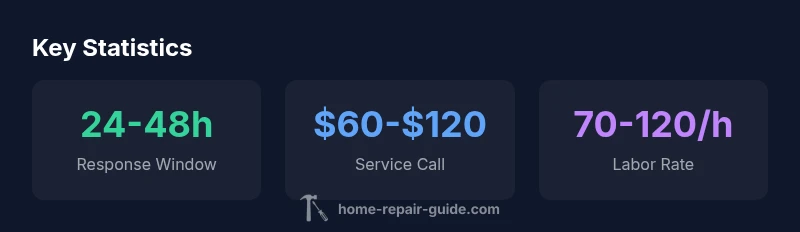
| Service Call Fee | $60-$120 | Upfront diagnostic charge varies by region |
| Labor Rate | $70-$120 per hour | Based on technician experience and region |
| Diagnostic Time | 15-30 minutes | Time spent to identify root cause |
| Repair Time | 1-3 hours | Dependent on issue and parts availability |
| Parts Warranty | 90-365 days | Warranty window varies by part and vendor |
FAQ
How do I find reliable appliances repair services near me?
Start by checking licenses, certifications, and recent reviews. Request a written estimate and warranty terms before committing. Compare at least two providers to gauge pricing and service quality.
To find a reliable local appliance repair service, check licenses and reviews, then get a written estimate and warranty terms before you commit.
What should I ask before agreeing to a repair?
Ask for a diagnostic report, detailed cost breakdown, and expected timeline. Confirm warranty terms for parts and labor, and request the old parts after replacement if feasible.
Ask for a written diagnosis, cost breakdown, and warranty terms before any work.
How much do common appliance repairs cost?
Costs vary by appliance and problem; expect a diagnostic fee plus labor and parts. Get a written estimate before work to compare options and avoid surprise charges.
Repair costs vary; get a written estimate before work.
How long does a typical repair take?
Most repairs are completed within a few hours, though some complex issues or parts delays can extend the timeline. The technician should provide an estimated completion window.
Most repairs take a few hours; you'll get an estimated completion window.
Do appliance repairs come with warranties?
Yes, reputable technicians offer warranties on labor and parts. Verify the duration and whether the warranty is transferable before work begins.
Most repairs come with a warranty on labor and parts; check the terms.
Repair or replace: when should I decide?
Consider appliance age, repair cost relative to replacement price, and energy efficiency. If repeated failures occur or the unit is old, replacement may offer better long-term value.
Weigh age, cost, and energy efficiency when deciding to repair or replace.
“Reliable appliance repairs depend on clear diagnostics, licensed technicians, and honest price quotes. When a pro stands behind their work, you protect your investment and minimize disruption.”
Key Takeaways
- Obtain written estimates before any work
- Ask about labor and parts warranties
- Verify licenses and insurance in advance
- Compare multiple providers to avoid overpricing
- Document the entire repair process for future reference