Heating and AC Repair Near Me: A Practical Guide to Finding the Right Pro
Find trustworthy heating and AC repair near you with this practical guide. Learn how to evaluate HVAC pros, typical costs, common fixes, and when to hire licensed technicians for durable comfort.


To find reliable heating and AC repair near you, start with licensed HVAC pros, verify insurance, and read recent reviews. Request written estimates and compare warranties, response times, and parts guarantees. In winter, prioritize 24/7 availability. A nearby contractor with transparent pricing and a solid parts-and-labor warranty is usually the best long-term choice.
The value of local heating and AC repair expertise
When your home comfort depends on a furnace, heat pump, or central AC, nearby expertise matters. Local HVAC technicians understand climate-specific loads, building codes, and seasonal demand. The Home Repair Guide team notes that proximity often correlates with faster response times, easier scheduling, and clearer follow-up. In this article we explore how to assess local options, why a regional specialist saves money in the long run, and how to verify credentials, read reviews, and check for transparent pricing. For homeowners seeking reliable heating ac repair near me, the goal is to find a licensed professional who communicates clearly, offers written estimates, and stands behind their work with a warranty.
How to vet technicians near you
Verifying the quality and reliability of a nearby HVAC provider starts before you pick up the phone. Check licensing and insurance, and ask for at least three references. Look for transparent written estimates that break out labor, parts, and any diagnostic fees. Read recent customer reviews across multiple platforms and note the consistency of service, timeliness, and problem-solving. Confirm that the contractor aligns with local codes and building standards. Finally, compare warranties for both parts and labor and ensure there is a clear service agreement.
Common HVAC repair tasks and plausible timelines
Most heating and AC repairs fall into a few common categories: thermostat or control board failures, capacitor or motor issues, refrigerant leaks, blower or duct problems, and ignition or heat exchanger concerns. While timelines vary by system age and complexity, simple thermostat changes or blown fuses can be resolved the same day, whereas refrigerant-related leaks or heat exchanger work might require a follow-up visit. Understanding the typical fault patterns helps homeowners communicate symptoms efficiently to the technician.
Cost considerations and budgeting for repairs
Costs for heating and AC repairs vary by region, system type, parts, and labor. Expect itemized quotes that separate diagnostic charges, labor, and parts. Warranties can reduce long-term cost, so compare coverage for both components and deployment. Be mindful of hidden charges such as trip fees or overtime rates. Homeowners should request written estimates and ask for a worst-case and best-case scenario to plan their budget with confidence.
DIY vs professional repair: safety, limits, and when to call a pro
HVAC systems involve electricity, refrigerant, and pressurized lines. DIY attempts can create safety and health risks, including electrical shock, freezer burn, or gas leaks. Reserve DIY for noncritical maintenance like filter replacement or coil cleaning from the exterior with power turned off. For anything involving refrigerants, ignition, combustion safety, or sealed components, hire a licensed professional to ensure compliance with codes and warranty protections.
Maintenance strategies to extend system life
Preventive maintenance reduces breakdowns and keeps efficiency high. Schedule an annual professional tune-up, replace filters regularly, and inspect ductwork for leaks. Clean outdoor condenser coils and clear debris from around the unit. A small upfront maintenance plan can yield long-term savings by improving reliability and lowering energy usage, especially in regions with extreme seasonal demands.
Emergency readiness and winter prep
In cold months, a heating failure is more than an inconvenience—it’s a safety risk. Prepare by locating a trusted 24/7 HVAC provider and keeping emergency contact information accessible. Maintain a temporary space with programmable thermostats to regulate heat, and have a basic tool kit and flashlight on hand. When you sense a sudden loss of heat, document symptoms and call your provider for rapid triage.
Choosing a local HVAC warranty plan and service agreements
A robust service contract should outline response times, coverage for parts and labor, and clear exclusions. Look for a plan that includes annual preventive maintenance, priority scheduling, and transparent terms. Compare plans across providers to identify gaps in coverage and ensure you understand renewal costs. A good warranty plan saves money and reduces downtime during peak seasons.
Common HVAC repair service aspects and considerations
| Service Aspect | Typical Range | Notes |
|---|---|---|
| Diagnostic Visit | Variable by region | Ask for a written quote before work begins |
| Labor and Repair Parts | Region- and model-dependent | Request itemized quotes and warranties |
| Diagnostics vs Emergent Repair | Same-day common fixes; complex issues take longer | Confirm availability for emergencies |
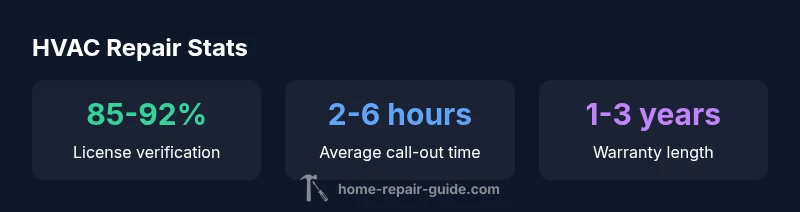
| Warranty Coverage | 1-3 years typical on parts and labor | Check exclusions and renewal terms |
FAQ
What should I check before hiring a heating and AC repair near me?
Always verify licensing and insurance, ask for references, and confirm warranty terms. Compare at least three quotes and ensure the technician provides a written estimate and a clear scope of work.
Check licenses and insurance, ask for references, and compare three quotes with written estimates and clear scopes.
What is the typical cost for HVAC repair?
Costs vary by region and problem. Expect a quote that breaks out diagnostic fees, labor, and parts, with additional charges for emergencies or after-hours service.
HVAC repair costs vary; get a written estimate that breaks out diagnostic, labor, and parts.
How long does a typical HVAC repair take?
Most fixes take a few hours, but complex issues can require more time or multiple visits depending on parts availability and system age.
Most repairs are a few hours; complex problems may need more time or follow-up visits.
When should I replace instead of repair?
If failures are frequent, energy bills are rising, or the equipment is old and inefficient, replacement may be more cost-effective in the long run.
If failures are frequent or the unit is old, replacement may be the better option.
Are there energy efficiency considerations?
Upgrading to high-efficiency equipment or smarter thermostats can reduce energy use. Have a professional assess potential efficiency gains before buying new equipment.
Consider energy-efficient options and a professional efficiency assessment.
What maintenance helps prevent future breakdowns?
Regular filter changes, coil cleaning, and annual professional tune-ups reduce downtime and keep systems running efficiently.
Change filters regularly, clean coils, and schedule annual tune-ups.
“"Reliable HVAC repair relies on transparency, licensed technicians, and clear warranties. Always ask for written estimates and a service agreement to protect your investment."”
Key Takeaways
- Prioritize licensed, insured local pros for faster service
- Obtain written estimates and compare warranties
- Know when to DIY (simple maintenance) vs hire (dangerous or complex repairs)
- Budget for diagnostic fees, labor, and parts with transparent pricing
- Invest in annual maintenance to extend system life