Heat Pump Repair Near Me: Your Local Guide
Learn how to locate reliable heat pump repair near me, compare quotes, and maintain your system with practical, step-by-step guidance from Home Repair Guide.


You can safely diagnose common heat pump issues and locate trusted repair near me by checking licenses, reading reviews, and requesting transparent estimates. Start by confirming your unit model, noting symptoms, and scheduling a diagnostic visit. According to Home Repair Guide, compare at least three local HVAC pros and ask about parts availability and labor warranties.
Understanding heat pump basics and why local repair matters
Heat pumps are efficient, all-season climate control systems that transfer heat using refrigerant cycles. A typical heat pump includes an outdoor condenser, an interior air handler, defrost controls, a reversing valve, and a smart thermostat. When a heat pump malfunctions, the issue may lie in electrical components, refrigerant flow, or outdoor conditions such as dirty coils or obstructed airflow. Finding a local repair provider near you matters because proximity reduces travel time, improves diagnostic follow-up, and helps ensure timely service during peak heating and cooling seasons. According to Home Repair Guide, licensing, insurance, and transparent warranties are indicators of credible service, and locally familiar technicians are likelier to offer accurate cost estimates and dependable follow-up. The right pro can explain whether the problem is a simple fix—like cleaning a coil or replacing a capacitor—or something that requires a full component replacement. In many regions, heat pumps are designed to be repaired rather than replaced, so a skilled local technician can save you money while preserving energy efficiency. Keep in mind that reliability comes from a mix of diagnostic skill, access to the correct parts, and a clear, written plan for the repair. With a careful search for heat pump repair near me, homeowners can balance cost, speed, and long-term performance.
How to evaluate local HVAC pros near me
Start by verifying licenses and insurance. Ask for license numbers and confirm them with the appropriate state or city boards. Read several reviews to gauge reliability, and look for consistent praise about clarity, punctuality, and fair pricing. Request a written diagnostic with itemized costs, and ask about warranties on both parts and labor. Check whether the contractor provides a clear scope of work and a planned sequence of repairs. For heat pumps, prioritize pros who can explain defrost controls, refrigerant handling, and emergency service options. According to Home Repair Guide analysis, licensed technicians who offer transparent quotes and warranties tend to deliver more durable results and better value over time.
Common heat pump failure symptoms and quick checks
Heat pumps communicate problems through several telltale signs. If your home is not heating or cooling adequately, or if you notice uneven temperatures between rooms, start by checking the air filter and indoor blower for obstructions. A dirty filter reduces airflow and makes the system work harder, increasing energy consumption and wear on components. Look at the outdoor unit: clear at least 2 feet of clearance around the condenser, remove debris, and inspect for ice buildup on the coil, which can indicate low refrigerant or a defrost control issue. Listen for unusual noises like rattling, buzzing, or screeching, which can point to loose mounting, failing bearings, or a failing capacitor. If the system cycles on and off too frequently, it may be struggling with thermostat wiring or refrigerant pressure. A failing defrost sequence can cause frost on outdoor coils in cold weather, reducing efficiency. Quick checks are not a substitute for a professional diagnosis, but they can help you describe symptoms clearly to a repair technician and avoid unnecessary visits. If you spot refrigerant smells or signs of a leak, do not operate the unit and contact a licensed HVAC technician immediately.
How to compare quotes and ensure fair pricing
When you receive bids for heat pump repair near me, ask for a detailed, itemized quote that separates parts, labor, diagnostic fees, and any potential refrigerant costs. Beware of lowball estimates that omit essential components or warranty terms. A credible contractor will provide a written scope of work, a clear timeline, and a warranty on parts and labor. Compare the price against the system’s age and energy efficiency rating; a repair that preserves a high SEER/HSPF rating and uses quality parts can be a better long-term value than the cheapest fix. Request references or case studies from similar repairs and ask about the availability of same-day service for urgent situations. Ensure that the quote includes a plan for testing after the repair and a method for addressing any lingering issues. From a transferability and risk perspective, knowledge of local weather patterns, the typical failure points in your model, and the technician’s access to the exact replacement parts all influence the final cost and outcome. Based on Home Repair Guide analysis, transparent quotes, and clearly stated warranties are linked to higher customer satisfaction and fewer service callbacks.
Maintenance tips to reduce future repairs
Preventive maintenance is your best defense against surprise outages. Schedule a professional inspection at least once a year, ideally before peak heating or cooling seasons. Between visits, replace or clean the air filters every 1-3 months, depending on usage and indoor air quality; this simple step keeps airflow steady and reduces strain on the compressor. Keep outdoor coils free of leaves and debris, and ensure the unit has adequate clearance for airflow. Check the condensate drain line to avoid moisture-related damage and test the thermostat’s responsiveness to temperature changes. If your system uses a smart thermostat, review energy-saving settings and ensure firmware is up to date. A quick DIY check can include listening for abnormal noises when the system starts, observing any frequent cycling, and verifying that window coverings or rugs aren’t obstructing vents. A well-maintained heat pump typically requires fewer emergency repairs and delivers higher energy efficiency. Remember to schedule annual maintenance with a licensed pro, who can perform a refrigerant leak check and verify electrical connections and safety devices.
Safety and warranty considerations
Electrical work, refrigerant handling, and working on outdoor equipment carry safety risks. Before any inspection, switch off the power at the main breaker and, if possible, lock the panel to prevent accidental energization. Never attempt to repair refrigerant lines or discharge refrigerant yourself; this must be handled by a licensed technician under EPA regulations. Ask every contractor about their liability insurance and workers’ compensation coverage; request a written warranty that covers both parts and labor. Clarify what the warranty excludes, such as improper installation or damage from external conditions. If a repair is extensive or involves major components, you may be offered a service plan that includes priority scheduling and diagnostic follow-ups. For homeowners, keeping detailed records of past repairs, software updates, and parts replacements can help future technicians diagnose issues more efficiently. The Home Repair Guide team recommends placing a premium on transparency, safety, and a service provider who stands behind their work with a clear warranty.
Authority sources
- https://www.energy.gov/energysaver/heat-pumps
- https://www.energystar.gov/products/heating_cooling/heat_pumps
- https://www.epa.gov/iaq/air-cleaners-and-heat-pumps
Tools & Materials
- Digital multimeter(Test voltage, continuity, and resistance safely)
- Non-contact voltage tester(Verify power is off before touching wires)
- Screwdriver set (Phillips and flathead)(Access panels and mounting hardware)
- Nut drivers(Tighten or loosen electrical connections)
- Safety gear (gloves, safety glasses)(Protect hands and eyes during inspection)
- Repair manual or model-specific service guide(Wiring diagrams and specs for your unit)
- Patterned cloth or coil brush(For cleaning outdoor condenser fins)
- Vacuum pump and gauges(Only for trained technicians handling refrigerant)
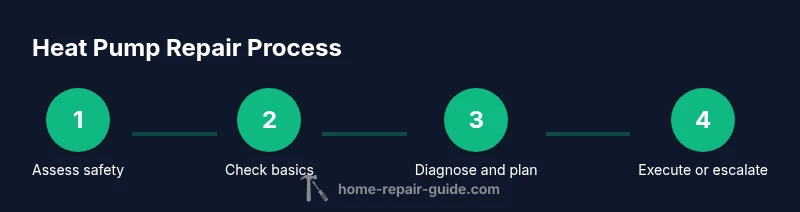
Steps
Estimated time: 1-2 hours
- 1
Power down and prepare
Locate the main breaker for the heat pump circuit, switch it off, and remove the cover panel. Confirm there is no voltage present using a non-contact tester. This reduces the risk of electric shock during inspection.
Tip: Lockout the breaker if others might re-energize the circuit. - 2
Identify system type and model
Record the model and serial numbers from the outdoor unit and indoor air handler. This helps you pull the correct service manual and ensure compatible parts if a replacement is needed.
Tip: Take photos of labeling before disconnecting any wires. - 3
Check electrical connections
Inspect accessible wiring for loose or corroded connections. Tighten where appropriate, and look for burnt smells or heat discoloration that signal resistive losses.
Tip: Do not over-tighten screws; avoid bending wires. - 4
Inspect refrigerant lines (non-technical check)
Look for obvious signs of damage, oil staining near joints, or ice formation on the outdoor coil. A refrigerant issue typically requires a licensed tech and cannot be resolved by DIY service.
Tip: If you suspect a leak, stop and contact a pro immediately. - 5
Test operation basics
With power restored (if you are proceeding), observe the thermostat response, defrost cycle, and compressor operation. Note any abnormal cycling, extended run times, or insufficient heating/cooling.
Tip: Document symptoms with times and temperatures for the technician. - 6
Decide on repair vs escalation
If symptoms persist after basic checks, determine whether it’s cost-effective to repair or if a replacement part/system upgrade is more prudent. Consider lifespan, efficiency, and warranty terms.
Tip: When in doubt, request a staged plan and a second opinion.
FAQ
What qualifies as a licensed HVAC contractor for heat pump repair?
A licensed HVAC contractor has current, valid state or local credentials and carries liability insurance. Verify license numbers and contact the issuing board. Always request references and proof of insurance before work begins.
Choose a licensed, insured HVAC contractor and verify their credentials with the issuing board.
How do I compare repair quotes for heat pumps?
Ask for a detailed, written estimate that itemizes parts, labor, diagnostics, and any refrigerant costs. Compare warranties, response times, and whether the price includes post-repair testing.
Get written, itemized quotes with warranties and clear post-repair testing details.
Can I repair refrigerant components myself?
No. Refrigerant handling and leak repair must be performed by a licensed technician under EPA regulations due to safety and environmental concerns.
Refrigerant work should always be done by a licensed professional.
What maintenance can extend my heat pump life?
Regular filter changes, coil cleaning, and annual professional inspections help prevent major failures and keep efficiency high.
Keep up with routine maintenance to reduce big repairs.
What costs should I expect for heat pump repairs?
Costs vary by issue and region; seek multiple quotes and ensure the estimate covers parts, labor, and warranties. Avoid surprise charges by requesting a written scope.
Prices vary; ask for details in writing and compare warranties.
Is DIY repair safe for heat pumps?
Basic maintenance is possible for some homeowners, but avoid electrical work and refrigerant handling. When in doubt, call a licensed professional.
Consider safety first; call a pro for electrical or refrigerant work.
Watch Video
Key Takeaways
- Verify licensing and insurance before hiring.
- Get detailed, written quotes with clear warranties.
- Describe symptoms precisely to speed diagnosis.
- Perform regular maintenance to reduce future repairs.
- Prioritize safety and professional handling of refrigerant.