Ford F-150 AC Repair: Step-by-Step Guide
Learn how to diagnose and repair common Ford F-150 air conditioning issues with a practical, safety-focused approach. This Home Repair Guide tutorial covers tools, steps, warnings, and when to seek professional help for reliable cooling.


By the end of this guide you’ll be able to identify typical Ford F-150 AC problems, follow a safety-first diagnostic process, replace common worn parts, and recharge the system correctly. You’ll also know when refrigerant handling requires a licensed technician. This is a practical, step-by-step approach designed for homeowners and DIY enthusiasts.
How the Ford F-150 AC system works
According to Home Repair Guide, the Ford F-150 air conditioning system operates as a closed refrigerant loop that absorbs heat from the cabin and releases it outside the vehicle. Core components include the compressor, condenser, evaporator, expansion device, and a network of hoses and fittings. The compressor pushes high-pressure refrigerant, which is cooled in the condenser, expands through the expansion device, and absorbs heat in the evaporator before returning to the compressor. In practical terms, when one part falters—such as a leaky seal, a worn compressor clutch, or a blocked orifice tube—the system struggles to move refrigerant effectively, resulting in weak cooling and uneven temperatures. Across model years, refrigerant types and replacement intervals vary, so always consult the factory manual.
For homeowners, understanding this cycle helps in diagnosing symptoms without assuming a single failed part. Small leaks, improper refrigerant charge, or electrical issues in the climate control system can mimic a major component failure. The key is to separate symptoms from root causes by checking pressures with the correct gauges, validating power to the AC clutch, and verifying airflow from the cabin vents. The Home Repair Guide team emphasizes starting with the fundamentals before swapping parts.
Safety and prep before you begin
Safety is the foundation of any automotive repair, especially when the air conditioning system is involved. Begin by disconnecting the negative battery terminal to avoid unexpected electrical shorts while you work near the blower, wiring, and control modules. Wear eye protection and gloves, and work in a well-ventilated area to avoid inhaling refrigerant fumes if a leak occurs. Keep a clean, organized workspace and have a dedicated container for any removed parts that could create a hazard if left in the crew area. Be aware that some Ford F-150 models use different refrigerants depending on year; confirm the exact specification for your truck before proceeding. Always follow local regulations for refrigerant handling and disposal, as improper release is harmful to the environment and may be illegal in your jurisdiction.
Before starting, gather the model year and service manual for your specific F-150. This information helps you confirm the correct refrigerant type, the expected pressure ranges on the gauges, and the precise steps to access the components you may need to service. If you lack confidence in any step—especially around refrigerant recovery—pause and consider professional service. The emphasis is on careful preparation and awareness of safety rules.
Symptoms to look for and initial checks
Common Ford F-150 AC symptoms include warm air from vents when the system is running, weak airflow, unusual noises from the compressor clutch, or a dashboard warning light related to the climate control system. If the engine warms up under climate control load or if the air conditioning cycles on and off erratically, that can signal a pressure or electrical fault. Start with non-invasive checks: verify that the fan is functioning at all speed settings, confirm that the thermostat is set to cool, and ensure the cabin air filter is not clogged; a blocked filter can reduce perceived cooling even when refrigerant flow is intact. If you hear a hissing sound, feel a coolant-like smell, or observe visible leaks around hoses or fittings, address leaks promptly because a refrigerant loss reduces cooling capacity and can damage the compressor.
When you approach diagnostics, use a color-accurate flashlight to inspect visible lines for staining or oil residue that indicates a leak. Take notes on the symptom timing, whether it occurs at idle or higher RPM, and under which outside temperature conditions the problem appears. The Home Repair Guide analysis shows that most cooling problems arise from leaks, improper refrigerant charge, or worn components, not from a single mysterious failure. Documenting symptoms helps you decide whether to proceed with more advanced testing or call a professional.
Diagnostic procedure: basic tests you can perform
A structured diagnostic workflow saves time and reduces the risk of misdiagnosis. Begin by confirming electrical power to the AC clutch and blower motor using a multimeter or a test light. If the clutch does not engage when the system calls for cooling, the issue may lie with the clutch relay, fuse, or control module. Next, test the refrigerant pressures with a manifold gauge set while the engine is running at idle and the AC is set to maximum cold. Compare readings against the Ford service manual’s specified pressure range for your model year. If pressures are too high or too low, it indicates either an overcharged system, a leak, or a malfunctioning expansion device. A leak test with UV dye or an electronic leak detector can identify small leaks that refrigerant bottles alone cannot confirm. Based on Home Repair Guide research, many failures originate from a slow leak rather than a sudden catastrophic rupture, so repeated checks over several days may reveal a slow deterioration.
If you discover electrical faults, check wiring harnesses and connectors near the compressor and under the dash. Loose grounds or corroded terminals can cause intermittent operation that mimics a mechanical fault. Always disconnect power before manipulating electrical connectors and keep track of any diagnostic codes with the vehicle’s on-board computer. A systematic approach minimizes wasted parts and ensures you address the root cause rather than symptoms.
When to replace components: compressor, condenser, or receiver-drier
If diagnostics point toward a worn compressor, a leaking condenser, or a degraded receiver-drier, replacement is often the most reliable fix. A failing compressor clutch will cause the system to fail to engage even when pressures are correct, while a compromised condenser may present with warm air due to limited heat rejection. The receiver-drier is essential for removing moisture and filtering contaminants; a saturated desiccant can cause rust and corrosion in the system that reduces performance and can lead to refrigerant boiling or compressor damage. Replacing multiple components at once can improve reliability if the vehicle has high mileage and recently showed multiple symptoms.
Before replacing major parts, verify that all seals and o-rings are correct for the Ford F-150 year and engine configuration. Use fresh refrigerant lines and appropriate lubricant per the service manual. After any component replacement, the system must be evacuated and recharged with the proper amount of refrigerant and oil, then tested for leaks and proper cooling. The Home Repair Guide team stresses documenting the parts changed and the pressures observed during testing to support any future warranty claims.
Evacuation and refrigerant recovery: why this is not a DIY step for most owners
Refrigerant evacuation and recovery require certified equipment and training to avoid environmental harm and personal injury. The system must be evacuated to remove moisture and air, and then charged with the correct refrigerant type and oil quantity. Attempting to recover or evacuate refrigerant without the proper licenses and equipment can violate environmental regulations and void warranties. If the diagnostic results indicate a refrigerant loss or if the system has been opened, arrange for a licensed technician to recover the refrigerant first and then complete the repair. This step protects the system and ensures code compliance.
In many jurisdictions, technicians must hold EPA Section 608 credentials to handle refrigerants. The Home Repair Guide team recommends prioritizing safety and legal compliance over shortcut fixes. If you do not have access to the required equipment or documentation, proceed to the next step only with professional assistance in mind.
Charging the system: refrigerant type and target charge
Selecting the correct refrigerant type for your Ford F-150 is essential. Older models commonly use R-134a, while newer configurations may use R-1234yf. Verify the exact specification in the owner’s manual or a reliable service bulletin before charging. Use a high-quality manifold gauge set to measure both high and low pressure while the system runs with the vehicle in maximum cooling. The goal is to achieve the target pressures listed by Ford for your year and engine configuration, then verify the operating temperature of the discharge air. Do not overcharge, which can increase head pressure and damage the compressor. If the system is declared leak-free, gradually add refrigerant in small increments, and recheck pressures after each adjustment. The Home Repair Guide analysis recommends a cautious, data-driven approach rather than guessing the charge amount.
Always use an approved charging procedure and observe safety guidelines for high-pressure systems. Keep refrigerant canisters upright and away from heat sources. Wear eye protection and avoid inhaling any fumes. If you are unsure about the correct oil type or charge amount, consult the service manual or a licensed technician.
Leak detection and test drive: confirming a solid repair
After charging, perform a leak test using UV dye or an electronic detector to ensure there are no persistent leaks. A test drive helps confirm consistent cooling across fan speeds and driving conditions. Monitor the performance by recording the cabin temperature differential between inside the vehicle and outside air. If cooling remains subpar or if the system shows rapid pressure changes, revisit the diagnostic steps to check for missing seals or hidden leaks. Persistent issues may indicate a hidden leak, a compromised seal, or a microfracture in a line that needs replacement. The goal is to achieve stable, repeatable cooling with no leaks over several drive cycles. If leaks persist, consult the manual for service bulletins or schedule a professional inspection.
As a reminder, regular maintenance including cabin filter replacement and periodic system checks can prevent many AC problems from escalating. The Home Repair Guide team emphasizes routine inspections as a practical way to sustain performance between major repairs.
Maintenance and prevention for Ford F-150 AC
Proactive maintenance helps keep the Ford F-150 AC system reliable. Schedule periodic inspections of hoses, seals, and the compressor belt for wear and tension. Check the cabin air filter and replace it as needed to maintain airflow and efficiency. Keep an eye on the recirculation function to prevent stale air and reduce load on the cooling system. For older models, replace the receiver-drier at intervals recommended by Ford’s service documentation to prevent moisture-related corrosion and compressor damage. Clean the exterior condenser fins and remove debris that can impede airflow during hot months. Maintaining a consistent service schedule reduces the likelihood of emergency repairs and can extend the life of the entire air conditioning system. The Home Repair Guide team recommends creating a simple maintenance plan and keeping a log of repairs for future reference.
Finally, always be mindful of environmental regulations related to refrigerants. If you suspect a leak, address it promptly with a professional, as a small leak can become a larger issue in extreme heat or high mileage.
Authority sources and next steps
For readers seeking authoritative guidance, refer to the following sources for refrigerant handling and vehicle HVAC systems, including Ford F-150 compatibility and recommended service practices:
- EPA, Section 608 Refrigerant Recycling requirements: https://www.epa.gov/section-608-refrigerant-recycling
- U.S. Department of Labor (OSHA) safety considerations for automotive work: https://www.osha.gov
- DOE/ENERGY-related guidance on efficient vehicle cooling and maintenance: https://www.energy.gov/eere/vehicles/articles
These sources support safe, compliant, and effective AC repair practices and complement the practical steps outlined in this guide. If you encounter a condition that falls outside routine maintenance, or if you lack the proper tools for refrigerant handling, the Home Repair Guide team recommends enlisting a qualified technician to ensure safety and compliance.
Tools & Materials
- Ford F-150 service manual (year-specific)(Confirm refrigerant type and system layout for your year/model)
- Manifold gauge set (high/low sides)(Ensure it supports the refrigerant in your truck (R-134a or R-1234yf))
- Vacuum pump and refrigerant recovery machine(Required for safe evacuation and compliance with regulations)
- Assorted O-rings and service seals(Use OEM-spec seals for the Ford F-150 year)
- R-134a or R-1234yf refrigerant (as specified)(Do not mix refrigerants; follow the manual)
- Car battery disconnect tool(Useful for safety when working near electrical components)
- Leak-detection dye or electronic detector(Helps locate slow leaks)
- Protective gloves and eye protection(Nitrile gloves and impact-rated eye protection)
Steps
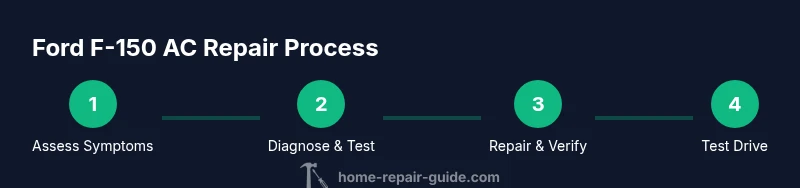
Estimated time: 2-6 hours
- 1
Assess symptoms and confirm safety
Document the exact symptoms, check for warning lights, and verify that the vehicle is parked in a safe, ventilated area. Turn off the engine and ensure the vehicle is stable before opening any panels. PPE should be worn at all times.
Tip: Log the symptoms and take photos for reference when you discuss with a tech. - 2
Power down and access the AC components
Disconnect the negative battery terminal to prevent accidental shorts. Remove the necessary panels to access the compressor, condenser, and radiator area as described in the service manual.
Tip: Keep fasteners organized in a labeled tray. - 3
Diagnose with gauges and electrical checks
Connect the manifold gauge set and run the engine with AC on max. Check high and low pressures against the Ford spec. Inspect the clutch coil and wiring for continuity and proper engagement.
Tip: If the compressor clutch does not engage, test the relay and fuses before replacing components. - 4
Plan for refrigerant recovery if needed
If refrigerant needs to be recovered, do not proceed without a certified recovery device. Evacuate the system per EPA guidelines and dispose of recovered refrigerant properly.
Tip: Never vent refrigerant to the atmosphere. - 5
Replace faulty components
If diagnostics point to a worn compressor, damaged condenser, or dried receiver, replace the affected parts with OEM-spec equivalents. Reinstall seals and double-check connections.
Tip: Replace multiple worn parts if the system has high mileage to improve reliability. - 6
Evacuate, charge, and seal the system
Evacuate the system to remove moisture, then charge with the correct amount of refrigerant and oil as per the manual. Check for leaks after charging and ensure all seals are tight.
Tip: Charge in small increments and verify pressures after each increment. - 7
Test cooling and validate operation
Run the vehicle in various conditions (idle, drive, high fan speed) and confirm consistent airflow and temperature. Confirm no leaks and correct fan operation across speeds.
Tip: Document the final pressures and temperatures for warranty purposes. - 8
Document and finish
Record what parts were replaced, the final gauges readings, and the test results. Reassemble panels and clean the work area. Schedule periodic checks for preventative maintenance.
Tip: Maintain a repair log for future reference and resale value.
FAQ
Is it safe to attempt Ford F-150 AC repair yourself, or should I hire a pro?
DIY work can be safe for non-refrigerant tasks like checking airflow and replacing cabin filters. However, refrigerant handling requires a licensed technician and proper recovery equipment in most areas. If in doubt, consult a professional to avoid environmental harm and warranty issues.
DIY can handle non-refrigerant tasks, but refrigerant work should be left to a licensed technician for safety and compliance.
What are common signs my Ford F-150 AC needs service?
Common signs include warm air from the vents, weak airflow, unusual noises from the compressor, and fluctuating cooling. Leaks, a high cabin temperature, or dashboard warnings also indicate a potential issue requiring diagnosis.
Look for warm air, weak airflow, strange noises, or leaks as red flags for service.
Can I recharge the system myself?
Recharging is possible for some simple systems, but it requires correct refrigerant type, pressure readings, and a steady hand. Most Ford F-150 repairs involving leaks, compressor, or the receiver-drier should be performed by a professional.
You can attempt a recharge if you have the right gauge set and the exact refrigerant, but be cautious.
Which refrigerant does a Ford F-150 use?
Older F-150s commonly use R-134a, while newer configurations may use R-1234yf. Always verify the year and engine specs in the service manual before purchase or charging.
Check your truck year to confirm whether it uses R-134a or R-1234yf.
How long does a typical AC repair take?
A straightforward diagnosis and part replacement can take 2-4 hours, while a full evac, recharge, and leak repair may require 4-6 hours or longer depending on access and parts availability.
Expect a few hours for a simple fix or longer for a full service with evac and recharge.
Do I need a license to handle refrigerants?
Yes. In the United States, handling refrigerants typically requires EPA credentials (Section 608) and proper recovery equipment. Check your local regulations before proceeding.
Yes, refrigerants require EPA credentials and proper equipment.
What maintenance helps prevent Ford F-150 AC problems?
Regularly replace the cabin air filter, inspect hoses for cracks, keep the condenser clean of debris, and schedule periodic checks of the refrigerant system. Early attention to minor leaks reduces large repairs later.
Keep filters clean, inspect hoses, and service early to prevent big problems.
What should I do if I detect a refrigerant leak?
If you suspect a leak, stop driving the vehicle if safe, and contact a licensed technician promptly. Leaks can worsen and cause system damage and environmental harm if not handled correctly.
If you detect a leak, stop and call a qualified tech.
Watch Video
Key Takeaways
- Identify typical AC problems with symptom checks
- Prioritize safety and legal refrigerant handling
- Use the correct refrigerant and charge amount
- Document steps and test results for warranty clarity
- Seek professional help when refrigerant handling is required