Why Is My Service Not Working? A Practical Troubleshooting Guide
Facing a service that won’t work? This urgent, step-by-step guide helps homeowners diagnose power, connectivity, and configuration issues fast, with safe fixes and clear next steps from Home Repair Guide.


According to Home Repair Guide, most service failures come from a simple root cause: power, connection, or misconfiguration. Start by verifying power, rebooting the device, and checking service status. If these basics don’t fix it, follow the step-by-step diagnostic flow to isolate the exact issue and apply the correct fix.
Quick Diagnostics You Can Do in Minutes
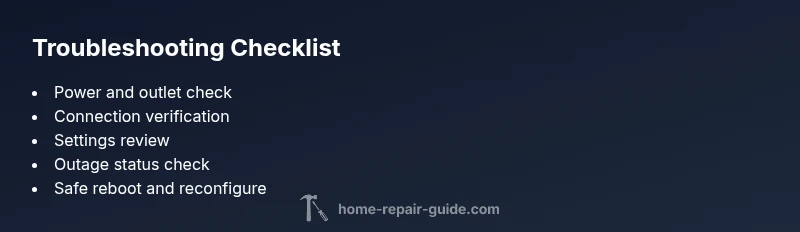
If you’re asking 'why is my service not working', you’re not alone. In most cases, the cause is one of a few simple issues: power, connectivity, or misconfiguration. According to Home Repair Guide, you can identify and fix many problems with a calm, methodical checklist. Start by confirming the device is plugged in, the outlet has power, and the power switch is ON. If a restart option is available, perform a clean reboot. Look for error codes or blinking lights and check any official outage notices. If an outage is reported by the provider, you may need to wait; otherwise, proceed with the diagnostic flow to pinpoint the root cause and apply the appropriate fix.
bold sentence}: null,
Steps
Estimated time: 30-45 minutes
- 1
Power check and reset
Ensure the device is plugged in and powered on. If there’s a power switch, turn it off for 5 seconds, then back on. If available, perform a soft reset or reboot.
Tip: If the outlet is controlled by a wall switch, confirm it’s ON before testing. - 2
Inspect cables and hardware connections
Unplug and reseat all cables. Look for loose connectors or damaged cords. Replace frayed cables and ensure secure connections on both ends.
Tip: Do not force connectors; gently reseat to a firm click. - 3
Restart the service components
Restart the service or app and, if applicable, power cycle any related hubs or routers. Allow 1–2 minutes for the system to come back online before testing again.
Tip: Give devices time to initialize; rushing a full reboot can miss initialization steps. - 4
Test with a different device or network
Try the service from another device or network to determine if the issue is device- or network-related. Use a wired connection if possible to eliminate Wi‑Fi variables.
Tip: If the other device works, focus on the original device configuration. - 5
Check for outages and status updates
Visit the official status page or contact your provider to confirm whether there is a known outage affecting your area. Document any outage references.
Tip: Outages can render services unavailable even if your setup is correct. - 6
Validate account and permissions
Ensure you’re signed in with the correct account and that permissions or billing status aren’t blocking access. Re-authenticate if needed.
Tip: Forgotten credentials and expired sessions are common culprits. - 7
Update settings or firmware
Apply recommended updates or reinstall essential settings. Back up preferences before making changes if possible.
Tip: Backups prevent loss of customized configurations during updates. - 8
If it still fails, escalate safely
If none of the above resolve the issue, contact support with your error messages, device model, and steps you’ve already tried. Do not attempt unsafe DIY repairs.
Tip: Ask for a remediation plan and estimated resolution time. - 9
Document and monitor after fix
Record the steps taken and the outcome. Monitor for reoccurrence and set a maintenance reminder to avoid future issues.
Tip: Keeping a log helps identify recurring problems.
Diagnosis: Service not responding or fails to start
Possible Causes
- highPower issue or unstable supply
- highConnectivity problems (network or internet)
- mediumMisconfiguration or incorrect settings
- mediumOutage or service disruption in your area
- lowAccount or authentication problems
Fixes
- easyCheck power supply and outlet, try a different outlet
- easyRestart device, modem, or service gateway
- easyVerify network connectivity (ping test, try wired connection)
- easyReview and re-enter correct settings or credentials
- easyCheck status page or contact provider for outage
FAQ
What should I do first when my service isn't working?
Begin by checking power, connections, and whether there is an outage. Then use the diagnostic flow to isolate the issue and apply the fix.
First, check power and connections and confirm there’s no outage, then follow the diagnostic steps.
How can I confirm there is a service outage in my area?
Visit the official status page or contact your provider for outage information. If an outage is reported, you’ll need to wait or follow the provider’s guidance.
Check the status page or call your provider for outage details.
Why do settings changes sometimes cause a service to stop working?
Incorrect credentials or misconfigured options can block access or disrupt service. Review recent changes and revert if necessary.
Sometimes a recent setting change can disrupt service; review and revert if needed.
When should I contact customer support?
If basic troubleshooting fails, or if you suspect outages or account issues, contact support with your error messages and device details.
If basics don’t fix it, reach out to support with details about the issue.
Is it safe to reset or reboot the system?
A soft reset or reboot is generally safe and often resolved many issues. Avoid factory resets unless advised by support.
Resetting is usually safe, but only reset to factory settings if told to by support.
What common mistakes should I avoid during troubleshooting?
Avoid skipping basic checks, ignoring outages, or disassembling hardware beyond labeled components. Document steps before changing settings.
Don’t skip the basics or crack open hardware unless you know what you’re doing.
Watch Video
Key Takeaways
- Start with power and connectivity checks
- Verify outages before deep debugging
- Document errors and steps taken
- Escalate when provider or hardware fault is suspected