Minecraft Item Repair Guide: What Do You Use to Fix Items
Learn how to repair items in Minecraft using anvil repairs, materials, and Mending. This guide covers steps, best practices, and common pitfalls to keep gear durable in survival.


To repair items in Minecraft, you primarily use an anvil to combine a damaged item with another of the same type or with the right repair material, and you can also rely on the Mending enchantment to restore durability via XP. A grindstone removes enchantments and does not repair durability. These methods keep your gear usable longer.
What Defines Repair in Minecraft
Durability and longevity are part of the core Minecraft experience. In practical terms, repair means restoring a tool, weapon, or piece of armor so it can continue to perform. According to Home Repair Guide, durability management is a common-sense skill that translates from real-life maintenance to gaming strategy. So, what do you use to repair items in minecraft? The core tools are the Anvil, the Mending enchantment, and the Grindstone. Each has different purposes: Anvil restores durability by combining items or using materials; Mending uses XP to heal, and Grindstone clears enchantments while removing special protections. Understanding these options helps you keep essential gear in peak condition during longer play sessions. This article will explain when to use each method, how costs scale, and practical tactics for common items like swords, pickaxes, and armor.
The Anvil: The Primary Repair Station
The anvil is the centerpiece for most repairs in Minecraft. By placing a damaged item in the left slot and either another compatible item or a repair material in the right slot, you restore durability and extend usefulness. The cost to perform repairs increases with each use, and the final cost is shown in levels before you confirm. You can preserve enchantments by combining items that carry the same enchantments or by carefully choosing compatible repairs. If your item has enchantments you want to keep, plan the repair in a way that minimizes the loss of enchantments while avoiding excessive XP costs. As you gain more experience in-game, repair costs will influence your decision between repairing now or crafting a new item. According to Home Repair Guide Analysis, 2026, players often balance durability against XP farming to maximize longevity of critical gear.
Repairing with Materials: Iron Ingots, Diamonds, and More
Repairing with materials is a straightforward option when you don’t want to risk losing enchantments. In the anvil, you can place the damaged item on the left and the appropriate repair material on the right. Iron ingots repair iron-based tools and armor, diamonds repair diamond gear, and netherite scraps can contribute to repairing netherite items. The choice depends on item type and your resource availability. Materials don’t just restore durability; they can also influence the item’s level cost in the anvil, so plan ahead. Remember that repairs with materials consume the material, so stock up if you rely on durable gear during long sessions.
Mending: Using XP to Repair
Mending is a powerful enchantment that converts experience orbs into durability. When you have Mending on an item, XP collected from mining, fighting, or farming will repair the item instead of going to your experience pool. This is especially valuable for tools you use constantly in survival mode. To take full advantage, ensure Mending is active on the item’s enchantment list and keep your XP flowing—shaded by the fact that in some play styles you may want to limit XP income for balance. For many players, Mending plus steady XP sources creates a self-sustaining repair loop that minimizes material costs.
Grindstone: Enchantments and Limitations
Grindstones are a useful divisor in the repair toolkit, but they are not a primary durability method. They remove all enchantments from an item and return a small amount of experience, while not repairing durability. This is helpful when you want to discard unwanted enchantments or consolidate enchantments on a different item, at the cost of losing all magic. If your goal is to clean up enchantments while preserving basic durability, the grindstone is the right tool. Use it sparingly, and plan which enchantments you want to lose.
Combining Items: Practical Scenarios
There are several practical scenarios for combining items. For example, you might combine two swords with similar enchantments to fuse durability and keep the dual advantages. When you combine enchanted items, you can typically preserve some enchantments and their levels, but the enchantment costs can rise quickly in the anvil. Consider using a grindstone to strip enchantments before combining, then reapply key enchantments on a separate item if needed. These strategies help you maximize durability while maintaining essential enchantments.
Practical Scenarios: Tools, Weapons, and Armor
Tools, weapons, and armor each have repair preferences. Tools like pickaxes and shovels benefit from Mending if you have a steady XP source, while weapons should be repaired or replaced as durability wanes to prevent their breakage in critical moments. Armor durability can be extended similarly with anvil repairs and Mending. In all cases, balance resource costs, XP costs, and the item’s importance to your gameplay. A well-planned repair routine keeps you productive without farming for endless materials.
Common Pitfalls and Best Practices
Common mistakes include over-relying on anvils, letting XP costs become impractically high, and neglecting to repair before an item breaks. A good practice is to repair or re-enchant items before they reach critical durability. Keep a small stockpile of repair materials, and use Mending strategically rather than as the sole repair method. Finally, consider having backup gear for high-risk tasks to avoid unnecessary XP costs when you’re in the middle of a long expedition.
Tools & Materials
- Anvil(Centerpiece for most repairs; craft from iron blocks and three iron ingots.)
- Iron ingots(Repair iron-based items; cost scales with use.)
- Diamonds(Repair diamond items; resource-intensive but highly durable.)
- Netherite ingot / scraps(For netherite items; use scraps with a smithing table where applicable.)
- Grindstone(Remove enchantments; does not restore durability.)
- Experience orbs / XP(Needed for Mending when activated on an item.)
- Enchantment books (optional)(Used to reapply or adjust enchantments after repair.)
Steps
Estimated time: 15-30 minutes
- 1
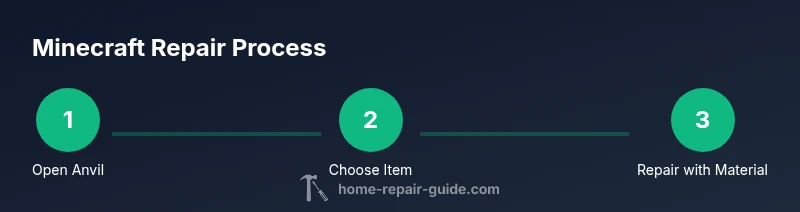
Open the Anvil Interface
Place the Anvil on the ground and right-click to open. Make sure you have the damaged item at hand. Open the interface and prepare to drop items into the left slot.
Tip: If the anvil cost is high, consider repairing a backup item first to lower the XP cost. - 2
Choose Your Damaged Item
Drag the item you want to repair into the left slot. Verify its durability and enchantments so you know what to preserve or lose.
Tip: Keep a second, similar item handy to use as a repair partner or to capture useful enchantments. - 3
Add Repair Partner or Material
Drop either a matching item in the right slot or the appropriate repair material (iron ingot, diamond, etc.).
Tip: Using the correct repair material minimizes XP cost and preserves enchantments when possible. - 4
Review Cost and Confirm
Check the XP level cost shown to complete the repair. Confirm if the cost fits your XP plan and availability.
Tip: If the cost is too high, back out and try material repair or hold XP for Mending. - 5
Optional: Rename or Combine for Optimization
You can rename the repaired item or combine with another item to adjust overall stats or enchantments.
Tip: Renaming helps keep inventory organized; combined items can preserve key enchantments with planning. - 6
Apply Enchantments and Manage XP
If Mending is on the item, ensure XP farming aligns with your goals. Avoid over-spending XP on fragile gear.
Tip: Keep a steady XP source, such as mining or farming, to sustain repairs over time. - 7
Consider Grindstone for Enchantments
If an enchantment is no longer desirable, use a grindstone to remove it. Note that this does not restore durability.
Tip: Grindstone can reset enchantments; plan before you break any enchantments you want to keep. - 8
Test and Save Your Changes
Equip the repaired item and test it in-game to confirm durability and enchantments behave as expected.
Tip: Testing ensures you didn’t lose a critical enchantment or miscalculate durability.
FAQ
What is the best way to repair tools in Minecraft?
The best approach combines the item with a matching repair material in an anvil, or uses Mending to repair via XP. If enchantments must stay, plan repairs to preserve them.
Use an anvil with matching materials, or rely on Mending using XP to repair without losing essential enchantments.
Can Mending repair items without XP?
No. Mending repairs items using XP orbs. You need to collect XP to keep items durable when Mending is active.
Mending requires XP to repair items; you’ll need an XP source to keep items repaired.
Does grinding remove all enchantments permanently?
Yes. Grindstone removes all enchantments from the item. It does not restore durability, but it can be useful to re-enchant a clean item.
Grindstone wipes enchantments and doesn’t repair durability, so use it when you want to rework enchantments.
Is there a limit to repairing items with an anvil?
Repair costs rise with each use, which can make further repairs expensive. Plan repairs to avoid excessive XP costs.
Anvils get pricier the more you repair, so plan ahead to manage XP costs.
Which items benefit most from repair strategies?
Weapons and armor used in survival—like swords and chestplates—benefit most, especially when paired with Mending and selective enchantments.
Weapons and armor you rely on in survival are the best to repair and prolong with Mending.
Can you repair items without any materials?
Yes, via the Mending enchantment that uses XP. If Mending isn’t available, you’ll need the appropriate repair materials for the item.
If you have Mending, you can repair with XP. Without it, you’ll need the right materials.
Watch Video
Key Takeaways
- Plan repairs to minimize XP expenditure.
- Mending uses XP to keep items durable over time.
- Grindstone removes enchantments, not durability.
- Anvil costs increase with usage; practice smart repair.