How to Repair in Minecraft: Step-by-Step Guide for Beginners
Learn practical strategies to repair in minecraft using anvils, grindstones, Mending, and XP farming. Extend tool durability, manage enchantments, and repair efficiently with this step-by-step guide.


You’ll learn the fastest ways to repair tools and gear in Minecraft, including anvils, grindstones, Mending, and XP farming. This guide covers when to repair, how to combine enchantments safely, and cost considerations to keep durability high without breaking your balance. By following these steps, you’ll extend your equipment’s life in-game.
Understanding the Basics of Repair in Minecraft
If you’re wondering how to repair in minecraft, you first need a solid grasp of durability, item types, and the repair avenues available in vanilla Minecraft. Every tool and piece of armor has a durability value that ticks down with use. When an item’s durability is low, repairing it can save precious resources and keep you productive on long journeys or busy builds. The core idea is simple: restore durability while preserving or enhancing useful enchantments, without letting repair costs spiral out of control. In this section we’ll cover what durability means for different items, how repair interacts with enchantments, and why planning repairs ahead of time pays off in both single-player and multiplayer worlds. Understanding these basics sets you up to repair efficiently, no matter your play style or goals.
According to Home Repair Guide, approaching Minecraft repairs with a planned strategy reduces resource waste and keeps gameplay flowing smoothly. The durability system also interacts with XP, enchantment costs, and the way you choose to repair, so recognizing the trade-offs early helps you optimize long-term survival and advancement.
Core Repair Techniques
Minecraft offers several paths to restore durability, each with different costs and benefits. The primary tools are the Anvil, Grindstone, and Mending. Anvils combine items and enchantments at a cost in XP levels, gradually increasing item durability as you merge the best features. Grindstones remove all enchantments and can provide a modest durability restoration by merging two damaged items of the same type when used in the right setup. Mending uses experience orbs to repair items automatically, provided you have it enchanted on the item or you have access to an XP source. A practical flow is to decide whether you want to preserve enchantments or strip them for reconfiguration, then choose the tool that best fits your current XP and resource pool. This section walks through real-world workflows and decision points that help you keep your gear functional without grinding to a halt during exploration or creation.
A common pitfall is trying to over-rely on a single method. The best strategy often blends Mending when XP is abundant with careful anvil use for durability gains when enchantments matter most. As you gain experience, you’ll be able to estimate costs in XP levels and materials, and plan multiple repairs in a row before needing a full rebuild.
When to Repair vs Replace
Knowing when to repair versus when to replace is a central skill in Minecraft survival. If you’re carrying a tool with a volatile enchantment that isn’t worth preserving, or a weapon nearing its final velocity, it’s often smarter to replace or reforge rather than chase a costly repair cycle. Repair is most useful for items you rely on every day—blades, pickaxes, and armor that smooth your progression. Considering the XP cost, repair costs on the anvil rise with each merge, so stacking the most durable components into one item is a time-tested strategy. In practice, you’ll want to consider how many uses remain, the next upgrade path, and whether the enchantments on your gear genuinely add value to your current play style. Using a blend of Mending and strategic anvil work can extend longevity without excessive XP penalties.
Home Repair Guide analysis shows players often favor a balanced approach: use Mending to leverage XP when available, then perform targeted repairs with an anvil for critical items. This avoids escalating costs while maintaining strong performance.
Using Anvils Effectively
Anvils are powerful but deceptively expensive. Each time you combine two items, the XP cost increases, and renaming items also consumes levels. A common mistake is over-renaming or attempting to merge incompatible enchantments. To maximize efficiency, always start with the most compatible base items, and plan the final result you want before you begin. If your goal is to preserve enchantments, weave through the enchantment table or an anvil recipe that minimizes XP penalties. If you want a clean, highly durable artifact, consider merging two similarly damaged items first, then adding improvements in subsequent steps. Remember that the order and the specific pairs you choose matter: the earlier the merge, the lower the long-term cost.
The Home Repair Guide team notes that careful sequencing reduces wasted XP and helps you build items that last longer in harsh environments.
Mending and XP Management
Mending is one of the most valuable mechanics for ongoing repair. When you have Mending on an item, any experience you earn from mining, defeating mobs, or smelting goes toward repairing that item. This creates a natural loop: play the game, earn XP, and watch your tools repair over time. To maximize Mending’s benefit, pair it with efficient XP sources such as mob farms or furnace XP farms, and avoid unnecessary repairs that consume valuable XP for little return. It’s also important to understand that Mending will not fully repair items unless you accumulate enough XP, so you should still intervene with anvils for large durability gaps.
In practice, use Mending as your primary ongoing repair method when feasible, then supplement with targeted anvil repairs to manage the durability curve and keep your tools in good condition for important expeditions.
Based on Home Repair Guide research, players who leverage Mending alongside selective anviling consistently extend gear lifespans without excessive resource drain.
Grindstone and Disenchanting Enchantments
Grindstones are handy for removing all enchantments from a gear item, returning the item to its base durability at the cost of some XP and the loss of enchantments. This can be valuable when two damaged items share few compatible enchantments, or when you want to re-roll enchantments on an item. Remember that grindstones do not directly repair to full durability; they primarily reset enchantments and provide a small XP reward. After disenchanting, you can re-apply desired enchantments more strategically through an anvil using enchanted books. This approach helps you reinvent gear that would otherwise be wasted, especially when you’ve outgrown the current enchantments or want to tailor a build around new playstyles.
Grindstone strategies work best when you have multiple damaged items you can combine into a single, clean base item with your preferred enchantments applied anew.
Enchantments and Repair: A Balanced Approach
Balancing enchantments and repair is essential for long-term success. Mending works best when XP is abundant, while Anvils excel at combining and upgrading items with the right enchantments intact. When planning repairs, consider whether the enchantments on your gear align with your current goals and whether the durability cost will be worth the outcome. For example, a weapon with Power and Sharpness should be prioritized for careful merging to preserve those effects, whereas tools with less important enchantments may be better candidates for removal and reapplication via grindstones and enchanted books. A thoughtful blend of these approaches allows you to maintain high performance without wasting XP or resources.
Home Repair Guide’s analysis emphasizes tailoring repair strategies to your unique in-game priorities and play style, ensuring you always have the tools you need for your adventures.
Practical Playthrough: A Step-by-Step Example
Imagine you’re repairing a damaged diamond pickaxe with Efficiency IV and Unbreaking III. Step one is to check current durability and plan your repair path: you might merge it with a spare diamond pickaxe to restore durability while keeping Efficiency IV intact. Then, you’d consider adding a new enchantment using an enchanted book, or investing XP into Mending if it’s available in your world. In the next step, you open the anvil, place your two pickaxes, confirm the XP cost, and retrieve the combined item with maximum possible durability. Finally, you test the repaired tool to gauge handling and confirm it meets your expectations. The goal is to end with a reliable pickaxe that supports long mining sessions without frequent repairs.
A well-executed repair sequence saves XP and materials in the long run, letting you focus on exploration and resource gathering.
Common Pitfalls and Safety Tips
Avoid over-reliance on the Anvil; costs can climb quickly and make repairs uneconomical. Don’t neglect XP sources, especially early-game, as you may struggle to repair high-value gear later. If you’re unsure about an enchantment path, test on a spare item rather than your main gear. Always back up your world or create a safe testing area when experimenting with new repair strategies, to prevent accidental loss of rare items. Finally, keep enchantments in mind—some combinations are mutually exclusive or heavily cost-inefficient, so plan ahead to avoid wasted XP and material resources.
Quick Reference: Bedrock vs Java and Modded Considerations
In different Minecraft editions or with mods, repair mechanics can shift. Some mods introduce additional repair tools, tools with new durability curves, or alternative XP systems. Bedrock and Java editions handle XP distribution and anvil costs slightly differently, so adapt the general principles to your version. If you’re playing with mods, read the mod documentation to understand how repair interacts with new items and enchantments. The core concept remains: plan repairs, preserve essential enchantments, and use XP efficiently to extend gear life without breaking progression.
Tools & Materials
- Anvil(Used to repair, rename, and merge items; costs XP levels with each operation)
- Grindstone(Removes all enchantments and can repair by combining two damaged items; does not restore full durability directly)
- XP orbs / XP bottles(Needed for Mending and to pay for many anvil repairs)
- Enchanted books (optional)(Transferring enchantments via anvil is a common optimization)
- Diamond or Netherite items (optional)(Useful when repairing high-value gear; plan merges carefully to minimize XP cost)
Steps
Estimated time: 15-25 minutes
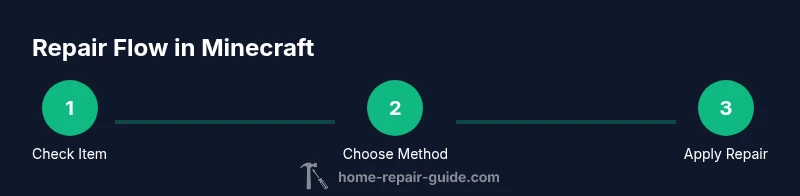
- 1
Check durability and plan repair path
Inspect the item’s current durability and decide whether to repair via anvil, grindstone, or Mending. Consider whether you want to preserve enchantments or reconfigure them for a different build.
Tip: Always estimate XP cost before starting anvil work to avoid costly surprises. - 2
Open the anvil interface
Place the target item in the first slot and the repair partner (another item or an enchanted book) in the second slot to initiate the repair. Review the XP cost before proceeding.
Tip: Keep a spare, lower-durability item handy for safer experimentation. - 3
Combine items to restore durability
Merge two items of the same type to restore durability. This often preserves stat boosts but may erase some enchantments, depending on the pair.
Tip: Start with base items that have complementary efficiencies to minimize XP costs. - 4
Decide on enchantments
If you want to keep existing enchantments, consider adding enchantments via books or carefully chosen merges. If not, use Grindstone to remove them and reapply later.
Tip: Grindstone can be a valuable reset tool when you want to re-roll or reapply enchantments strategically. - 5
Utilize Mending with XP
If your item has Mending, gain XP from gameplay to repair the tool automatically. This is efficient during long exploration or mining runs.
Tip: Keep XP sources active near mining or combat to maximize repair throughput. - 6
Test and adjust
Test the repaired tool to ensure it meets your needs. If durability or enchantments aren’t ideal, consider another pass with the anvil or grindstone.
Tip: Avoid overusing the same repair path in rapid succession to prevent XP inflation and costs.
FAQ
What is the most cost-effective way to repair high-value gear?
The most cost-effective method typically combines Mending with careful anvil use, preserving important enchantments while gradually restoring durability. Enchantments can be added via books or targeted merges to minimize XP costs.
Use Mending when XP is available and plan merges carefully to minimize costs; add enchantments with books when needed.
Does Mending always repair items fully?
Mending repairs as you gain XP, but it may not fully restore durability if you don’t accumulate enough XP. For high-durability needs, supplement with anvil repairs.
Mending uses XP over time, but full repair isn’t guaranteed without XP flow.
Will using a grindstone ruin cherished enchantments?
Yes, grindstones remove all enchantments from the item. Use it when you want to reset enchantments and reapply new ones strategically.
Grindstone clears enchantments—plan accordingly before using it.
Can I repair armor and weapons with the same method?
Yes, most repair principles apply to armor and weapons, but costs and durability interactions can vary by item type. Treat each class (tools vs armor) with the appropriate merge strategy.
Armor and weapons follow similar rules, but costs vary by item type.
What happens if I rename items too often on the anvil?
Renaming items adds to the XP cost and can inflate repair expenses quickly. Rename sparingly or only when it adds clear value.
Renaming increases XP costs—only rename when useful.
Is there a difference between Java and Bedrock editions for repair?
Repair mechanics are similar but may differ in XP behavior and enchantment interactions. Always verify your edition’s specifics, especially if you use mods or servers.
Editional differences exist; adjust repairs to your edition.
Watch Video
Key Takeaways
- Check durability before repairing and plan path
- Use Mending when XP is abundant to maximize repairs
- Manage anvil costs by sequencing merges strategically
- Grindstone resets enchantments—use for reconfiguration
- Balance enchantments with durability for best long-term results