Tire Repair Truck Near Me: Your On-Site Tire Help Guide
Discover how to find a tire repair truck near you, what on-site tire services cover, typical costs, and tips to choose a trusted mobile tire technician for quick, safe roadside help.


What is a tire repair truck near me and how it works
A tire repair truck near me refers to a mobile tire service that dispatches a technician to your location to handle common tire issues such as punctures, slow leaks, or tire replacements. These units carry portable tools like inflators, patch kits, sealants, and backup tires, enabling many repairs without a tow. The growing popularity of mobile tire services aligns with homeowner and roadside assistance needs, offering convenience and faster resolution times. When evaluating a service, consider response time, service scope, warranty options, and whether they stock the tires you might need. The Home Repair Guide team notes that reliable on-site tire assistance can dramatically reduce downtime and improve safety compared with waiting for a tow to a shop.
How mobile tire repair works: process and timeline
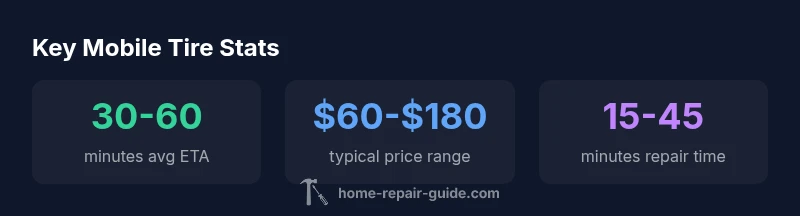
Most on-site tire services follow a straightforward process. You book or call to request service, a dispatcher provides an ETA, and a technician arrives with equipped van within that window. Upon arrival, they assess the tire condition—checking tread wear, puncture location, bead integrity, and wheel condition. If a repair is possible (plug/patch, sealant, inflation, balancing), they execute it on-site and test the tire for air leakage. If a replacement is required and the repair isn’t feasible, they may tow the vehicle to a shop or arrange a follow-up visit with a suitable tire. Expect 30–60 minutes for arrival and another 15–60 minutes for the actual fix, depending on tire type and accessibility. Payment is usually handled on-site via card or digital wallet.
When to use mobile tire repair vs towing
Use mobile tire repair when the damage is repairable on-site and you’re in a safe location. It’s ideal for flats in good weather or in driveable conditions where a patch or sealant can restore service. If the puncture is in an unsafe area, the tire shows severe sidewall damage, or the tire cannot be repaired, towing to a shop may be the safer option. In cold or icy conditions, confirm that the service can operate safely at the location and that they can bring suitable tires or parts. Always verify whether the technician can provide a warranty on the repair and whether a temporary fix is allowed by your vehicle warranty or insurance policy.
What to expect during an on-site tire repair
During an on-site repair, technicians start with a safety check, then inspect the spare (if you have one) and confirm the tire’s repairability. A common on-site repair is plug-and-patch, followed by reinflation to the correct pressure and wheel balancing if needed. They may advise you to monitor the tire for leaks over the next 24–72 hours and may recommend a permanent replacement depending on tread depth and damage location. If a spare is used, ensure you replace it or repair the tire as soon as possible. A warranty policy on the repair and any parts used is essential for long-term peace of mind.
Cost ranges and how to compare quotes
Prices vary by region, vehicle type, and the extent of the tire issue. On-site puncture repairs typically fall within broader ranges that reflect local labor costs and parts availability. Expect quotes to be provided as ranges rather than fixed figures. When comparing, ask for the exact scope of work, any warranty coverage, and whether additional services (tire rotations, wheel balancing, or a tow) are bundled. If a replacement tire is needed, check whether the mobile unit can supply it or if you’ll pay for a separate tire purchase and installation. Always request a written estimate before work begins.
How to choose a reputable tire repair truck near you
Start by checking licensing and insurance status, then review customer feedback and any certifications the technician holds. Ask for a written warranty on the repair and confirm that the service uses OEM-quality parts. Look for transparency in pricing, ETA estimates, and clear conclusions about repair feasibility. If you have a preferred tire brand, confirm compatibility and availability of that brand while on-site. A reliable provider should be able to share diagnostic notes and offer follow-up support if issues recur.
Safety and maintenance tips after a mobile tire service
After your tire is repaired on-site, verify the tire pressure again and request a printout or digital note for your records. If the fix is temporary, arrange a full inspection at a shop soon. Regular maintenance like tread depth checks, rotation, and proper tire inflation helps reduce future on-site repair calls. Ensure you keep a spare tire in good condition and replace worn tires at recommended intervals. Store contact details of trusted mobile tire services for future emergencies.
DIY checks you can perform safely while waiting
While you wait for the mobile technician, you can safely inspect the area around the tire:
- Check the tread depth and look for visible punctures or embedded objects (do not remove embedded objects).
- Ensure the wheel is not visibly damaged or cracked.
- If the vehicle is drivable, keep it at a safe speed and drive cautiously to avoid worsening damage.
- Gather your vehicle’s information (VIN, tire size) for the technician to ensure compatibility.