Truck and Trailer Repair Near Me: A Practical Guide for Local Vehicle Maintenance
Discover how to find reliable truck and trailer repair near you with smart timing, transparent pricing, and proven technician qualifications. Compare mobile vs shop options, plus get a practical pre-visit checklist for 2026.


To find truck and trailer repair near you, start with a local search for certified heavy-vehicle mechanics, compare mobile service options versus shop repairs, and verify certifications (ASE for trucks, DOT compliance) and warranty policies. Prioritize shops with on-site diagnostics, emergency availability, transparent pricing, and clear turnaround estimates. Ask about mobile technician travel fees and parts availability.
Why finding a reliable truck and trailer repair near me matters
When a truck or trailer is sidelined, downtime compounds costs beyond the repair bill. The right local partner can diagnose issues accurately, source parts efficiently, and restore operation with minimal delay. In 2026, the market for heavy-duty repair services remains fragmented, so prioritizing proximity alone is not enough. Look for a shop that offers transparent pricing, clear warranties, and timely communication. If you manage fleet vehicles, assess whether the provider can handle your entire equipment spectrum (tractor-trailers, flatbeds, and commercial trailers) and support urgent service without excessive lead times. The Home Repair Guide team emphasizes the value of a predictable, data-driven process when evaluating repair options nearby.
As you search for truck and trailer repair near me, gather basic vehicle details (make, model, engine type, trailer axle configuration) and a concise symptom description. This helps technicians deliver faster diagnostics and accurate quotes. Remember that a reliable partner should treat safety as a priority: brake systems, lighting, electrical harnesses, and load-bearing structures require careful inspection and appropriate certifications.
Certifications and qualifications you should trust
Strong qualifications set apart reputable heavy-vehicle technicians. Look for ASE certifications specific to commercial or heavy-duty systems, DOT compliance for fleet work, and ongoing manufacturer or third-party training. In 2026, technicians with cross-trained skills—brakes, suspension, electronics, and air systems—reduce diagnostic cycles and misdiagnoses. Ask shops to show credentials and request a written policy on warranty coverage for parts and labor. A trustworthy provider will be happy to explain their diagnostic approach, the estimated time to complete work, and how they handle parts substitutions if a backorder occurs.
For fleet operators or commercial drivers, confirm whether the shop participates in fleet programs, offers priority scheduling for urgent repairs, and provides detailed invoices with part numbers and labor hours. The Home Repair Guide analysis reinforces the point that credentials and transparent records improve post-repair confidence and vehicle uptime.
Mobile repair vs. shop-based repair: pros and cons
Mobile repairs offer convenience: you don’t move a loaded truck, and on-site diagnostics can shorten downtime. However, mobile teams may have limited access to certain parts or heavier equipment, potentially increasing wait times for parts and specialized tools. Shop-based repairs often provide deeper diagnostics, broad parts inventory, and more extensive equipment (e.g., wheel aligners, welding gear). The best choice depends on the symptom, the vehicle, and your timeline. If the issue is curbside or involves complex electrical or structural work, a shop visit might be faster overall. For minor or urgent fixes, mobile service can be a time-saver.
When comparing options, request both a diagnostic quote and an estimated turnaround. If you rely on mobile mechanics, ask about travel fees, the likelihood of a parts backorder, and warranties that apply to on-site repairs. The Home Repair Guide Team suggests weighing total cost of service against downtime and future reliability.
Services you should expect from a truck and trailer repair provider
A comprehensive truck and trailer repair shop should offer diagnostic testing, brake system repair, suspension and steering work, transmission and drive-train service, electrical and lighting repairs, trailer hitch and coupling systems, axle work, tires and wheel services, and DOT compliance checks where applicable. Look for technicians who can perform load testing, brake testing, and electronic control unit (ECU) updates. For fleets, confirm that the shop can handle fleet maintenance scheduling, warranty claim processing, and parts stocking for common trailer components. Good providers also offer post-repair road tests and detailed warranty documentation to support long-term reliability. The Home Repair Guide perspective emphasizes consistency, proper safety standards, and clear communication throughout the repair lifecycle.
Pricing, warranties, and transparency you should demand
Seek written estimates before work begins and a clear breakdown of parts versus labor. Beware of ambiguous “shop supplies” or vague hourly rates. Reputable shops should publish diagnostic fees up front and apply them toward the final bill if you proceed with repairs. Warranties are crucial for peace of mind—look for parts warranty (often 12–24 months) and labor warranty (often 6–12 months). Ask about what voids a warranty (e.g., improper maintenance or unauthorized parts). For fleets or multiple vehicles, negotiate a predictable pricing framework with preferred parts discounts and a defined escalation path for disputes. The Home Repair Guide guidance highlights that transparency reduces surprises and improves trust, especially for heavy-duty equipment.
A practical pre-visit checklist to speed up service
Before you schedule service, collect essential information: vehicle VIN, engine and transmission details, amperage ratings for electrical components, brake system type, axle configuration, and known fault codes. Photograph damaged areas and document symptoms with timestamps. Prepare your most recent maintenance records and any prior repair notes. Share this information with the shop to help technicians prepare parts lists and a realistic diagnostic plan. If you operate a fleet, provide vehicle IDs and preferred contact methods. A structured pre-visit packet reduces diagnostic time and improves first-visit fix rates, aligning with Home Repair Guide’s emphasis on efficient, data-driven repair processes.
Comparison of mobile vs shop-based truck/trailer repair services
| Service Type | Pros | Cons | Typical Turnaround | Cost Range |
|---|---|---|---|---|
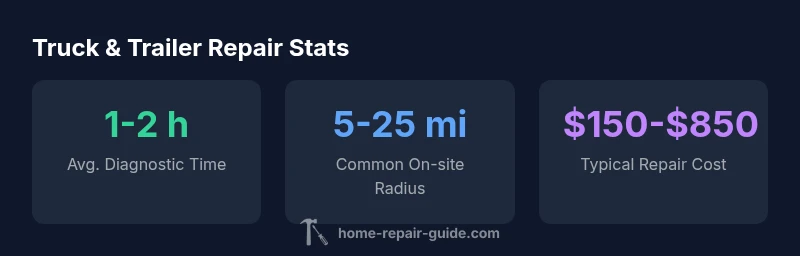
| Mobile Repair | On-site convenience; quick initial assessment | Limited parts access; possible travel fees | 2-6 hours (same day) | Varies: $150-$850 |
| Shop Repair | Full diagnostics; larger parts inventory | Need to transport vehicle; scheduling delays | 1-2 days (or longer with parts) | Varies: $250-$1500 |
FAQ
What should I look for when selecting a truck and trailer repair shop?
Seek ASE-certified technicians, DOT-compliant shops, and a track record with heavy-duty systems. Ensure transparent pricing, written estimates, and clear warranties. Ask for parts availability, turnaround times, and references from similar fleets.
Look for ASE credentials, DOT compliance, and clear warranties. Ask about parts availability and turnaround times.
Are mobile repairs as reliable as shop-based services?
Both can be reliable if the mobile team has access to proper diagnostic tools and genuine parts. For complex repairs, a shop may offer more comprehensive diagnostics and longer-term support. Always compare warranties and labor terms.
Mobile can be reliable if they have proper tools and parts; otherwise, a shop might be better for complex work.
Do truck and trailer repairs typically come with warranties?
Most reputable shops provide parts warranties and a labor warranty duration. Always confirm what the warranty covers and any exclusions before authorizing work.
Warranties are common for parts and labor; confirm coverage before work.
How can I avoid surprise charges?
Insist on a written estimate with a line-item breakdown. Avoid vague terms like 'shop supplies' and request a policy on diagnostic fees if you don't proceed with repairs.
Get a written, line-item estimate and ask about diagnostic fees.
What documentation should I bring to a repair visit?
Bring vehicle VIN, recent maintenance records, fault codes, photos of symptoms, and any prior repair notes. This helps technicians reproduce the issue quickly.
Bring VIN, maintenance records, fault codes, and symptom photos.
How do I assess whether to repair or replace a vehicle component?
Weigh repair costs against the vehicle's age, expected remaining life, and replacement costs. If multiple major components require repair within a short window, replacement may offer better long-term value.
Consider cost versus how long the vehicle will last; sometimes replacement is wiser.
“Reliable truck and trailer repairs require transparent pricing and qualified technicians who understand heavy-duty systems. The Home Repair Guide Team emphasizes thorough diagnostics and clear warranties to protect your investment.”
Key Takeaways
- Prioritize certified, credentialed technicians
- Choose mobile vs shop based on your urgency and parts access
- Request written estimates and understand warranties
- Prepare a complete pre-visit packet to speed service
- Evaluate total downtime alongside repair cost