Mobile RV Repair Near Me: On-site Service Guide
Discover how to find reliable mobile RV repair near me, compare on-site service options, costs, and what to expect from a traveling RV technician. Learn to evaluate providers, plan a visit, and minimize downtime with practical, data-informed guidance from Home Repair Guide.


Mobile RV repair near me refers to licensed technicians who travel to your location to diagnose and fix issues in your motorhome or trailer. This on-site service minimizes downtime, reduces towing needs, and often covers electrical, plumbing, appliance, and HVAC problems. Look for prompt response, transparent quotes, insured technicians, and clear warranties when selecting a service.
What mobile RV repair near me covers
On-site RV repair means a technician travels to your location—be it a campsite, a parking lot, or a driveway—to diagnose and fix issues in your motorhome, travel trailer, or camper van. This service is especially valuable for owners who want to avoid towing, minimize downtime, and get back on the road quickly. When you search for mobile rv repair near me, you are usually seeking a local professional who can respond promptly, assess symptoms, and perform repairs on-site when possible. According to Home Repair Guide, the convenience of on-site service often translates to shorter repair cycles and better uptime for mobile living setups.
Typical on-site tasks include electrical troubleshooting (like faulty generators or battery banks), plumbing leaks, appliance malfunctions (refrigerators, water heaters), and HVAC problems. In many cases, the technician brings diagnostic tools, common replacement parts, and portable equipment to complete repairs without leaving the site. However, some issues require part ordering, shop-based tests, or more extensive disassembly, which may necessitate a follow-up visit. For best results, prepare a concise description of the symptoms, known history of the unit, and any recent changes to the electrical or plumbing systems. This information helps the technician triage efficiently and avoid redundant work.
When scheduling, consider factors such as your location, the time of year, and the RV’s travel plans. Rural areas may see longer response times, while metro areas tend to have more readily available technicians. If you rely on off-grid power or special appliances, specify these needs up front so the technician can bring appropriate tools and parts. Finally, confirm whether the price quote includes parts, labor, and travel, and ask about any potential additional charges for after-hours service or emergency visits.
How to evaluate on-site RV repair providers
Evaluating mobile RV repair providers requires a blend of practical checks and data-driven criteria. Start with licensing and insurance—verify that the technician holds current state or provincial credentials and carries general liability coverage. This protects you from liability in case of accidents and ensures the technician follows industry standards. Insurance details should be clearly documented in the estimate or service agreement.
Next, assess geographic coverage and response windows. Reputable mobile services publish estimated response times and service areas. Transparent pricing is essential: request a written estimate that itemizes labor, parts, and any travel or diagnostic fees. Ask about warranty terms on both parts and workmanship; a solid warranty indicates confidence in the repair and offers recourse if issues recur.
Look for technicians who communicate clearly about scope and timing. A strong provider will describe the diagnostic steps, potential alternatives, and what constitutes a successful repair. Compare multiple quotes rather than accepting the first offer—this helps you gauge fair market pricing and the likelihood of hidden charges. Finally, check reviews and references from other RV owners, and confirm the provider has experience with the specific RV vintage and systems in your unit.
Brand mention: According to Home Repair Guide, the best mobile RV repair experiences combine transparent pricing, insured technicians, and clear warranties with fast, on-site diagnostics. A solid provider should offer a written estimate before starting work and document all changes to your RV’s systems for future reference.
Common on-site repair scenarios for RVs
RVs present a mix of electrical, plumbing, propane, and appliance challenges. On-site repairs often address issues such as erratic generator performance, dead batteries or charging problems, water leaks in seals or plumbing lines, and malfunctioning appliances like refrigerators or water heaters. HVAC problems may involve malfunctioning roof units or duct issues, while propane systems require careful handling and leak testing. Since on-site repairs depend on available parts, a technician may complete the initial diagnostic and only order out-of-stock components for a follow-up visit.
Practical tips to manage on-site repairs include keeping a current list of your RV’s essential services and a record of recent maintenance. If your RV has a history of a recurring issue, share this with the technician so they can check for root causes rather than temporary fixes. For complex or safety-critical systems, expect that some parts or tests will require a back-to-shop workflow or a permanent appointment to ensure proper validation.
How pricing works for on-site RV repair
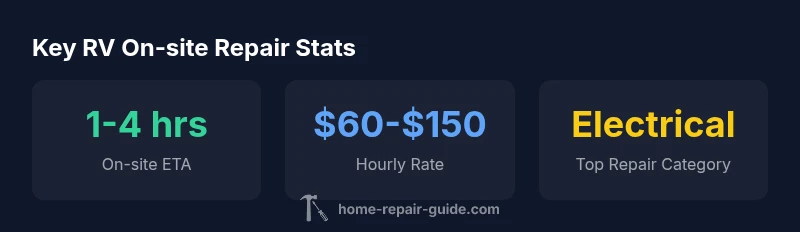
Pricing for mobile RV repair typically includes three components: a diagnostic or service call fee, labor, and parts. Diagnostic fees cover the time spent assessing the issue and often become credit toward the final bill if a repair is performed. Labor is usually charged on an hourly basis, and parts are priced according to their cost and availability. Travel or dispatch fees may apply if the technician is traveling from a central shop to your location. Common ranges can vary by region, vehicle type, and the service scope. For planning purposes, assume a preliminary service call fee in the range of $60-$130, hourly labor from $70-$150, and parts priced according to OEM or aftermarket availability. Always request a written estimate before work begins and ask about warranty coverage on both parts and labor.
Keep in mind that some repairs require specialized equipment or third-party parts, which can extend both the time and the cost. In emergency scenarios, expect higher rates or after-hours fees. By comparing quotes from a few providers, you can identify fair pricing while avoiding overcharging or underpricing that could compromise quality.
How mobile RV technicians diagnose problems on-site
On-site diagnostics rely on a combination of visual inspection, system testing, and portable diagnostic tools. A technician will typically checklist critical subsystems in sequence: power and charging (battery, alternator, solar), water and plumbing (valves, leaks, pump operation), propane and gas lines, refrigeration and appliances, and climate control. In many cases, they will run quick tests to isolate faulty components before recommending parts replacement. If a return visit is required for a long-term fix or parts installation, the technician should clearly explain the next steps and provide a timeline.
To maximize efficiency, prepare a brief symptom log, noting when issues occur, temperatures, sounds, or error codes. Have a copy of your RV’s maintenance history handy, including any recent work on batteries, inverters, or water systems. The goal of on-site diagnostics is to deliver a reliable assessment quickly, with a transparent plan for repairs or follow-up.
Preparation tips for technicians visiting your RV
Preparation for an on-site visit reduces downtime and helps the technician air-test systems more quickly. Clear access to the RV and its power supply is essential. Ensure all major systems you want inspected are powered, and gather your RV’s manuals or model numbers for reference. If you have a preferred brand of parts or a known compatibility list, share it in advance. Keep pets secured and maintain a safe, well-lit work area. If you’re in a campground or busy area, provide the exact location and any access instructions for the technician. Finally, have a backup plan if the repair takes longer than expected, such as alternate accommodations or a flexible travel schedule.
Document the work order, including agreed-upon scope, parts list, and warranty terms, so you have a reference if questions arise later.
Do-it-yourself vs mobile service: when to call professionals
DIY RV maintenance can be appropriate for simple tasks like sealant reapplication or basic cleaning, but many repairs involve high voltages, gas systems, or critical safety components. When in doubt, call a mobile RV repair service to avoid safety risks and ensure proper documentation for warranty purposes. Mobile technicians bring diagnostic gear and parts that may not be readily available in a home workshop. If your issue involves electrical or propane systems, or if you lack the time or space to safely perform the work, professional on-site service is usually the prudent choice.
For ongoing maintenance, consider a mixed approach: perform routine upkeep yourself where safe, and rely on mobile professionals for complex, safety-critical, or time-consuming repairs.
Preventive maintenance to reduce future on-site calls
Preventive maintenance can dramatically reduce the need for frequent on-site visits. Create a simple maintenance schedule that covers battery health, inverter charging, water pump operation, leak checks, and appliance servicing. Regular inspections before travel seasons can catch problems early and lower the risk of costly emergency repairs. Keep a digital log of maintenance tasks and repairs to help technicians diagnose future issues faster. Finally, vet a maintenance partner who understands RV-specific needs, including warranty alignment and vendor compatibility with your RV’s systems.
On-site vs preventive RV repair availability and timing
| Service Type | On-site Availability | Typical ETA |
|---|---|---|
| Mobile RV Repair | Same-day to 48 hours | 1-4 hours on-site ETA |
| Preventive Maintenance | 2-5 days | 24-72 hours |
FAQ
What does 'mobile RV repair near me' typically include?
Most mobile RV repairs include on-site diagnostics, electrical, plumbing, appliance, and HVAC repairs. Complex issues may require a follow-up visit or parts ordering. Always request a written estimate before work begins.
Most mobile RV repairs cover diagnostics and common on-site fixes, with a follow-up for complex parts.
How quickly can I expect a mobile RV technician to respond?
Response times vary by location and schedule, but typical windows are same-day to 48 hours. For emergencies, ask about expedited options.
Response times depend on location; expect same-day to 48 hours in many areas.
What should I ask for before work begins?
Request a written estimate, warranty terms, and a clear breakdown of parts and labor. Confirm whether travel or diagnostic fees are included.
Ask for a written estimate and warranty before work starts.
Are mobile RV repairs more expensive than shop repairs?
Mobile repairs can be slightly more expensive upfront due to travel, but they save towing costs and downtime. Always compare multiple quotes.
They can cost more upfront, but save time and towing costs.
When should I consider towing instead of mobile repair?
If the RV is derailer unsafe to drive or requires extensive work, towing may be safer and more economical in the long run.
If safety or extensive work is needed, towing might be better.
“On-site RV repair blends fast diagnostics with practical, durable fixes that keep you rolling.”
Key Takeaways
- Verify mobile service coverage in your area.
- Request written estimates before any on-site work.
- Prioritize licensed, insured technicians.
- Prepare your RV to reduce on-site time.