How to Craft a Repair and Disenchant Table in Minecraft
Learn how to craft a Repair and Disenchant Table in Minecraft. This step-by-step guide covers vanilla methods (anvil and grindstone), modded options, and best practices to keep your gear in top shape.


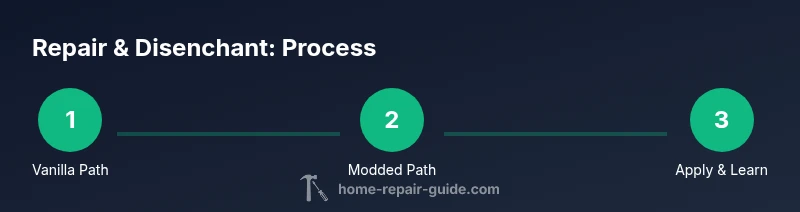
Vanilla Minecraft does not include a single Repair and Disenchant Table. To repair items you use an Anvil, and to disenchant or strip enchantments you use a Grindstone. Some mods add a combined Repair and Disenchant Table with its own recipe and behavior. If you’re playing modded Minecraft, check the mod’s documentation for exact crafting steps and requirements.
Understanding vanilla reality vs modded options
In vanilla Minecraft, there is no single Repair and Disenchant Table. You repair items with an Anvil and disenchant with a Grindstone. Some players install mods that introduce a combined repair-disenchant table, which can simplify gear management. If you’re playing on a modded server, check the mod's wiki for the exact recipe and behavior. The Home Repair Guide team emphasizes practical, reliable approaches to game tasks, including how to approach complex crafting setups. For newcomers, starting with the vanilla workflow builds a strong foundation before exploring mods. The core idea is to separate durability management from enchantment control, then decide whether a consolidated station is worth the extra complexity.
What you need to get started (vanilla) and modded options
To understand the full process, you should know how to make a repair and disenchant table in minecraft. Vanilla Minecraft doesn’t include a single table; it relies on the Anvil for repairs and the Grindstone for disenchanting. Some mods add a combined station that handles both tasks in one interface. Here we outline the essential tools and items for both paths, so you can plan your setup with confidence. In vanilla play, focus on leveling your Anvil and collecting XP to keep repairs affordable. In modded play, verify the exact craft recipe, including any unique materials required by the mod. The Home Repair Guide approach stays simple: break tasks into clearly defined steps, test, and back up your world before making large changes.
Vanilla workflow: repair with anvil, disenchant with grindstone
The vanilla route uses two distinct machines. The Anvil allows you to repair tools by combining two items or a damaged item with another to restore durability, at the cost of experience levels. The Grindstone removes all enchantments from an item, returning some experience and creating a clean base for re-enchanting. This separation keeps things transparent and predictable. When you understand the individual costs and outcomes, you can plan repairs more efficiently and avoid waste.
Modded options: a single workstation (if your pack adds one)
Modded Minecraft often introduces a combined Repair and Disenchant Table. The recipe and mechanics vary by mod, but common themes include special crafting ingredients, a dedicated interface, and a fixed experience cost. If you adopt a mod that adds this table, check the documentation or in-game book for the exact crafting recipe. The benefit is a streamlined workflow: repair and disenchant in one step, with clear item-level outcomes. The Home Repair Guide team notes that modded workflows shine when you back up your world and test new recipes in a safe environment.
Crafting essentials: vanilla tools vs. modded components
Vanilla tools rely on Anvil, Grindstone, and experience. Modded variants may require a specialized repair-disenchant block, plus mod-specific materials. Regardless of path, the core ideas remain: manage durability, control enchantments, and minimize XP waste. Always keep backup saves before attempting new recipes, especially in survival mode where inventory and resources are precious.
Step-by-step comparison of outcomes
With vanilla, repairs preserve the item’s identity while restoring durability, and disenchanting leaves you with an enchantment-free base. In modded setups, the table might preserve some enchantments or add unique properties, depending on the mod. Compare expected results: durability restoration, enchantment retention or removal, and the XP cost. This comparison helps you choose the best method for your play style and world settings.
Best practices for gear maintenance in both paths
Keep a small stock of repair materials, like iron or diamonds, to reduce downtime. Weigh the experience costs and plan repairs in batches to minimize XP drain. Regularly disenchant unnecessary enchantments to free up better options for future upgrades. Finally, maintain regular backups so you can revert if a mod recipe changes or a plugin behavior shifts.
A quick note on safety and stability
In modded worlds, always backup before adding new mods or recipes. Some mods can conflict with others, causing crashes or item loss. Use a separate test world to try new repair-disenchant workflows before applying them to your primary save. The Home Repair Guide team recommends conservative updates and incremental testing to keep your world stable.
Tools & Materials
- Anvil (vanilla)(Placed at a smithing or repair area; cost increases with durability and item tier)
- Grindstone (vanilla)(Used to disenchant; inserts items that lose all enchantments)
- Crafting Table(Basic workbench; optional if using a modded table)
- Repair-disenchant mod (optional)(If using a mod that adds a single station, include the mod’s crafted components)
- Backup storage (world backup)(Always back up your world before installing mods or changing recipes)
Steps
Estimated time: 60-90 minutes
- 1
Decide vanilla or modded path
Assess your world: are you using vanilla Minecraft or a modded pack? Decide whether you will use the separate Anvil/Grindstone path or a modded repair-disenchant table. This choice will guide all subsequent steps and resource gathering.
Tip: Document your chosen path in a quick note so future edits are consistent. - 2
Gather required tools
If you’re sticking with vanilla, ensure you have an Anvil, a Grindstone, and a Crafting Table accessible in your base. If you’re installing a mod, back up the world first and gather the mod’s required materials.
Tip: Keep repair materials in a dedicated chests to speed up workflow. - 3
Prepare a dedicated workspace
Create a compact repair station or a mods-enabled workstation with a visible crafting area. Clear space for interface screens and ensure you have easy access to anvil and grindstone.
Tip: Label chests so you know where to find repair components. - 4
Repair items using vanilla workflow
Place the damaged item on an anvil, add a second item if you want to restore durability, and pay the XP cost. Plan repairs to minimize XP drain by combining items strategically.
Tip: Repair in batches to reduce repeated XP payments. - 5
Disenchant items using grindstone
Insert an enchanted item into a grindstone to remove all enchantments. The grindstone returns a portion of experience but removes enchantments, enabling re-enchantment with better setups.
Tip: Disenchant before re-enchanting to unlock better enchantment slots. - 6
Modded path: craft the combined table
If your mod adds a Repair and Disenchant Table, follow the mod’s recipe shown in the in-game guide or manual. Craft the table and place it in your workstation.
Tip: Double-check recipe variations across versions or pack updates. - 7
Test the setup with simple items
Test with a basic tool to confirm repair costs and disenchant outcomes. Observe if any enchantments persist or are removed as expected, and adjust approaches accordingly.
Tip: Keep notes of outcomes for different item tiers. - 8
Document and backup
Record your chosen approach and ensure the world is backed up before major changes. This helps you recover quickly if a modpack update changes the recipe.
Tip: Schedule regular backups as part of your maintenance routine.
FAQ
Does vanilla Minecraft include a Repair and Disenchant Table?
No. Vanilla Minecraft separates repairs (Anvil) and disenchanting (Grindstone). A combined table is typically provided by mods. If you play vanilla, you’ll perform repairs and disenchant separately.
Vanilla Minecraft uses separate tools: anvil for repair and grindstone for disenchanting. Mods may add a combined table.
What is the best method to repair tools in vanilla Minecraft?
Use an Anvil to repair items by combining two similar items or using its repair cost. Managing experience levels is important to keep costs reasonable.
Repair with an anvil and manage XP levels to keep costs down.
How do you disenchant items quickly in Minecraft?
Disenchant using a Grindstone. It removes all enchantments and returns a portion of experience, allowing you to re-enchant with fresh options.
Disenchant with a grindstone to strip enchantments and reclaim some XP.
Can enchantments persist after repairing with the Anvil?
Enchantments may be preserved if you combine items carefully, but repairing through the Anvil can increase the cost. Plan combinations to avoid losing valuable enchantments.
Enchantments can stay if you combine carefully; costs may rise with repairs.
Which mods add a combined repair-disenchant table?
Several mod packs add custom tables with unique recipes. Check your pack’s documentation or in-game guide to see if a combined table exists and how to craft it.
Mods may add a combined table; consult the mod docs for exact recipes.
What should I consider before repairing vs disenchanting?
Compare durability restoration, enchantment retention, and XP costs. If an enchantment is valuable, disenchant first to re-roll with better options.
Consider durability, enchantments, and XP costs before choosing a path.
Watch Video
Key Takeaways
- Vanilla path uses two tools: Anvil for repair, Grindstone for disenchant.
- Modded packs may offer a single repair-disenchant table with unique recipes.
- Back up your world before mods and test changes in a safe environment.
- Plan repairs to minimize XP costs and maximize gear longevity.