Glass Repair: A Practical, Step-by-Step Guide
A practical, step-by-step guide for DIY glass repair, covering small cracks, safety, tools, and when to call a pro. Learn techniques, materials, and maintenance to extend glass life from Home Repair Guide.


You can safely repair small glass cracks or chips in many cases where the pane remains structurally sound. Start by cleaning the area, drying it, and assessing whether the glass will be stable after temporary fixes. For larger cracks, or if the pane is in a load-bearing frame, hire a professional.
Understanding glass repair: definitions and scope
Glass repair describes the process of fixing damaged glass to restore safety, clarity, and function. It spans minor chips, hairline cracks, and edge damage on windows, shower enclosures, tabletops, and display cases. Not all glass can or should be repaired; tempered and laminated glass often require replacement rather than a repair. The Home Repair Guide perspective emphasizes practicality, safety, and quality outcomes. Water intrusion, improper sealing, and structural load on the frame are factors that influence repair feasibility. In many homes, a small chip or crack up to a certain length can be stabilized with resin or epoxy, but larger cracks or multiple cracks may compromise safety and require pane replacement. For DIY repairs, choose appropriate materials that match the glass type, thickness, and mounting context. For example, acrylic or PET glazing can be a temporary substitute in some applications, but glass still benefits from proper glazing methods. This guide explains options, tools, steps, and safety practices to help homeowners decide whether to repair or replace.
When to DIY vs hire a pro
Deciding between a DIY repair and professional service depends on the glass type, location, and risk level. Small chips on non-load bearing glass in non-visible areas are often suitable for DIY repair with resin or epoxy, following product instructions. However, tempered glass in a doorway, laminated safety glass, or any crack extending across the pane typically requires replacement or professional handling to avoid shattering or injury. The Home Repair Guide analysis shows that attempting complex repairs without proper equipment can lead to worsened cracks and higher long term costs. If you're unsure, start with a conservative approach: protect the area, consult the manufacturer guidelines, and request a quick phone estimate from a local glazier or glass shop.
Types of glass repairs and materials
Glass repairs commonly involve surface bonding on clear annealed glass, resin injections for micro cracks, or edge sealing to prevent further propagation. For small chips, a clear epoxy or UV-curing resin can fill voids and restore smoothness. For cracks longer than a few inches, injection methods are more suitable, often requiring specialized equipment and controlled curing. Laminated glass is designed to hold together when damaged, but if you see delamination, replacement is usually safer. When choosing materials, ensure compatibility with the glass thickness, coating, and any existing sealants in the frame. Always perform a test on a hidden area if possible, to verify clarity and bonding.
Safety considerations for working with glass
Safety comes first in any glass repair project. Wear ANSI Z87.1 rated safety goggles, cut resistant gloves, and long sleeves. Clear the work area of bystanders and pets, and protect floors with drop cloths. Glass shards can travel long distances when cracks are disturbed; lift with care and avoid bending the pane. If a pane is loose or heavily cracked, do not attempt to apply resin while it may drop suddenly; support the pane and request help. Ventilate the space if solvents are used, and store resin and cleaners away from heat sources. After finishing, dispose of damaged glass according to local rules and wash exposed skin promptly if you were in contact with resin.
Maintenance and prevention to extend glass life
Prevention begins before you install glass and continues through maintenance. Use impact resistant glass where possible, keep silicone seals fresh, and apply protective films to reduce scratching. Regular cleaning with non abrasive solutions preserves clarity, while avoiding harsh chemicals that can degrade glazes. Inspect frames for rot or rust and reseal gaps promptly; proper weatherstripping helps prevent moisture intrusion, which weakens edges. If you notice minor chips, address them quickly; small repairs performed early can prevent more extensive cracks. Document repair details for future reference, including resin type and cure time.
Common myths about glass repair debunked
Myth one: all cracks can be repaired to original strength. Reality: many cracks reduce structural integrity and repair is a partial restoration; full pane replacement may be necessary. Myth two: repairs are permanent. Glass gets weaker with time; repeated cycles of thermal stress may reopen cracks. Myth three: DIY is always cheaper. While DIY saves money on small chips, professional replacement may be cost effective for larger areas or complex frames. Myth four: tempered glass can be repaired. Tempered glass is designed to crumble safely; once damaged, it must be replaced for safety.
Choosing glass types and glazing options
Know your application; for windows, tempered or laminated glass offers safety benefits. For decorative tablets or shelves, annealed glass is common and easier to repair. If natural light is critical, consider coatings or low-emissivity films after repair to maintain insulation. Glazing compounds help seal edges; ensure you select products compatible with the existing frame material and sealants. Professional advice helps avoid mismatches in thickness and expansion coefficients, which can lead to stress cracks.
Restoration vs replacement: cost considerations
Cost is a major factor. A small resin repair may be inexpensive, but replacement costs depend on glass type and pane size; tempered glass often requires replacement at a higher price. Consider hidden costs: frame damage, sealant replacement, labor charges, and disposal. A conservative approach often favors patching temporary repairs to buy time until replacement is feasible. Always obtain multiple quotes and compare warranties. Home Repair Guide suggests balancing upfront cost with long term durability.
How to seal and protect repaired glass in framing
After repairs, re sealing edges is crucial to prevent moisture intrusion. Use a high quality glazing compound and apply with a putty knife, smoothing to match the frame profile. Check that weatherstripping around the frame remains intact and replace if needed. Confirm that the repair does not alter the window's balance or hinge operation. Routine checks help catch creeping cracks at an early stage and prevent expensive failures.
Tools & Materials
- Safety goggles (ANSI Z87.1 or higher)(Impact-resistant for protection against shards)
- Cut-resistant gloves(Protect hands from sharp edges)
- Isopropyl alcohol or glass cleaner(For cleaning surface before repair)
- Lint-free cloths(For wiping and drying surfaces)
- Epoxy resin or UV-curing resin(Choose compatibility with glass type)
- Clear syringe or disposable applicator(For precise resin application)
- Plastic card or putty knife(To spread resin and smooth surface)
- Masking tape(To stabilize area and prevent spillover)
- Glazing compound or sealant(For edge sealing after repair)
- Masking film or drop cloth(Protects floor and nearby surfaces)
Steps
Estimated time: 2-3 hours (including cure time)
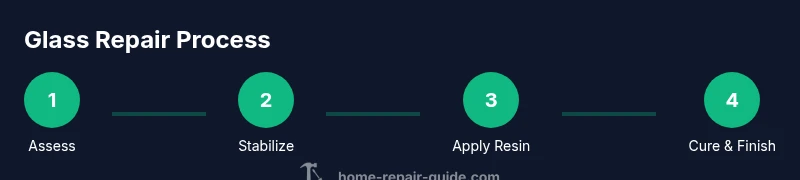
- 1
Assess damage and plan approach
Evaluate the crack length, location, and glass type. Decide whether resin repair is feasible and if the frame or mounting is intact. Document the situation with a photo before starting so you can reference details later.
Tip: Take a clear photo from multiple angles to guide the repair and possible replacement. - 2
Protect workspace and PPE
Clear the area of people and pets. Put on safety goggles and gloves, and lay down a drop cloth to catch any loose shards. Ensure good ventilation if solvents are used.
Tip: A tidy workspace reduces the risk of dropping tools or creating secondary damage. - 3
Clean the damaged area
Wipe around the crack with isopropyl alcohol and a lint-free cloth. Let the surface dry completely before applying any resin. Remove any dust or oils that could interfere with bonding.
Tip: Fresh, dry surfaces improve resin adhesion and cure quality. - 4
Stabilize the crack
If the pane is fragile, apply light masking tape across the crack to reduce propagation during repair. Do not apply tape over any already compromised edges where adhesive could trap moisture.
Tip: Tape is a temporary measure; do not rely on it as a long term fix. - 5
Apply resin into the crack
Mix or prepare the resin per product instructions. Use a syringe or card to introduce resin into the crack from one end to the other, ensuring it fills the void without trapping air pockets.
Tip: Work slowly and avoid overfilling to prevent overflow. - 6
Cure and assess
Allow the resin to cure as directed by the manufacturer, usually several minutes to hours depending on product. Check for complete hardening and any visible bonding across the crack.
Tip: Don’t rush curing; premature handling can re-widen the crack. - 7
Finish and reseal
If needed, trim excess resin with a blade and smooth the surface. Apply glazing compound or sealant to edges if the glass sits in a frame or panel, then reassemble or rehang as appropriate.
Tip: Smooth edges to prevent future snagging or catching on clothing. - 8
Inspect and monitor
After cure, inspect the area for uniform appearance and structural integrity. If the crack reopens or worsens, replace the pane rather than continuing repairs.
Tip: Keep an eye on the repair over several days for any signs of failure.
FAQ
Can tempered glass be repaired?
Tempered glass is designed to crumble safely and is not reliably repairable. If damaged, replacement is the safer option. Always consult a professional if you’re unsure about the glass type.
Tempered glass cannot be reliably repaired; if damaged, replacement is safer. Consult a pro if unsure.
What resin is best for glass repair?
For small chips and cracks, a clear epoxy or UV-curing resin that’s compatible with your glass works best. Always follow the product instructions and check compatibility with coatings.
Use a clear epoxy or UV-curing resin that matches your glass and follow the instructions.
Is DIY glass repair cost-effective?
DIY can save money on small repairs, but larger cracks or safety glass often benefit from professional service to avoid future failures. Compare material, labor, and replacement costs.
DIY can save money for small repairs, but professional help may be cheaper in the long run for bigger fixes.
When should I call a professional?
Call a professional if the crack is large, glass is tempered, the frame is damaged, or the pane is structurally load-bearing. A pro ensures safety and proper sealing.
Call a professional if the crack is large, tempered glass, or the frame is damaged.
Will repair affect warranty?
Repair methods can affect warranties; check with the manufacturer or installer. Document all materials and steps to support any warranty claim.
Repairs can affect warranties; check with the manufacturer and keep records.
Watch Video
Key Takeaways
- Assess safety before attempting repairs
- Use the right resin compatible with glass type
- Follow cure times precisely for best bonding
- Replace tempered or heavily damaged panes
- Document repairs for future maintenance