Windshield Crack Repair: A Practical How-To Guide
Discover a practical, step-by-step approach to repairing windshield cracks safely. This guide covers DIY methods, materials, safety, and when to seek professional help.


With a small windshield crack, you can often stabilize and repair the damage using a resin repair kit. This quick guide explains when DIY is feasible, what tools you need, and the basic steps to prevent crack growth and restore visibility before you consider a replacement.
Understanding windshield cracks: types and implications
Windshield cracks come in several forms, including chips, starbursts, and long linear fractures. The way a crack propagates depends on temperature changes, road vibration, and structural stress. For homeowners and renters handling a vehicle repair, recognizing the crack type helps you decide whether a DIY fix is viable or if you should contact a professional. Small, isolated chips or short, shallow cracks are more amenable to resin repair, while long, spreading cracks or cracks near the edge may require windshield replacement. According to Home Repair Guide, early assessment reduces the risk of further damage and keeps repair costs more predictable. Always consider safety: a compromised windshield can affect airbag deployment and visibility, so avoid driving with extensive damage if visibility is impaired.
Assessing crack severity and safety considerations
A reliable assessment starts with a clean, dry windshield and good lighting. Look for whether the crack is a single line, a pattern of cracks, or a spread that crosses the windshield. If the crack runs from the edge toward the center or crosses the windshield, the repair may be less durable and more prone to re-cracking. Temperature changes can cause expansion, so consider whether the crack appeared after a rapid cold-to-warm shift. For safety reasons, if you notice large cracks, multiple fractures, or any impact near the edge, limit driving and prioritize a professional evaluation. Home Repair Guide analysis shows that DIY repairs succeed best on small, non-extending cracks and when performed promptly after cracking occurs.
DIY repair vs professional service: when to choose
DIY resin repair can be effective for small, contained cracks, especially when you want a temporary fix to stabilize the glass and prevent spreading. However, attempts to repair large, spreading, or edge cracks can yield poor results and potentially compromise safety. Professional technicians use higher-grade resins, specialized curing equipment, and may offer a restoration that improves visibility more consistently. If your windshield has sensors or advanced driver-assistance systems (ADAS), consult a pro—improper repairs can interfere with calibration or function. The Home Repair Guide team recommends weighing repair feasibility, safety considerations, and the long-term cost of replacement when deciding.
Materials and preparation: what you need before starting
Before you begin, gather a resin repair kit, a razor blade, isopropyl alcohol or glass cleaner, microfiber towels, safety glasses, and gloves. Clear the work area, remove dirt and moisture, and ensure the car is in a shaded, dust-free space to avoid premature curing. Read the kit instructions carefully, as curing times vary by resin and climate. A clean, dry surface improves resin bonding and reduces the chance of air bubbles that can obscure your vision. If you lack direct sun or a UV source, plan for longer curing times or seek a shaded outdoor location to encourage cure without heat damage to the surrounding glass.
Step-by-step overview for small cracks
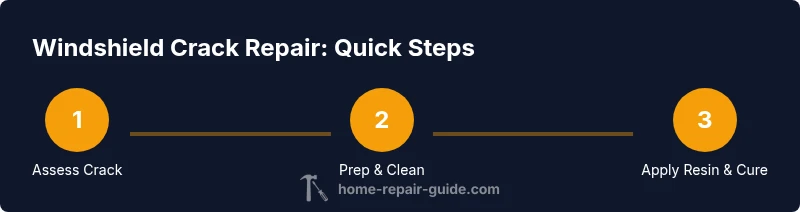
This section provides a concise, actionable workflow for small cracks. It is intended as a practical outline, while the STEP-BY-STEP block below contains the full, enforceable steps. Start by cleaning the area around the crack to remove dust and oils. Apply the resin according to the kit’s instructions, inject it into the crack, and then cure it with either sunlight or a UV lamp. Finally, wipe away any excess resin and inspect the finish for clarity. If the crack reappears or worsens, stop and seek professional help.
Prevention and maintenance to extend windshield life
To extend windshield life after repair, protect the windshield from rapid temperature fluctuations, use UV-safe window treatments, and address chips promptly to prevent expansion. Regular cleaning with non-abrasive cleaners helps maintain clarity and reduces the likelihood of re-cracking. If you park outdoors, consider a windshield cover or shade to limit sun exposure. Avoid slamming doors and extreme pressure near the glass, which can induce micro-fractures.
When to replace: signs a windshield is beyond DIY repair
If a crack is longer than a few inches, propagates from the edge, or has multiple fractures radiating outward, replacement is often the safer option. Cracks in the lower portions of the windshield or near the windshield wipers may impair visibility and moisture resistance even after repair. If the ADAS sensors are affected or if you notice distortion or rainbow-like halos around the crack, a professional assessment is strongly advised. Home Repair Guide emphasizes prioritizing safety and long-term reliability when deciding between repair and replacement.
Tools & Materials
- Windshield repair kit (resin repair kit)(Contains resin, injector, and curing lamp)
- Razor blade or plastic scraper(For removing excess resin after curing)
- Isopropyl alcohol or glass cleaner(To clean surface before and after repair)
- Microfiber cloths(For drying and polishing the surface)
- Safety glasses(Protect eyes from resin splashes)
- Nitrile gloves(Keep skin protected from resin)
- UV light or access to sunlight(For curing the resin (sunlight is acceptable in many kits))
Steps
Estimated time: 20-40 minutes
- 1
Inspect and clean the area
Visually assess the crack size and pattern, then clean the area with isopropyl alcohol to remove dust and oils. A clean surface improves resin adhesion and reduces air pockets.
Tip: Use a bright, angled light to reveal subtle cracks you might miss. - 2
Mask surrounding glass
Apply painter's tape around the crack to keep resin off adjacent glass areas. This keeps the repair focused and neat, reducing cleanup after curing.
Tip: Only tape on the exterior surface to avoid interfering with the crack itself. - 3
Inject resin into the crack
Follow the kit’s instructions to inject resin into the crack, ensuring it fills microvoids. Use steady, even pressure to avoid creating air bubbles.
Tip: Work slowly and pause if you see air pockets forming; reseat the injector and continue. - 4
Cure the resin
Expose the repair to sunlight or a dedicated UV lamp for the recommended time. Proper curing hardens the resin and stabilizes the crack.
Tip: If using sunlight, avoid direct intense sun for long periods to prevent glass stress. - 5
Remove excess resin
Carefully lift excess resin with a razor blade while keeping the blade flat against the glass. This reveals a clean, smooth surface.
Tip: Keep blades sharp and angle the blade slightly to avoid scratching the glass. - 6
Inspect and finalize
Wipe the area with a clean microfiber cloth and recheck visibility. If the crack remains visible or spreads, stop and consult a pro.
Tip: Document the repair with a photo for insurance or future reference.
FAQ
Can all windshield cracks be repaired?
No. Small, non-edge cracks are the most repair-friendly. Cracks near the edge, long fractures, or those compromising sensors often require replacement and professional service.
Most cracks can’t be repaired if they’re large or near the edge; a pro can tell you the best option.
What factors determine repair success?
Crack size, orientation, proximity to edges, and proper curing all influence success. Temperature changes and road vibration can also affect durability.
Size, location, and curing matter most for a durable repair.
How long does a DIY repair take?
Most DIY repairs take about 20 to 40 minutes, plus additional time for curing. Always factor in prep and cleanup for a complete job.
Most repairs take under an hour, including curing time.
Will a DIY repair affect windshield sensors or safety features?
Improper repairs can affect calibration of ADAS sensors. When in doubt, have a pro handle repairs near sensor areas.
Repair near sensors can affect system calibration; get a pro if sensor areas are involved.
When should I replace instead of repairing?
If the crack is long, spreads quickly, or extends to the edge, replacement is safer and more reliable than DIY repair.
If the crack is large or spreading, replacement is usually best.
Watch Video
Key Takeaways
- Assess crack type and edge proximity before DIY
- Small, contained cracks are the best candidates for resin repair
- Follow kit instructions precisely for curing
- When in doubt, opt for professional evaluation for safety