Can Broken Blown Glass Be Repaired? A Practical Guide
Learn whether broken blown glass can be repaired, when to DIY, and safe alternatives. This guide from Home Repair Guide covers materials, methods, and safety for homeowners and renters.


You can repair small, non-structural glass chips using resin or epoxy, but most blown or tempered glass cannot be safely repaired. If the crack extends or the pane supports load, replacement is safer. Gather PPE, a cleanup plan, and a DIY kit if the glass type allows it, and follow proper safety precautions. Consider professional assessment for windows, shower doors, and large panes.
Understanding When Glass Can Be Repaired
According to Home Repair Guide, the answer depends on the glass type and damage extent before deciding on a repair approach. Glass comes in several formulations—annealed, tempered, laminated—and the repair strategy shifts with each. Annealed glass can sometimes be treated to fill shallow chips with a clear resin, but tempered and laminated glass behave differently due to their engineered strength. Additionally, the location matters: a non-structural glass panel in a cabinet contrasts with a load-bearing window or a large shower door. The guidance here emphasizes safety first. If you notice a chip, crack, or broken surface, evaluate whether the damage is cosmetic or structural. Cosmetic chips in decorative glass may be addressed with careful resin filling, while structural glass often requires replacement. The Home Repair Guide team reminds readers that repairs can alter the glass’s strength and its failure mode, so proceed with caution. For homeowners, renters, or DIY enthusiasts, the bottom line remains: identify the glass type, assess the damage, and choose a repair route that preserves safety and usability.
Assessing Damage: Chips, Cracks, and Breakage
Damage to glass can manifest as a small chip, a surface crack, a long fracture, or a shattered pane. The first step is to categorize the damage and determine whether the glass is tempered, laminated, or annealed. Tempered glass is designed to shatter into tiny, blunt pieces and is generally not repairable; attempting a DIY fix can compromise safety and the glazing’s intended performance. Laminated glass is made of layers bonded with interlayers; while a repair can sometimes address surface flaws, deep delamination may render repair impractical. Annealed glass, in contrast, is the most repair-friendly option for small chips, provided the damage is limited to a shallow area and the pane is not structurally compromised. As you assess, note the location (e.g., a window, a mirror, a cabinet door) and whether the damage affects sealing, insulation, or weatherproofing. Home Repair Guide analysis shows that some minor chips on non-load-bearing surfaces can be improved with resin, but larger cracks or edge damage likely signals replacement. Always consider safety first; damaged glass can fail suddenly, creating shards and injury risk. If in doubt, consult a professional before attempting DIY repairs.
Repair Options: When to DIY and when to Replace
Repair strategies depend on glass type, damage extent, and the pane’s role in the structure. For small, non-structural chips on annealed glass, resin or epoxy injections can smooth the surface and reduce roughness. Clear, UV-curing resins are popular because they dry quickly and cure to a transparent finish. However, the result is rarely perfect and strength is not restored to factory levels. When dealing with tempered or laminated glass, or when the damage is near edges or corners, replacement is usually the safer option. For high-humidity environments such as bathrooms or kitchens, adhesives must be compatible with moisture exposure; otherwise, bond failure is more likely. If you’re repairing a window or a critical panel, even a successful cosmetic fix may not prevent future breakage. The Home Repair Guide team emphasizes that repairs for safety-critical glass should be evaluated by a professional, and local building codes should be followed. If you decide to proceed DIY, work slowly, follow product instructions, and document the process for future reference.
Safety Considerations and When to Call a Pro
Safety is non-negotiable with broken glass. Always wear impact-resistant safety glasses, cut-resistant gloves, and sturdy footwear. Work in a dry, well-ventilated area away from pets and children. Use a container or tray to collect shards and place damaged pieces in a rigid container for disposal. Do not grind, heat, or flex tempered glass in an attempt to repair—it can shatter unpredictably. If the glass is part of a structural element (e.g., a structural window, exterior pane, or door), or if the damage involves deep cracks reaching the edge, replacement is strongly advised. For large panes or glass with historical or aesthetic value, consult a professional glazier. The risk of injury and secondary breakage increases with each handling, so err on the side of caution. The Home Repair Guide team recommends seeking professional input when the damage is uncertain or involves safety-critical components.
Practical Home Repair Steps (Overview)
This section provides an overview of a DIY repair path for minor, non-structural chips on annealed glass. Begin with a clean, dry workspace and inspect the area. Prepare the resin repair kit according to the manufacturer’s directions, and perform a small test in an inconspicuous spot to verify adhesion and curing behavior. If the test looks good, apply a very thin layer of resin to the damaged area, smoothing the surface with a plastic card or spatula. Allow the resin to cure fully before handling the pane. Polishing may be used to blend the repair with surrounding glass, but excessive material can lead to weak points. Finally, inspect the edge and surface after curing to ensure there are no air pockets or cloudy areas. For more complex damage, the official stance remains: replace rather than repair.
Materials and Tools You'll Probably Use
In most home repair scenarios, you’ll need a clean workspace, safety gear, cleaning supplies, and a resin-based repair kit suitable for glass. Always select a product compatible with the glass type and environment. For safety, you’ll want to have a disposal plan for shattered pieces and a rigid container to transport damaged glass. READ the manufacturer’s directions before mixing. The Home Repair Guide suggests testing any repair in a discreet spot first to gauge adhesion and curing.
Maintenance and Prevention: Extend Glass Lifespan
After repairing or replacing glass, you can take steps to reduce future damage. Use weatherstripping on doors and windows to minimize stress on glass edges, handle glass with care during cleaning, and avoid slamming doors or applying excessive pressure near panes. Regular inspections help you catch minor chips before they become major cracks. Consider applying UV-protective films or coatings if the glass will be exposed to intense sunlight, as sun exposure can exacerbate micro-cracks over time. If your glass is part of an enclosure or cabinet, ensure proper mounting to prevent movement that could cause future chips. The Home Repair Guide approach to maintenance combines routine checks with proactive protective measures to prolong the life of glass surfaces.
The Home Repair Guide Approach and Final Thoughts
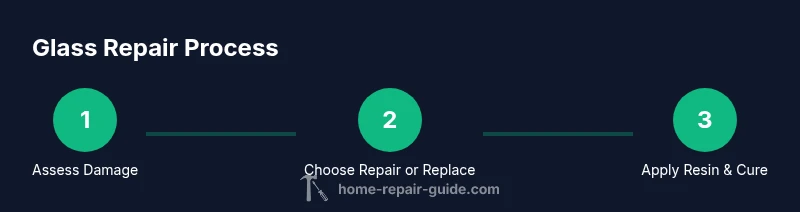
The Home Repair Guide team encourages a structured decision process: identify glass type, assess damage, weigh safety considerations, and choose an approach that balances cost, risk, and durability. For small, cosmetic chips on non-structural annealed glass, a resin repair may be a practical stopgap. For tempered or laminated glass, or for panes that contribute to structural integrity, replacement is the recommended path. When in doubt, get a professional opinion to avoid compromising safety or code compliance. The practical takeaway is clear: repairs are not a universal solution; they are a targeted option when used appropriately. The Home Repair Guide team's verdict is to prioritize safety, performance, and long-term reliability while considering budget and complexity.
Tools & Materials
- Safety glasses(Impact-resistant lenses to protect eyes from shards and dust)
- Cut-resistant gloves(Grip and finger protection when handling sharp edges)
- Dust mask or respirator(Ventilate if working in poorly ventilated spaces; avoid inhaling fumes)
- Epoxy resin or clear glass repair kit(Follow product directions; choose UV-curing formulas if available)
- Isopropyl alcohol or glass cleaner(Clean surface thoroughly before applying resin)
- Soft microfiber cloths(For cleaning and smoothing the resin surface)
- Plastic card or small spatula(Smooth resin and remove excess material)
- Safety disposal container(Seal shards and damaged pieces before disposal)
- UV lamp (optional)(Accelerates curing for certain resins)
Steps
Estimated time: 60-90 minutes
- 1
Prepare workspace and safety
Set up a clean, well-lit area. Put on safety glasses and gloves, and lay down a tray or old sheet to catch shards. Remove any nearby items that could be damaged by resin or shards. Ventilate the area if you’ll use chemicals.
Tip: Keep a rigid container close by for storing damaged pieces during repair. - 2
Inspect damage and test for cracks
Carefully examine the damaged pane and identify the extent of chips or cracks. If possible, test a small area with cleaner on a hidden edge to ensure the surface accepts adhesives. Do not try to bend or flex tempered glass.
Tip: If you see edge cracks or signs of delamination, stop and consider replacement. - 3
Apply resin to the damaged area
Mix epoxy or select a clear resin designed for glass repairs per the product instructions. Apply a thin layer directly onto the damaged area with a plastic card, smoothing from the center outward to eliminate air pockets.
Tip: Avoid overfilling; a thin layer reduces the risk of micro-cracks under pressure. - 4
Cure and verify repair
Allow the resin to cure fully according to the manufacturer’s times. Keep the area undisturbed and away from heat sources. After curing, inspect the surface for cloudiness or unbonded spots.
Tip: If UV-curing resin is used, illuminate with a UV light as directed to ensure complete hardening. - 5
Finish and clean up
Gently polish the repaired area with a microfiber cloth to blend edges. Remove residue around the repair and dispose of damaged shards safely. If the surface remains rough, you may lightly sand with a fine grit, being careful not to remove the repair layer.
Tip: Document the repair for future maintenance records and potential resale questions.
FAQ
Can broken glass be repaired?
Repair is possible for small chips in non-structural glass using resin or epoxy, but tempered or large cracks are usually not safely repairable. Cosmetic fixes may not restore full strength.
Yes, for small chips in non-structural glass, but tempered or major cracks typically require replacement.
Is blown glass repairable?
Blown glass often has complex internal structure and is difficult to repair. A minor cosmetic fix may be possible in rare cases, but replacement is commonly the recommended path.
Blown glass is generally not repairable; replacement is usually safer.
What types of glass can be repaired at home?
Annealed glass with small surface chips can sometimes be repaired at home using resin. Tempered or laminated glass, or damage near edges, should typically be handled by a pro or replaced.
You can repair small chips in annealed glass at home; tempered or laminated glass usually needs a professional.
How much does glass repair cost?
Costs vary with damage and material. DIY resin kits are relatively inexpensive, while professional repairs or full pane replacement can be considerably more. Always compare options and safety implications.
Costs vary; DIY kits are cheaper, professional repair or replacement costs more. Safety first.
When should I replace vs repair?
If the damage affects safety, structural integrity, or the glass is tempered or laminated, replacement is recommended. For minor cosmetic chips on decorative glass, repair may be acceptable with caution.
When in doubt, replace for safety; repair is only for minor, non-structural chips.
Watch Video
Key Takeaways
- Assess damage and glass type before repair.
- DIY repairs suit small, non-structural chips.
- Replacement is safer for tempered or structural glass.
- Follow resin curing times exactly for best results.
- Consult a professional for large or risky damage.