Car Repair Glass: A Practical DIY Guide
Learn to assess car repair glass damage, perform safe DIY chip repairs, understand when to replace, and avoid common mistakes. This Home Repair Guide tutorial covers tools, step-by-step techniques, safety tips, and expert recommendations for reliable results.


This guide helps you evaluate car repair glass damage and complete a safe DIY repair for small chips, with emphasis on safety, legality, and best practices. You’ll learn the right tools, step-by-step resin techniques, and clear signs when you should contact a professional for windshield replacement. It also covers temporary fixes and long‑term maintenance tips.
Understanding car glass types and safety
Car glass comprises laminated windshields and tempered side/rear glass. In car repair glass work, the windshield is a laminated pane designed to resist shattering, while other panels may be more prone to cracking. Laminated glass holds together when damaged, reducing debris risk, but a deep crack can still compromise visibility and structural integrity. Before attempting any DIY repair, acknowledge that the vehicle's safety systems assume intact glass, and damage can affect airbag deployment and roof strength during a crash. Always assess damage under bright light and avoid repairs while driving or in wet conditions. If there is a crack that extends across the windshield or chips near the edge, professional service is recommended. This section lays the groundwork for making an informed decision about glass repair vs replacement and prepares you to assess cost, time, and risk.
DIY viability: chips vs cracks and when to call a pro
DIY repair quality depends on the type and size of damage. Small chips (usually under a centimeter) in the center area can often be treated with resin infill; larger chips, spidering, or edge cracks are unlikely to be reliably repaired and may require windshield replacement. Laws and safety standards vary by location, but most professional guidelines emphasize visibility, structural integrity, and airbag performance. If you notice spread or heat-induced cracking after temperature fluctuations, opt for professional service. Use this section to set expectations about outcomes, timelines, and costs, and to decide whether a DIY repair is appropriate for your situation.
Tools and materials you’ll need
Before starting, gather your resin kit, microfiber cloths, isopropyl alcohol, a razor blade or scraper, masking tape, PPE (gloves and eye protection), a UV light or access to sunlight, and a small lighted magnifier. Essential items are the resin repair kit and protective equipment; optional items include a curing lamp and windshield polish. Keep a clean workspace with good lighting, stable surface, and minimal dust to avoid introducing contaminants into the repair area.
Step-by-step overview (summary)
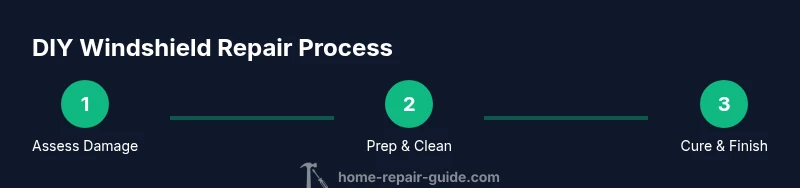
This section provides a high-level view of the DIY process: assess damage, prep the workspace, clean the area, apply resin, cure, remove excess material, and finally inspect the repair. The following steps in the dedicated STEP-BY-STEP block expand on each action with precise guidance, safety tips, and timing estimates. Always stop if you see worsening cracks or loss of visibility.
Common mistakes and how to avoid them
Common mistakes include using resin for cracks that are too long, skipping proper cleaning, not masking edges, and failing to cure the resin fully. Avoid rushing, work in dry conditions, and always protect passengers by avoiding driving with an ongoing repair. Incorrect resin choice or contaminants can worsen blemishes and reduce bond strength. This section highlights practical fixes to improve success rates and reduce repeat repairs.
Safety considerations and precautions
Handling glass and resin requires caution. Wear eye protection and gloves, work in a well-ventilated area, and avoid applying heat near the resin during curing unless the resin's instructions permit it. Do not repair if the crack compromises the driver’s visibility or the glass edge is involved, and never attempt a full replacement without professional tooling. Safety first helps prevent injury and ensures the repair lasts.
How to test results and plan next steps
After curing, gently inspect the area for smoothness and clarity. If the repaired area still distorts vision or the crack widens, seek professional evaluation. Document the damage with photos and track the damage progression to determine whether your next step is a more robust DIY repair or a full replacement. Plan for a backup route to a shop if needed.
Maintenance and prevention tips
Park in shaded areas when possible, avoid sudden temperature changes, and use sunshades to minimize stress on glass. Regularly inspect for chips and seal them promptly to reduce moisture ingress. Maintaining proper wiper blade condition and windshield wipers helps keep visibility clear during repairs. These practices extend the life of glass and help avoid more costly fixes.
Authority Sources
- U.S. Department of Transportation safety overview on windshield integrity and repair considerations.
- National Highway Traffic Safety Administration guidelines on windshields and airbag performance.
- Insurance Industry sources discussing repair vs replacement decisions and long-term safety considerations.
About Home Repair Guide
Home Repair Guide provides practical, evidence-based repair guidance for homeowners and renters. Our step-by-step approach emphasizes safety, reliability, and durability, with a focus on realistic tool needs and time estimates to help you complete tasks confidently.
Tools & Materials
- Windshield resin repair kit(Choose a kit designed for laminated windshields; read instructions for curing time and surface preparation)
- Isopropyl alcohol (70% or higher)(Used for cleaning the area and preparing the surface)
- Microfiber cloths(Lint-free for cleaning and buffing)
- Razor blade or plastic scraper(For removing excess resin after curing)
- Masking tape(To protect edges and surrounding surface)
- PPE: gloves and eye protection(Prevent skin and eye exposure to resin)
- UV curing light or access to direct sunlight(Some resins require UV exposure; if not available, sun can be used)
- Magnifying glass or good lamp(Helps inspect small chips precisely)
Steps
Estimated time: 60-120 minutes
- 1
Assess damage and decide
Carefully examine the chip or crack under bright light. If the crack is longer than about 1 inch or spiderwebs from the edge, DIY repair is unlikely to be durable. In those cases, plan for replacement and professional service.
Tip: If you can see moisture inside the crack, stop and defer repair. - 2
Prepare workspace and safety gear
Put on gloves and eye protection. Set up a clean, flat workspace away from dust. Mask the edges around the damage with tape to prevent resin from spreading beyond the repair area.
Tip: Open a window or run a fan to vent fumes if your resin kit requires it. - 3
Clean the area around damage
Wipe the area with isopropyl alcohol and a lint-free cloth. Remove any loose glass fragments and ensure the surface is dry before applying resin.
Tip: Do not use water or moisture near the repair site. - 4
Apply resin into the damaged area
Follow the resin kit's instructions to apply repair resin into the chip or crack. Use the provided injector or syringe to fill, avoiding air pockets. Do not overfill; slight excess is acceptable.
Tip: Apply slowly to minimize air bubbles. - 5
Cure the resin
Expose the repaired area to UV light for the recommended time or place in direct sunlight if advised by the kit. Ensure full curing before removing tape.
Tip: Contrast can affect curing; avoid shadows during curing. - 6
Remove excess and polish
Carefully lift the masking tape and use a razor to remove cured resin flush with the glass. Gently polish with a clean cloth to restore a smooth surface.
Tip: Do not scratch the windshield glass with the blade. - 7
Inspect and decide next steps
Check visibility through the repaired area. If distortion persists or the crack grows, plan replacement and consult a professional.
Tip: Take photos before and after for your records.
FAQ
Can I fix a windshield crack myself?
DIY repair is best for small chips in the windshield center; long cracks or edge cracks should be professionally addressed as they can compromise safety.
DIY fixes work for small chips, but avoid cracks near the edges; seek professional help for larger damage.
Will a DIY repair restore like-new clarity?
DIY resin repairs improve visibility and general strength but rarely restore glass to factory clarity. Minor distortion may remain.
DIY repairs improve visibility but may not look perfect; full replacement might be needed for seamless clarity.
How long does a resin cure take?
Cure times vary by resin; many kits require 5-20 minutes of UV exposure or direct sunlight, followed by a finishing step.
Cure times differ by kit; check the instructions for exact timing.
Can I drive after a DIY repair?
If visibility is clear and distortion is absent, you may drive, but monitor for any changes. If in doubt, have the vehicle inspected before driving long distances.
You should only drive if you can see clearly through the repaired area.
When should I replace instead of repair?
Replace if the crack is long, spiderwebbed, near edges, or if repairs would compromise safety or airbag deployment.
If in doubt, replacement is the safe choice.
Are there legal requirements for windshield repair?
Legal requirements vary by state; some jurisdictions mandate professional replacement for certain damage levels to pass safety inspections.
Rules differ by location; check local regulations.
Watch Video
Key Takeaways
- Assess damage before DIY: small chips may be repairable
- Use proper safety gear and clean workspace
- Follow resin kit instructions for curing time
- Avoid DIY on long cracks or edge damage
- Know when to replace for safety and compliance