Chamberlain Garage Door Opener Repair: A DIY Guide
Comprehensive, practical steps for diagnosing and repairing Chamberlain garage door opener issues. Learn safety tips, common problems, step-by-step fixes, maintenance, and when to call a pro.


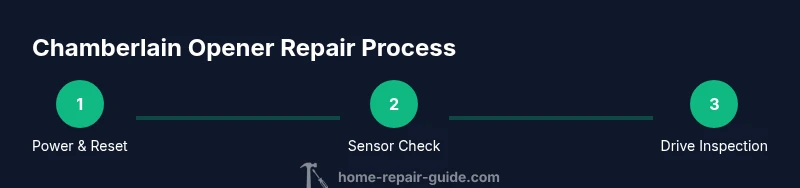
This guide helps you perform chamberlain garage door opener repair safely and effectively. You’ll cover power checks, sensor alignment, drive-system inspection, and remote reprogramming. By following these steps, homeowners can restore smooth operation, diagnose common failure modes, and avoid unnecessary service calls. It’s a practical start for anyone facing chamberlain garage door opener repair.
Understanding Chamberlain Garage Door Opener Basics
Chamberlain garage door openers are among the most popular residential systems, prized for their reliability and smart features. According to Home Repair Guide, these openers blend robust hardware with convenient connectivity, but like any mechanical device, they require regular attention. The core components include the power source, the drive mechanism (belt or chain), the trolley and rails, and the safety sensors. When a repair is needed, the goal is to return the opener tobalanced operation with all safety devices functioning. For DIYers, starting with a clear model number and the user manual makes troubleshooting far more efficient. Remember that proper calibration of travel limits and force is essential for safe and smooth closing. As you read, keep in mind that chamberlain garage door opener repair often hinges on simple maintenance tasks and timely part replacement rather than complex overhauls.
In this guide, we emphasize practical steps you can take, including remote reprogramming, sensor cleaning, and drive-system inspection. By documenting your findings before and after each fix, you’ll build a reliable baseline for future maintenance. The Home Repair Guide team notes that many issues stem from wear, misalignment, or power fluctuations, not mysterious malfunctions. With the right approach, you can restore dependable performance without unnecessary downtime.
Common Problems with Chamberlain Openers
Chamberlain openers typically fail for reasons tied to wear and misalignment. Common symptoms include the door not moving, the remote failing to respond, or the door reversing prematurely. Sensor alignment is a frequent culprit; dirty lenses, misalignment, or obstruction can prevent safe operation. The belt or chain can stretch over time, producing slower responses or jerky movement. If the opener motor hums but the door doesn’t move, a broken drive component or failed limit switch might be at fault. Weather conditions can also affect performance, especially if seasonal moisture or debris accumulates on tracks. Regular inspection helps catch these issues early and reduces downtime when you need the door most.
From a research perspective, Home Repair Guide analysis shows sensor and remote-control issues are among the most reported Chamberlain opener problems, while drive-belts and track alignment account for a significant portion of mechanical wear. Keeping a careful log of symptoms and dates helps pinpoint recurring faults and informs whether a repair is within DIY reach or warrants professional service.
Safety First: What Not to Do
Garage door opener repairs must prioritize safety. Never work under a door that is attached to a broken spring or a load-bearing component; those parts carry high tension and can cause serious injury. Disconnect the power to the opener before inspecting any internal components. Avoid modifying safety sensors or bypassing reversing mechanisms. Do not lubricate chains or belts with heavy grease on nylon parts, and never attempt to replace torsion springs unless you are trained and equipped for spring work. If you encounter a problem with springs, cables, or structural components, contact a licensed technician. The goal is to mitigate risk while addressing the root cause of the malfunction.
The Home Repair Guide team emphasizes following the manufacturer’s guidelines for your specific Chamberlain model, using the correct replacement parts, and wearing safety gear during all inspections. When in doubt, pause and seek professional help rather than rushing repairs that could compromise safety.
Diagnosing Issues: Quick Tests You Can Do
Begin with basic power checks: unplug the opener and reattach to reset the circuit. Replace remote batteries and reprogram remotes if needed. Test the wall switch and inside keypad to ensure they send proper signals. Clean the safety sensors and verify they face each other directly with an unobstructed path. If the door rises but won’t fully close, inspect the mounting brackets and tracks for bends or debris. A manual lift test (with the door disconnected from the opener) helps determine if the door is balanced; a door that is heavy or drifts indicates spring or balance issues beyond DIY scope. Finally, confirm the limit and force settings on the opener are correctly calibrated for your door height and weight.
These checks cover the most common culprits behind chamberlain garage door opener repair scenarios and help you decide whether to continue with more involved steps or call a pro. The aim is to build confidence through methodical testing rather than guesswork.
Step-by-Step Repair Guide (Overview)
This section provides a structured path for common, non-spring-related repairs on Chamberlain openers. You’ll learn how to isolate a fault, perform safe maintenance, and validate results with repeatable tests. Each step builds toward a fully functional system while emphasizing safety and model-specific precautions. Keep your manual handy and reference replacement part numbers to ensure compatibility. Although some tasks can be completed by a capable homeowner, certain components—especially those under tension—should be handled by professionals. Maintain documentation of the process so you can reproduce fixes in the future and track wear patterns.
Throughout the process, the emphasis is on incremental testing: verify a change worked before moving ahead, and stop if a step reveals unexpected hazards.
Maintenance and Long-Term Care
Proactive maintenance reduces the risk of stubborn failures and extends the life of your Chamberlain opener. Schedule a quarterly quick-check to confirm sensors are clean, tracks are free of obstructions, and the door is balanced. Occasionally lubricate moving parts with silicone-based lubricant and avoid oil-based products that can attract dust. Keep the remote controls stored away from electromagnetic interference sources, such as other devices or metal surfaces that can disrupt signals. Finally, keep an updated inventory of model numbers and part replacements so you can source the correct gear or belt if wear occurs. Regular maintenance is a practical, cost-effective approach to reliable operation and peace of mind.
Bonus: Battery Backup and Smart Features
If your Chamberlain opener supports battery backup or smart-home integration, test these features after repairs to ensure end-to-end reliability. Reconnect the battery backup and verify it engages during a power outage. Re-sync Wi-Fi or Bluetooth pairing if your model supports smart access to avoid future disconnects. Keeping software up to date and maintaining a clean network can prevent remote-control issues and improve overall performance. Regularly reviewing app notifications can also alert you to potential problems before they affect daily use.
Tools & Materials
- Safety goggles(Protect eyes from debris during testing)
- Voltage tester(Verify power at outlet and unit)
- Flathead screwdriver(Adjust limit switches and housing screws)
- Phillips-head screwdriver(Screws on opener housing)
- Adjustable wrench(Tighten or loosen hardware on tracks/shafts)
- Pliers (needle-nose)(Grip small parts and wires)
- Silicone lubricant spray(Lightly lubricate tracks/rollers; avoid nylon wear)
- Rags or paper towels(Clean spills and wipe hands)
- Replacement belt or gears (if applicable)(Only if wear is confirmed)
- Step ladder(Access ceiling-mounted components)
- Replacement remote batteries(Test remotes after replacement)
- Owner’s manual or model number reference(Identify compatible parts)
Steps
Estimated time: 60-120 minutes
- 1
Power down and verify safety
Unplug the opener at the wall and disconnect any battery backup. Attempt a manual move to ensure the door stays on its tracks. Reconnect power only when you are ready to test, and keep hands clear of the door path.
Tip: Always assume springs could be under tension; keep clear of the door's path. - 2
Check the remote, keypad, and receiver
Test all remotes and the wall switch. Replace batteries and reprogram remotes if needed. If your model uses a receiver, unplug and replug it to reset internal logic.
Tip: Remove clutter around the receiver to avoid interference. - 3
Inspect safety sensor alignment
Clean the sensor lenses and ensure both sensors face each other with a clear line of sight. Adjust the brackets so the LED indicators show solid operation.
Tip: Sensors must be aligned and unobstructed for automatic reversal to work. - 4
Check the tracks and rollers
Inspect tracks for bends, dents, or debris; tighten any loose brackets. Lubricate rollers and moving joints with silicone lubricant.
Tip: Use a level to confirm tracks are plumb and aligned. - 5
Test door balance manually
Disconnect the door from the opener and lift to about halfway. If the door feels heavy or drifts, the balance system or springs may require professional service.
Tip: Do not attempt to adjust torsion springs if you are not trained. - 6
Open the opener housing for gear inspection
Remove the cover and inspect drive gears, belt, or chain for wear. Look for loose fasteners and signs of slipping.
Tip: Take photos during disassembly to aid reassembly. - 7
Replace worn components if needed
Install a new belt/chain or gear set if you’ve confirmed wear. Re-tighten belts and recheck alignment before reassembly.
Tip: Use model-specific parts and follow torque guidance. - 8
Reassemble, reset limits, and retest remotes
Reattach the housing, reconnect power, and run a full test cycle. If the door stops too high or too low, adjust the limit switches and re-test with obstacles for safety.
Tip: Test the auto-reverse by placing a 1-inch object under the door.
FAQ
Can I perform chamberlain garage door opener repair myself?
Yes for basic maintenance and non-spring issues like sensor cleaning, remote reprogramming, and lubrication. More complex repairs, especially involving springs or structural parts, should be handled by a licensed technician.
Yes for simple tasks like cleaning sensors and replacing remote batteries, but avoid springs or structural work.
What tools do I need for a typical Chamberlain opener repair?
A basic set of hand tools, safety gear, a voltage tester, and model-specific replacement parts. Refer to the Tools and Materials list for a complete inventory.
A few common hand tools and safety gear will cover most tasks.
Is it safe to adjust the springs myself?
No. Torsion and extension springs are under high tension and can cause serious injuries. Always hire a professional for spring work.
Springs are dangerous; let a pro handle them.
Why won’t my Chamberlain opener respond to the remote after changing batteries?
Check the receiver and reprogram as needed. Look for interference sources and ensure sensors aren’t blocked. If problems persist, verify the model’s compatibility and reset the system.
Try reprogramming and checking for interference; consider a full reset if needed.
How do I reset the opener’s limits?
Use the wall control or the opener’s limit adjustment screws per your model manual. After resizing, test with the door in a few positions to confirm proper travel.
Use the manual’s limit settings and test carefully.
What maintenance should I do to prevent future issues?
Lubricate moving parts, keep sensors clean, inspect tracks, and check balance regularly. Schedule annual check-ins and replace worn components promptly.
Regular lubrication and sensor checks go a long way.
Watch Video
Key Takeaways
- Verify power and reset devices before any repair.
- Sensor alignment and drive-system wear are the top failure points.
- Only perform safe, non-spring tasks yourself; call a pro for springs or cables.
- Maintain a repair log to guide future maintenance.