Generator Repair: A Practical Step-by-Step Guide
Learn how to diagnose, repair, and maintain home generators safely with clear steps, essential tools, common issues, and maintenance tips from Home Repair Guide.


You can safely diagnose and repair many residential generators by following a structured process: inspect fuel, spark, and air; confirm safety features; check for worn or dirty carburetor and plugs; replace parts as needed; and test with a controlled load. Always work in ventilated space and follow the generator's manual.
What generator repair entails and why it matters
Generator repair encompasses diagnosing, servicing, and replacing worn parts on portable or standby generators to restore reliable starting, clean power, and safe operation during outages. A practical repair blends mechanical and electrical troubleshooting—fuel delivery, ignition, air intake, and control electronics. According to Home Repair Guide, a structured diagnostic approach paired with proper safety practices can prevent dangerous failures and extend equipment life. The Home Repair Guide team found that addressing minor symptoms early reduces downtime and lowers the chance of a costly breakdown when you need power most. This section lays the groundwork: how failure modes show up, what tools you’ll use, and how to decide whether a repair is cost-effective versus replacement. By the end, you’ll know how to approach generator repair with confidence and clarity.
In real-world scenarios, you’ll encounter a mix of mechanical wear and electrical quirks. Having a clear plan helps you prioritize fixes, orders of operations, and safety steps. The guidance here is designed for homeowners and renters who want practical, durable results without guessing at the next move.
Safety first: hazards and precautions
Working on a generator brings fuel, electricity, and hot components together. Fire, carbon monoxide, and electrical shock are real hazards. Always work in a well-ventilated outdoor area or in a workshop with a CO detector. Disconnect the battery, shut the fuel valve, and wait for moving parts to stop before touching anything. Wear eye protection, gloves, and sturdy footwear, and keep a fire extinguisher within reach. If you’re unsure about any step, pause and consult the manual or a professional. When in doubt, take a break and keep others at a safe distance. Following a consistent safety protocol dramatically reduces the risk of injury during generator repair.
Diagnosing common issues in generators
Most generator problems fall into fuel, ignition, or air-related categories. A generator that won’t start may have stale fuel, a clogged fuel filter, or a fouled spark plug. A unit that runs poorly or stalls can be caused by a dirty air intake, a dirty carburetor, or an old battery. Begin with a simple, documented checklist: verify fuel quality and valve position, inspect the spark plug and ignition coil, check air filters, and listen for abnormal sounds or smells. If you identify a fault, replace the worn part and re-test. Throughout the process, refer to the manual for torque specs and wiring diagrams. The Home Repair Guide team notes that systematic diagnosis reduces guesswork and speeds recovery.
Essential tools, parts, and safety gear
Having the right tools makes generator repair safer and more efficient. You’ll typically need a basic socket set, screwdrivers (flat and Phillips), pliers, a multimeter, a spark plug wrench, carburetor cleaner, a fuel stabilizer, oil, and shop towels. For replacements, keep a spare spark plug, air filter, and fuel filter if applicable. Always use manufacturer-recommended parts and check the model number before purchasing. Don’t skip safety gear: goggles, gloves, and hearing protection; wear a respirator if you’re exposed to solvent fumes. The Home Repair Guide emphasis on preparation helps you avoid mid-repair trips to the store.
Proactive maintenance to prevent future failures
Preventive maintenance is cheaper than emergency repairs and helps you rely on your generator when you need it most. Create a simple routine: check oil level, replace or clean air filters, drain and replace stale fuel, and inspect hoses and belts for wear. Keep a log of maintenance dates and parts replaced to track reliability over time. Run the unit under load periodically to confirm it operates under real-world conditions and to detect weak spots before a failure. Storage and handling tips, like using approved fuel containers and stabilizers, also matter. The Home Repair Guide analysis shows that consistent upkeep reduces the likelihood of major faults and keeps your generator ready for the next outage.
A practical repair workflow (overview)
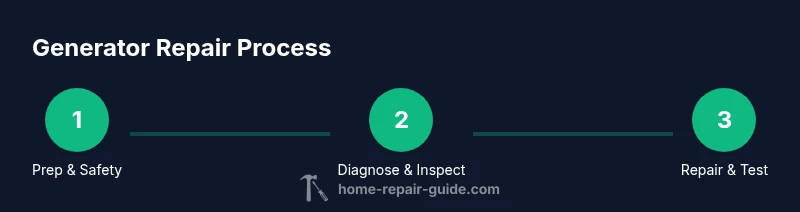
Here’s a concise, safe workflow you can follow before diving into a hands-on repair: 1) Prepare the workspace and gather tools; 2) Verify shutdown, disconnect power and fuel; 3) Run through a diagnostic checklist for fuel, spark, and air; 4) Replace worn components and reassemble; 5) Re-test with a controlled load and document results. This is a high-level guide to align your actions with the Step-by-Step section that follows. If you’re unsure about carburetor repair or electrical testing, consult the manual or a professional. The goal is to restore safe operation while preserving the unit’s life.
Common mistakes to avoid
Avoid bypassing safety features or rushing through diagnosis. Don’t use the wrong torque when tightening fasteners, and never mix incompatible parts with the engine or ignition system. A common error is letting stale fuel sit in the system; always drain and replace fuel before testing. Finally, avoid running a generator indoors or in an enclosed space to prevent carbon monoxide buildup. Careful adherence to safety and proper part selection pays off in long-term reliability.
When to call a professional
Some generator repairs are best left to trained technicians. If the fault involves high-voltage circuits, engine internals, or a gas leak, seek professional help. Electrical repairs can present shock risks, while carburetor work may require specialized tools and knowledge. If you aren’t confident performing a test or replacing a part, stop and arrange a service call. The Home Repair Guide team recommends erring on the side of caution for safety-critical repairs and for engines with warranty coverage.
Budgeting and evaluating repair versus replacement
Budgeting for generator repair means weighing part costs, tool needs, and potential labor if you hire help. Compare the price of replacement parts, the cost of professional service, and the expected lifetime extension from repair versus replacement. Plan for ongoing maintenance to maximize the return on investment. The decision is influenced by the unit’s age, reliability, and your power needs during outages. Based on Home Repair Guide analysis, informed maintenance planning helps homeowners make cost-effective choices without sacrificing safety or performance.
Tools & Materials
- Basic socket and screwdriver set(Includes common sizes for panels and fasteners)
- Multimeter or voltage tester(For checking circuits and battery charging)
- Spark plug wrench(Inspect/replace spark plug and gaps)
- Carburetor cleaner(Use non-corrosive cleaner and follow venturi guidance)
- Fuel stabilizer and fresh gasoline(Prevent fuel degradation between uses)
- Oil and funnel(Check oil level and quality per model)
- Shop towels and rags(Keep work area clean and prevent slips)
- Safety gear (gloves, goggles, ear protection)(Protect yourself from fuel and noise)
- Manual for generator model(Torque specs and wiring diagrams)
- Spare parts kit (spark plug, air filter, fuel filter)(On-hand replacements if available)
Steps
Estimated time: Total time: 2-3 hours
- 1
Secure the workspace and tools
Clear the area, lay out tools, and verify you have a fire extinguisher nearby. Ensure ventilation and lighting are adequate before you begin. This creates a safe baseline for the entire repair.
Tip: Label containers and cords to prevent confusion during disassembly. - 2
Power down and disconnect fuel
Turn off the generator, disconnect the battery, and close the fuel valve. Wait for any moving parts to stop and allow surfaces to cool before touching.
Tip: Take a photo of wiring before disconnecting to aid reassembly. - 3
Check fuel system and replace stale fuel
Inspect fuel quality and fuel lines for cracks or leaks. Drain stale fuel and refill with fresh fuel in approved containers.
Tip: Dispose of old fuel according to local regulations. - 4
Inspect spark plug and ignition
Remove the spark plug, check for fouling or wear, and replace if needed. Ensure the gap matches the manufacturer’s recommendation.
Tip: Clean the plug seating and gaskets to prevent leaks. - 5
Inspect air intake and filter
Inspect and clean or replace the air filter. Check the intake path for obstructions and clean any debris.
Tip: A clogged air filter reduces performance and can foul the carburetor. - 6
Inspect carburetor and fuel delivery
Check for varnish or deposits in the carburetor; use cleaner spray to clear passages. Inspect fuel lines for cracks.
Tip: Do not soak carburetor components beyond manufacturer guidance. - 7
Check electrical connections and charging system
Inspect connections to the battery, stator, and regulator. Tighten loose connections and test charging output with a multimeter.
Tip: Corrosion on terminals can mimic faulty components. - 8
Test operation and load, then assess performance
Reconnect power and fuel, start the unit, and run under a controlled light load before heavy load testing. Observe for smooth operation and listening for unusual sounds.
Tip: Record voltages and runtime to compare against baseline. - 9
Document results and plan maintenance
Document parts replaced, readings, and future maintenance dates. Schedule preventive maintenance to extend unit life.
Tip: Keep a repair journal for warranty and future troubleshooting.
FAQ
Is it safe to attempt generator repair myself?
Yes, many basic checks are safe if you follow the manual and safety steps. Do not attempt high-risk repairs without professional help. Always prioritize safety and discontinue work if you feel unsure.
Yes, you can handle basic checks safely by following the manual, but stop if you feel unsure and seek professional help for high-risk tasks.
What are the most common generator failures?
Stale fuel, clogged carburetor, worn spark plugs, and weak or dead batteries are among the most frequent causes of starting and running issues. Addressing these often resolves many problems.
Common failures include stale fuel, clogged carburetors, worn plugs, and weak batteries.
Do I need specialized tools for generator repair?
Most routine checks use common hand tools and a basic multimeter. Some tasks, like carburetor work or electrical testing, may require model-specific manuals and tools.
Most repairs use standard tools; some tasks may need model-specific gear.
How can I tell if my carburetor needs cleaning?
Symptoms include hard starting, sputtering, poor acceleration, and rough idle. Start with a carb cleaner spray and inspect jets for varnish or clogs.
Hard starting or rough idle can indicate carburetor issues; check jets and clean as needed.
Can I repair generator batteries?
Batteries can sometimes be revived or replaced, depending on age and condition. If a battery won’t hold a charge after testing, replacement is usually the safer option.
Battery issues may be revived, but often replacement is safer if it won’t hold a charge.
How often should I test my generator under load?
Test under load according to the manual and your power needs, to ensure performance during an outage. Periodic testing helps catch issues before they matter.
Test under load as outlined in your manual to verify performance.
Watch Video
Key Takeaways
- Diagnose with a structured check to find root causes
- Prioritize safety, ventilation, and PPE
- Use manufacturer parts and the right tools
- Document maintenance and repairs for future reliability
- Know when to seek professional help for complex issues