Auto Engine Repair: A Practical Home Guide
Learn practical, safe steps for auto engine repair—from diagnosis to common fixes and when to call a pro. Practical guidance by Home Repair Guide.


According to Home Repair Guide, with basic knowledge and the right safety precautions, you can perform basic checks and routine maintenance for auto engine repair. This guide covers diagnostic signs, essential tools, safe procedures, and when to seek professional help for major repairs. You will learn how to identify issues early, replace simple parts, and avoid common mistakes.
Understanding the scope of auto engine repair
Auto engine repair spans routine maintenance, fault diagnosis, component replacement, and, in some cases, full engine overhauls. For homeowners, the focus is on safe, practical tasks—identifying symptoms, using the right tools, and executing non-destructive fixes. According to Home Repair Guide, the work should start with safety checks and a clear plan, because engines house high heat, moving parts, and electrical systems that can cause injury if mishandled. You’ll learn to distinguish between quick, do-it-yourself fixes and repairs that truly require a shop. This section explains how to prioritize tasks, avoid common mistakes, and set realistic expectations for results.
How engines work: a quick refresher
Most modern gasoline engines operate on four essential strokes—intake, compression, power, and exhaust. The ignition system, fuel delivery, air intake, cooling, and lubrication all coordinate to convert fuel into usable motion. Sensors and the ECU adjust timing, fuel mix, and idle speed for efficiency and emission compliance. A basic grasp of these parts helps you spot symptoms more accurately: for example, a misfire might involve ignition or fuel delivery, while overheating often signals cooling-system trouble. Understanding these basics gives you a framework for safe, effective diagnostics and maintenance.
Diagnostic signs and tests you can perform safely
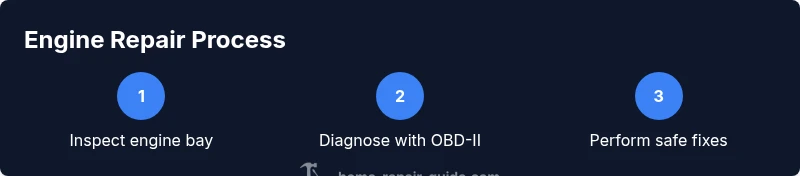
Look for common signs such as rough idling, stalling, misfires, reduced power, knocking, poor fuel economy, or warning lights on the dash. Start with non-destructive checks: inspect the air filter, check oil and coolant levels, and listen for unusual engine noises. A basic OBD-II scan can reveal stored codes that point you toward sensors or circuits that are malfunctioning. When you pull codes, cross-check with your vehicle’s service manual to interpret them correctly. Always work in a well-ventilated area and avoid cranking the engine while inspecting hot components.
Essential tools, equipment, and safety gear
Having the right tools saves time and reduces the risk of damage. You’ll need: a reliable OBD-II diagnostic scanner, a spark plug socket, a torque wrench, a set of metric and standard wrenches, screwdrivers, a multimeter, and a clean drain pan. Safety gear such as eye protection and gloves is essential, and a jack with stands is recommended if you must raise the vehicle. Keep rags, brake cleaner, and a flashlight handy. Optional but helpful: feeler gauges for precise gaps and a vacuum/pressure tester for certain diagnostics. Organize parts and fasteners in labeled containers to prevent mix-ups.
Common diagnostic and repair scenarios (overview)
In many cars, the most frequent engine issues are related to ignition, fuel delivery, or sensors. Replacing worn spark plugs or a clogged air filter can restore power and efficiency. Belts and hoses wear over time and can cause overheating or accessory failures; inspect for cracks and replace as needed. If codes indicate sensor faults (MAP, MAF, O2), follow the service manual for replacement and re-learning procedures. For stubborn symptoms, a professional inspection may be necessary to avoid misdiagnosis and unnecessary repairs.
Planning repairs and maintenance schedule
Before any repair, create a clear plan: confirm the symptoms, gather the correct replacement parts, and estimate the total cost and time. Check for manufacturer service bulletins that might cover your issue, and verify warranty implications before performing work that could affect coverage. Build a simple maintenance calendar: schedule air-filter changes, spark-plug inspections, belt checks, and fluid replacements at recommended intervals. Keeping a parts list and a repair log helps you track history and future service needs.
Safety, warranties, and when to seek professional help
The Home Repair Guide team emphasizes safety: disconnect the battery before working near electrical components, avoid hot surfaces, and never run the engine in a closed garage. For major engine repairs, frame-up fixes, or anything involving internal components, hire a qualified technician to protect your safety and vehicle warranty. If you’re unsure about a symptom or lack the specialized tools, it’s wise to consult a pro early to prevent costly misdiagnoses and potential harm.
Tools & Materials
- OBD-II diagnostic scanner(Compatible with your vehicle year/model; pull codes and live data)
- Spark plug socket(Do not use a regular socket; ensure proper size)
- Torque wrench(Used to tighten bolts to spec)
- Set of metric wrenches(Sizes vary; commonly 8-19 mm)
- Set of screwdrivers (flathead & Phillips)(Multi-size set)
- Multimeter(Electrical checks and sensor tests)
- Feeler gauge(For precise gap settings on certain components)
- Vacuum/pressure gauge(Useful for testing certain systems)
- Drain pan and rags(To catch fluids and keep workspace clean)
- Safety gear (gloves, safety glasses)(Eye protection and hand safety are essential)
- Jack and jack stands(Only if you need to raise the vehicle)
- Replacement parts (as needed: spark plugs, belts, filters)(Only after inspection reveals wear)
Steps
Estimated time: 2-6 hours
- 1
Power down and secure the workspace
Turn off the ignition, remove the key, and disconnect the negative battery cable. Allow any stored energy to dissipate and ensure the car is on a stable surface with parking brake engaged. Clear the area of flammable materials and gather your tools before starting.
Tip: Always wear eye protection and dry hands before handling electrical components. - 2
Connect the OBD-II scanner and pull codes
Plug the scanner into the OBD-II port and read all current and pending codes. Record the codes and note the freeze-frame data to understand the operating conditions when the issue occurred. Cross-check codes with the service manual to identify likely faulty systems.
Tip: Take a photo of the codes display for reference during the repair. - 3
Inspect ignition components
Visually inspect visible ignition parts—spark plugs, coils, and wires—for wear, fouling, or cracks. If you see obvious damage, replace the affected plugs or coils. Keep track of which plug came from which cylinder to maintain firing order.
Tip: Always gap and torque new spark plugs to manufacturer specs. - 4
Inspect air intake and filter
Check the air filter and intake hoses for dirt, cracks, or obstructions. A clogged air filter reduces performance and economy. If dirty, replace it and ensure hoses are securely connected with no leaks.
Tip: A clean MAF sensor and intake path can dramatically improve air flow readings. - 5
Check fuel delivery and leaks
Look for fuel leaks around lines and connectors and listen for whining from the fuel pump. If you suspect pressure issues, refer to the service manual for the correct fuel pressure specification and testing procedure.
Tip: Work in a well-ventilated area and avoid open flames when checking fuel components. - 6
Perform a compression test
Attach the compression gauge to each spark plug port and crank the engine to record cylinder pressures. Compare readings to factory specs. Low readings indicate sealing problems or worn components that may require further inspection.
Tip: Allow the engine to cool before testing and ensure all connectors are reattached afterward. - 7
Replace worn components
If tests point to worn spark plugs, belts, or seals, replace them following torque specs. Re-check that all electrical connectors are secure after replacement.
Tip: Dispose of old parts properly and keep a list of replaced components for warranty records. - 8
Reassemble and test run
Reconnect any removed components, reconnect the battery, and start the engine. Check for abnormal noises, leaks, or error codes. Take a short test drive to verify performance and re-scan to confirm the issue is resolved.
Tip: Monitor engine temperature and idle behavior during the test drive.
FAQ
What is auto engine repair?
Auto engine repair encompasses diagnosing and fixing components inside the engine or its systems to restore proper operation. It ranges from simple maintenance to complex overhauls and requires careful attention to safety and proper procedures.
Engine repair covers diagnosing and fixing engine components to restore operation. It can be simple or complex, but safety matters every step.
Can I perform engine repairs myself?
DIY work is possible for basic tasks that match your skill level and tool set. Major engine repairs usually require professional training and specialized equipment to avoid safety risks and warranty issues.
DIY is fine for simple tasks, but big engine repairs should be done by a professional to stay safe and protect warranties.
What tools are essential for engine repair?
Common essentials include an OBD-II scanner, spark plug socket, torque wrench, a sets of wrenches, screwdrivers, and a multimeter. Having safety gear and a drain pan helps keep the job clean and safe.
You’ll need an OBD-II scanner, torque wrench, sockets, wrenches, and basic safety gear.
When should I replace spark plugs?
Replace spark plugs when you notice rough running, misfires, reduced fuel economy, or visible wear on the plugs. Refer to the vehicle manual for model-specific guidance.
Replace plugs when you notice rough running or misfires, and follow your car’s manual for timing and gap specs.
Is engine repair dangerous?
Engine work involves heat, moving parts, and electrical systems, so safety gear and careful procedures are essential. If you’re unsure, seek professional help.
Yes, engine work can be dangerous. Use safety gear and don't push beyond your comfort level.
How can I verify a fix after repair?
Start the engine, watch for leaks, read engine codes again, and take a controlled test drive. Re-scan to confirm no codes return and monitor sensor readings.
Start the engine, test drive, and re-scan to confirm the issue is resolved.
Watch Video
Key Takeaways
- Inspect early to prevent major failures
- Use proper torque specs and tools
- Keep components organized to speed repairs
- Know when to escalate to a pro
- Document your work for future maintenance