Electric Repair for Cars: A Practical How-To Guide
A comprehensive, step-by-step guide to diagnosing and repairing common car electrical problems safely and effectively. Learn tools, techniques, and best practices for reliable home repairs in automotive electrical systems.


Learn to diagnose and repair common car electrical issues safely, from dead batteries to faulty grounds. This quick guide outlines a practical, step-by-step approach, the essential tools, and safety precautions. With the Home Repair Guide method, you’ll verify power, isolate faults, and test results before finishing the repair. It's suitable for homeowners and renters seeking reliable, durable fixes.
What is automotive electrical repair and why it matters
Automotive electrical repair refers to diagnosing and fixing issues that affect a vehicle's electrical system, including the battery, alternator, wiring harnesses, sensors, ignition, lighting, and control modules. Modern cars rely on complex networks of sensors and controllers, so problems can cascade and affect multiple systems. Understanding the basics helps homeowners and renters avoid unnecessary part replacements and reduce repair costs. According to Home Repair Guide, learning fundamental electrical repair skills empowers you to safely inspect circuits, interpret warning codes, and perform reliable fixes rather than relying on guesswork. In this section, we define core concepts, describe typical failure modes, and outline a practical workflow you can apply to most passenger cars. Whether you’re chasing a dim headlight, a dead battery, or intermittent gauge readings, the same disciplined approach—practice, patience, and proper safety—applies. This knowledge also sets you up to decide when to call a professional and when a home repair is appropriate.
Common car electrical problems
Common car electrical problems span a range of symptoms, from minor annoyances to safety-critical failures. Typical culprits include a dead or dying battery, a failing alternator, corroded battery terminals, blown fuses, and damaged wiring or grounding points. You may also encounter intermittent instrument cluster readings, sluggish power windows, or headlights that flicker at idle. In some cases, sensor failures or control-module glitches trigger warning lights. Recognizing patterns—like components that fail only when the engine is hot, or symptoms that appear after a windstorm or moisture exposure—helps narrow the fault. This section offers a framework to categorize issues: power delivery problems, control-system faults, grounding faults, and communication faults between modules. By mapping symptoms to these categories, you’ll prioritize tests and avoid unnecessary part replacement. The goal is to identify the root cause rather than chasing multiple symptoms with random part changes.
Safety first: essential precautions
Electrical work in a car can be hazardous. Always disconnect the negative battery terminal before removing panels or accessing wiring to reduce the risk of shorts or sparks. Work in a dry, well-ventilated area with adequate lighting, and wear eye protection and insulated gloves. Keep metal jewelry and tools away from battery terminals to prevent accidental short circuits. Avoid charging the battery or using high-current sources in cramped spaces, and never service high-voltage systems (such as certain EV components) unless properly trained. If you smell burning plastic or see melted insulation, stop immediately and seek professional help. These precautions protect you, your vehicle, and any passengers while you diagnose or repair electrical faults.
Diagnostic approach: how to identify the issue
A methodical diagnostic approach saves time and reduces the risk of errors. Start with a symptom-driven check: observe what fails, when it fails, and under what conditions. Verify basic power delivery by testing battery voltage with a multimeter and ensuring the ground connections are clean and tight. Inspect fuses and relays in the fuse box, then map circuits to see where power should flow. Use wiring diagrams and, if available, an OBD-II scanner to pull fault codes. Compare live data from sensors and controllers to expected ranges. When tests point to a specific circuit, isolate wiring segments with breakpoints to confirm where the fault lies. Document test results and maintain a cautious, repeatable approach to avoid misdiagnosis.
Tools and materials you’ll need
A reliable automotive diagnostic toolkit includes a digital multimeter (DVOM), a compact test light, insulated screwdrivers, a socket set, and a fuse puller. An OBD-II scanner is helpful for reading engine and powertrain codes. Keep spare fuses in a range of amperages, electrical contact cleaner, electrical tape, and cable ties for neat, safe wiring. You’ll also want a flashlight, PPE such as safety glasses and gloves, and a clean work surface. Having these items ready ensures you can diagnose and test circuits efficiently without repeatedly stopping to fetch tools. Organize your space to keep connectors, screws, and clips from getting misplaced. Always test power at the start and after any repair to confirm success before reassembly.
Step-by-step repair workflow (overview)
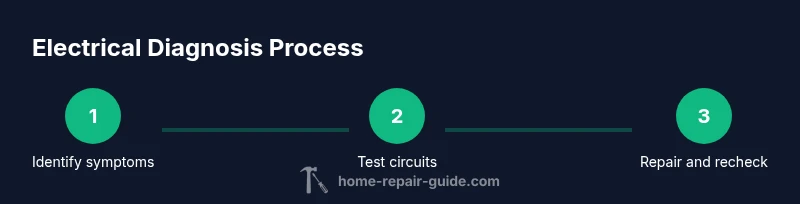
This section provides a high-level workflow you can apply to many car electrical tasks. Begin with safety and preparation, then perform a targeted diagnostic, follow with a controlled repair or component replacement, and conclude with a thorough re-test to verify all systems operate correctly. Throughout, refer to wiring diagrams for correct connections and torque specs where applicable. The flow emphasizes minimal disassembly, careful insulation of any exposed conductors, and documenting each action for future reference. For detailed steps, see the dedicated Step-by-Step section below.
Common mistakes to avoid and how to troubleshoot
Avoid common pitfalls by resisting the urge to replace parts without confirming a fault. Don’t over-tighten cable connections or apply force to fragile harnesses, which can worsen damage. Misidentifying grounds, overlooking corrosion, or ignoring the vehicle’s weather history are frequent errors. If a symptom persists after a repair, re-check your work, re-test power, and consider alternate circuits. When in doubt, pause and consult the wiring diagram, use a controlled test setup, and verify that you haven’t introduced a loose connector or stray conductor. Troubleshooting is a process of elimination, not a single fix.
Maintenance and prevention tips
Proactive maintenance can prevent many electrical problems. Regularly inspect battery terminals for corrosion and clean them with appropriate cleaners. Keep fuses organized and replace worn or damaged fuses as needed. Protect exposed wiring from vibration and moisture using split loom tubing or conduit. Schedule periodic visual checks of wiring harnesses, connectors, and grounding points, especially after road salts, moisture exposure, or heavy use. Replace aging components before failures occur, and maintain a log of symptoms and repairs to guide future maintenance. These habits reduce the likelihood of sudden outages and extend the life of your electrical system.
Authority sources
- NHTSA: https://www.nhtsa.gov
- U.S. Department of Energy (EV and charging infrastructure): https://www.energy.gov/eere/vehicles
- AAA Automotive Services: https://www.aaa.com
Tools & Materials
- digital multimeter (DVOM)(Prefer auto-specific DVOM with 600V rating and current measurement capability)
- automotive test light(Two-wire or three-wire type; ensure insulated handle)
- insulated screwdrivers(Varied tip sizes; IDEAL for panel work)
- socket set(Include metric and SAE sizes; 3/8" drive is versatile)
- fuse puller(For safe fuse removal without shorting terminals)
- assorted fuses(Mix of common amperages (e.g., 5A, 10A, 15A, 20A))
- OBD-II scanner(Helpful for engine codes and sensor data; not always necessary for non-powertrain faults)
- personal protective equipment (PPE)(Safety glasses and insulated gloves at minimum)
- electrical contact cleaner(Clean connectors before reseating; avoid leaving residue)
- electrical tape and cable ties(Secure and insulate repaired connections)
- dry, lint-free cloth(Wipe terminals and fuse blocks as needed)
Steps
Estimated time: 90-120 minutes
- 1
Prepare and safety check
Park the vehicle on a level surface, engage the parking brake, and switch off the ignition. Open the hood and disconnect the negative battery terminal to prevent accidental shorts while you inspect wiring and panels. This initial pause protects you and preserves electronics while you assess symptoms.
Tip: Label connectors you disconnect and photograph panel layouts before removal to aid reassembly. - 2
Inspect visually for obvious issues
Look for loose connectors, burnt wires, corrosion on terminals, melted insulation, and signs of moisture intrusion. Check fuse panels for blown fuses and inspect relays related to the symptoms. Document any findings with photos for later reference.
Tip: Use a flashlight and a magnifier for small connectors; moisture zones often hide corrosion. - 3
Test power delivery with a DVOM
With safety gear on, measure battery voltage, alternator output, and continuity on suspect circuits. Compare readings to manufacturer specifications in your service manual. A voltage drop test can reveal poor connections or parasitic drains.
Tip: Test with the engine off first, then with the engine running to see how voltage changes. - 4
Check grounds and battery terminals
Confirm that battery terminals are clean, tight, and free of corrosion. Inspect all ground points from the chassis to the engine block and any sensor grounds. A poor ground can cause erratic readings across multiple systems.
Tip: Remove, clean, and re-tighten both battery clamps; apply a small amount of dielectric grease to terminals afterward. - 5
Inspect fuses, relays, and harness connections
Test fuses and relays for proper operation. Wiggle connectors gently to identify loose or damaged pins. Inspect harnesses for cracked insulation or pinching near moving parts.
Tip: Replace blown fuses with the same amperage rating and examine circuit diagrams to confirm the correct fuse path. - 6
Use wiring diagrams and, if available, OBD-II scans
Consult the vehicle’s wiring diagram for circuit logic and conductor routes. If codes exist, use an OBD-II scanner to pull fault codes and live data to guide your diagnosis. Cross-check sensor readings with expected values.
Tip: Even if the OBD-II readout shows a code, confirm the fault with direct electrical tests rather than blindly replacing parts. - 7
Isolate the faulty component
By confirming a fault in a specific segment, you can isolate the problem without replacing multiple parts. Disconnect suspected devices one at a time and retest the system to observe whether symptoms persist.
Tip: Keep a log of which component you tested and the results to track progress clearly. - 8
Perform the repair or replacement
Replace damaged wires, connectors, or components using OEM-compatible parts when possible. Reinstall with correct torque specs and ensure proper insulation and routing to prevent future damage.
Tip: Test the repaired circuit in stages: power, function, and field performance before closing panels. - 9
Reassemble and re-test the system
Reconnect the battery, power on the vehicle, and perform a full system test. Verify that all affected systems operate normally and that warning lights are cleared. If issues persist, re-check the diagnosis or seek professional help.
Tip: Take a final drive to verify real-world operation and watch for any intermittent fault reappearing.
FAQ
What are common signs of electrical problems in a car?
Common signs include dim or inconsistent lighting, warning lights, a dead battery, slow power window operation, or intermittent instrumentation. If issues affect multiple subsystems, inspect grounding and main power feeds first. Accurate diagnosis saves time and money.
Look for dim lights, warning lights, and intermittent power; start by checking grounds and main power feeds.
Do I need a professional to repair my car's electrical system?
For complex systems such as airbags, ABS, or high-voltage components, a professional is recommended. For basic wiring and fuse-related issues, careful testing and replacement by a confident DIYer is possible.
For complex parts, call a pro; for simple fuse and wiring checks, you can handle it with caution.
What safety gear should I use?
Wear safety glasses and insulated gloves; keep loose clothing and jewelry away from moving parts and battery terminals. Work in a dry area and ensure proper lighting.
Always wear eye protection and gloves; stay dry and prepared.
What tools are essential for home electrical car repair?
A digital multimeter, test light, fuse puller, assortment of fuses, wiring diagrams, and basic hand tools. An OBD-II scanner is helpful but not always necessary.
A DVOM and a test light will cover most basic checks; add a fuse puller for convenience.
Is it safe to use an OBD-II scanner to diagnose electrical problems?
OBD-II is useful for diagnosing engine and some powertrain faults, but electrical issues outside the ECU wiring or modules may require direct electrical testing.
OBD-II helps for engine codes; some electrical faults need hands-on tests.
How long does a car electrical repair typically take?
Time varies with complexity. Simple fuse or connector fixes may take 30-60 minutes; larger rewiring tasks can take 2-3 hours depending on accessibility and testing needs.
It can range from half an hour to a few hours, depending on the fault.
Watch Video
Key Takeaways
- Identify the fault before replacing parts.
- Safety first: disconnect power and wear PPE.
- Use wiring diagrams and proper testing to confirm diagnosis.
- Test thoroughly after repair to verify success.
- Maintain a repair log for future maintenance.