Car Audio Repair Near Me: Step-by-Step Guide
Discover how to locate reliable car audio repair near you, compare quotes, verify warranties, and secure durable fixes with a practical, step-by-step approach.


This guide helps you locate reputable car audio repair near you, compare options, and understand typical repair scopes. Gather basic tools, check warranty terms, and verify shop certifications before committing to service. This approach suits modern cars with integrated systems and aims for transparent pricing and clear post-repair testing.
Assess Your Car Audio Issue
Car audio problems can stem from electrical faults, wiring, amplifier issues, or head-unit failures. Start by listing the symptoms: no sound, distortion, buzzing, intermittent power, or fading channels. According to Home Repair Guide, a systematic check helps differentiate fuse or power issues from deeper wiring faults. Begin with the basics: confirm the fuse for the radio is intact, verify the vehicle’s ignition is supplying power when you start the car, and test with the factory settings to rule out software glitches. If your dashboard lights dim when bass hits, it may indicate grounding or harness problems. Document the exact symptoms and any recent changes (new head unit, amplified speakers, or after-market harnesses) to share with a repair shop. This preparation saves time and increases the likelihood of accurate diagnoses. The Home Repair Guide team emphasizes clarity in describing symptoms to avoid misdiagnosis.
Finding a Local Expert Near You
Finding a trustworthy car audio repair shop near you is more than a quick search. You want a shop with visible credentials, transparent pricing, and a track record of handling automotive electronics safely. Start with searches like “car audio repair near me” and widen to nearby communities. Look for providers with ASE or manufacturer-certified technicians and ask for written estimates before work begins. Read reviews focusing on electrical work, testing procedures, and warranty terms. The Home Repair Guide analysis shows that customers benefit from shops that publish a clear scope of work and post-repair testing procedures. Don’t skip asking for a demonstration of the repaired audio system post-installation. A reputable shop will welcome you and explain findings in plain language.
Understanding Car Audio Systems and Signals
Modern vehicles integrate head units, amplifiers, speakers, and digital signal processors. Each component has its own set of wires, harnesses, and grounding points. When diagnosing, differentiate between head-unit faults (the source), amplifier-related issues (power delivery or clipping), and speaker problems (voice coil, cone damage, or enclosure leaks). Wiring complexity increases with aftermarket components or CAN-bus integrations, which require careful harness matching and factory-interface adapters. A basic understanding of signal flow—from head unit to amplifier to speakers—helps you identify where a fault most likely resides. This knowledge also informs what questions to ask a repair shop about compatibility and safety.
Tools and Safety: Get Ready Before You Start
Preparation matters for safety and efficiency. Ensure the car is off, keys removed, and the battery disconnected when inspecting wiring or removing panels near live circuits. Gather essential tools such as a digital multimeter, panel removal tools, screwdrivers, wire strippers, electrical tape, and spare fuses. For anyone doing in-dash work, a clean workspace with good lighting reduces the chance of misconnecting wires. Wearing safety glasses protects against sharp edges and small debris when prying panels. Keeping a photo log of wiring colors and connector layouts helps you reassemble accurately. The steps below assume you have basic car repair experience; if not, lean toward a professional.
How Shops Approach Diagnosis: Common Procedures
A reputable shop typically starts with a visual inspection, checks fuses and power supply, and tests speaker continuity. They will measure voltage at the head unit and amplifier harnesses, inspect ground connections, and verify signal paths with a multimeter or oscilloscope where available. If wiring harness adapters are used, technicians confirm compatibility and proper routing to avoid interference or shorts. Expect a litany of questions about vehicle year, model, installed aftermarket gear, and any recent changes. Clear communication about symptoms and observed behavior helps the technician pinpoint the fault faster and reduces unnecessary repairs.
DIY vs Professional: Making the Right Call
DIY repairs can save money for minor tasks like reseating connectors or replacing a blown fuse, provided you have the right tools and safety awareness. Complex issues—CAN-bus integration, amplifier repairs, or head-unit reprogramming—often exceed typical DIY scope and require professional service. Pros weigh risks such as electrical shorts, fire hazards, and warranty voidance when non-professional work is performed. If your car’s audio system is still under warranty, consult the dealer or an authorized service center to avoid coverage gaps. Your decision should balance cost, risk, and the value of reliable post-repair testing.
Getting Estimates: What to Compare
When requesting quotes, insist on a written estimate that itemizes parts, labor, and testing. Compare the scope of work across shops: do they replace components, repair wiring, or simply re-seat connectors? Ask about warranties on parts and labor, and whether post-repair testing is included. A good shop will provide a time estimate and a road-test plan to verify sound quality at different volumes and tracks. Be wary of quotes that are unusually low; they may reflect a reduced scope or lower-quality parts. Transparency and communication are key to a fair deal.
Red Flags and Warning Signs
Warning signs include vague estimates, pressure to proceed immediately without a written quote, or a shop that cannot show evidence of valid electrical training. Avoid shops that insist on bypassing safety steps or cutting into airbags, dashboards, or the vehicle’s electrical system without documenting each action. If a technician cannot explain the problem in simple terms or cannot demonstrate a test plan, consider getting a second opinion. Trustworthy professionals will show a clear diagnostic path and provide opportunities for you to verify results yourself.
Aftercare: Testing the System Post-Repair
Once the repair is complete, request a thorough test: power on behavior, level matching across channels, balance/treble adjustments, and button-feedback responsiveness. Listen for unusual noises, buzzing, or distortion at multiple volume levels and with different audio sources. A road test or simulated driving scenario helps confirm durability under real conditions. Retain the repair notes and your original receipt; this documentation supports future warranty claims and service history.
Authoritative sources and further reading
For consumer guidance on auto repairs and protecting your rights, consult established sources. The following resources provide consumer protection and safety information related to auto repairs and electrical work:
- https://www.ftc.gov/tips-advice/business-center/guidance/auto-repair-fraud
- https://www.nhtsa.gov/ road-safety
- https://www.nist.gov/topics/electrical-safety These references can help you evaluate repair shops, understand safety standards, and verify warranties.
Summary of the Process
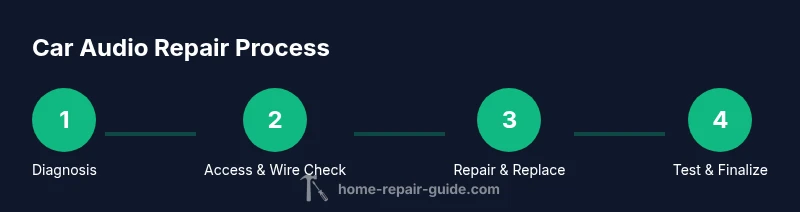
In short, diagnosing car audio near you involves symptom documentation, system understanding, safety prep, professional evaluation when needed, and thorough post-repair testing. Favor shops with transparent pricing, clear warranties, and demonstrable testing. Preparation, documentation, and a collaborative approach with your technician lead to reliable outcomes.
Tools & Materials
- Digital multimeter(For voltage checks and continuity tests)
- Trim removal tools(Plastic tools to avoid dash damage)
- Screwdriver set (Phillips & flat-head)(Various sizes for dash screws)
- Wire stripper/crimper(For splicing wires and connectors)
- Electrical tape or heat-shrink tubing(Insulation and safe joins)
- Replacement fuses and fuse taps(Keep on hand for protection and testing)
- Soldering iron and solder(Optional for clean, permanent connections)
- Replacement wiring harness adapters(If factory wiring requires adapters)
- Electrical contact cleaner(Keeps connectors rust-free and reliable)
Steps
Estimated time: 60-120 minutes
- 1
Identify symptoms
Document the exact symptoms and timeline. Note when the issue occurs (startup, at volume, while driving). This helps narrow the fault to a source and avoids unnecessary parts replacement.
Tip: Take clear videos or photos of the dashboard wiring and music source connections for reference. - 2
Power down and safety check
Turn off the car, disconnect the battery if you’ll be near wiring, and ensure you’re grounded to prevent shocks. Verify the device you’ll inspect is not live and avoid shorts.
Tip: Wear safety glasses to protect eyes from small screws and metal shavings. - 3
Access the head unit and harnesses
Use trim tools to remove dash panels carefully. Access the head unit, amplifier, and main harness. Photograph connector orientations before unplugging anything.
Tip: Label connectors with tape to mark their original orientation. - 4
Inspect wiring and connectors
Visually inspect for loose connections, corroded wires, or damaged insulation. Check grounds and the power feed to the head unit and amplifier.
Tip: Look for burnt smells or melted insulation as an immediate danger sign. - 5
Test with meter
Use the multimeter to verify voltage at key points and continuity between harness pins. Confirm that ground references are solid and that signals are present.
Tip: Test with the ignition on and off to see how power rails behave. - 6
Repair or replace faulty components
Repair damaged wiring, replace blown fuses, or swap a faulty head unit or amplifier as needed. Rebuild any damaged splices with heat-shrink or electrical tape.
Tip: Prefer replacing with OEM or-tested aftermarket components to maintain safety standards. - 7
Reconnect and tidy wiring
Reconnect all harnesses in their original orientation. Route wires away from moving parts and heat sources. Reinstall panels securely.
Tip: Use zip ties sparingly to prevent heat buildup around heat sources. - 8
Test and confirm
Reconnect the battery, power on the system, and perform a full audio test at multiple volumes and inputs. Confirm there are no shorts or abnormal noises.
Tip: Test on a drive to ensure performance under real conditions.
FAQ
What qualifies as a 'car audio repair near me'?
A local shop that can diagnose and repair components like head units, amplifiers, speakers, and wiring. Look for technicians with electrical experience and proper safety practices.
Look for shops with experience in head units, amplifiers, and wiring, and ask about their safety practices.
How should I verify a shop's credentials?
Ask for technician certifications, manufacturer-approved service status, and a written warranty. Read reviews focusing on electrical work and testing procedures.
Check for technician certifications, proper warranties, and solid reviews on electrical work.
What should I expect to pay for car audio repairs?
Costs vary by issue and vehicle. Get multiple written estimates and compare scope, parts, and labor before deciding.
Costs vary; get several written estimates and compare scope and parts.
Can I DIY a car audio problem safely?
Simple tasks like reseating connectors or replacing a fuse can be DIY, but complex issues involving CAN-bus or amplifiers are best left to professionals.
DIY is okay for basics, but complex problems should be handled by a pro.
How long does a typical car audio repair take?
It depends on the issue and parts availability. Most common repairs can take a few hours to a day, with longer delays for specialty parts.
Typical repairs take a few hours to a day, depending on parts.
Do warranties cover installation mistakes?
Warranty terms vary by shop, but a reputable installer will cover both parts and labor for a defined period if issues arise from their work.
Warranties vary; ask for coverage of labor and parts tied to the installer’s work.
Watch Video
Key Takeaways
- Identify issue symptoms clearly before repair.
- Choose a shop with transparent pricing and warranties.
- Understand how the car audio system is wired and tested.
- Post-repair testing confirms reliability and safety.