Roof Repair Costs: Budgeting and Planning for 2026
Explore roof repair costs, what drives price ranges, and how to budget for repairs or replacement. This data-driven guide from Home Repair Guide covers materials, labor, insurance, and maintenance strategies.


Roof repair costs vary widely, but most quick fixes cost a few hundred dollars and major repairs can run into the thousands. Typical ranges depend on roof type, material, extent of damage, accessibility, and local labor rates. This article breaks down every major factor and provides budgeting guidance to plan for maintenance or emergencies.
Understanding the Scope and Primary Cost Drivers
Roof repair costs are not a single number; they are a function of what needs fixing and how accessible the fix is. The most significant drivers include the roof type (asphalt, metal, tile, or flat), the extent of damage (minor leaks vs. structural compromise), and the labor market in your area. Weather conditions can delay work and raise temporary costs like tarping and safety gear. Finally, permit requirements, old warranties, and the presence of multiple layers can affect both labor time and material needs. By thinking of repairs as a spectrum—from quick patchwork to full-scale rehabilitation—homeowners can better estimate timelines and budgets. Home Repair Guide’s data indicate that planning for contingencies is essential when calculating roof repair costs; underestimation is a common reason for budget overruns. In practice, you should start with a quick visual assessment, then call a few reputable pros for written estimates that itemize materials, labor, and disposal.
Material Type and Cost Influence
Material choice is a top determinant of roof repair costs. Asphalt shingles, the most common material in many regions, typically produce lower repair costs because they are easier to access and replace. Metal roofs, while durable, often require specialized tools and fasteners, driving up labor time and materials. Tile and slate roofs tend to be the most expensive to repair due to their weight, fragility, and the need for matching pieces. Flat roofs (like many commercial or home additions) have different membranes and flashing requirements that influence both cost and scheduling. In every scenario, the age of the material matters: older roofs may require more invasive repairs or multiple patches, increasing labor hours and waste disposal. When you compare estimates, ask for a breakdown by material, and ensure that the quote accounts for potential matching materials if replacement parts are needed. Home Repair Guide's research shows that homeowners who understand material cost profiles can negotiate better with contractors and avoid overpaying for premium options when a simple patch would suffice.
Common Repair Scenarios and Price Ranges
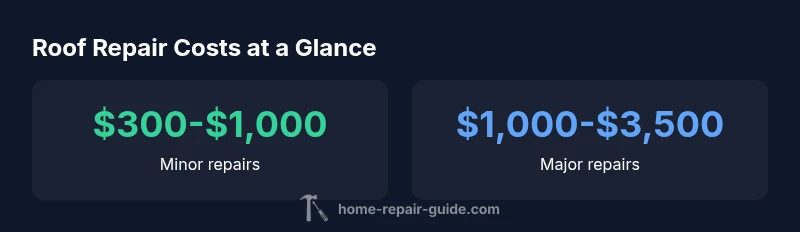
Typical repair scenarios cover a wide spectrum of needs. A minor leak around flashing or a vent boot might cost in the lower end of the range, while replacing damaged shingles or repairing structural components can push totals higher. For example, patching flashing and resealing seams often falls in the $300–$1,000 window, whereas more extensive shingle replacement or flashing upgrades can reach $1,000–$3,500. Emergencies or weather-related fixes, such as tarping a damaged roof, tend to be on the lower end for quick action but can add temporary costs. When planning, consider whether a pro can address multiple issues in a single visit to maximize efficiency and minimize repeated access charges.
Labor, Accessibility, and Regional Price Variation
Labor costs are a major variable, with regional differences reflecting demand, competition, and travel time for workers. Urban areas typically see higher hourly rates than rural regions, but the price gap can be offset by shorter project durations in dense markets. Accessibility matters too: steep pitches, difficult access points, or roofs with complex geometry add to labor time and safety precautions. If your roof has multiple layers or needs tear-off, expect a longer process and more disposal costs. To stay on budget, request itemized quotes that separate labor, materials, disposal, and permit fees, and ask for a timeline with milestones so you can track progress and changes.
Budgeting Strategy: Step-by-Step for Homeowners
A practical budgeting approach starts with a baseline estimate based on roof size and material, plus a contingency for unknowns. Break your budget into categories: inspection, minor repairs, major repairs, replacement planning, and contingencies. Get at least three written estimates from licensed contractors and check their references and insurance. Consider setting aside a reserve fund for future maintenance, since preventative upkeep often prevents large, unexpected bills. For emergency readiness, identify which repairs you can schedule in advance and which must be addressed immediately after a storm or heavy rainfall. A disciplined budget anchored by documented estimates reduces the risk of cost overruns and delays.
Repair vs Replacement: Decision Framework
Deciding between repair and replacement hinges on age, overall condition, and long-term value. If the roof is nearing the end of its expected life or has widespread damage, replacement may offer better long-term value despite a higher upfront cost. In many cases, a targeted repair can extend life by several years without the disruption of full replacement. Use a cost-per-year framework: estimate the remaining lifespan of the roof after repair versus replacement, and weigh against the out-of-pocket difference and potential energy savings. Home Repair Guide recommends consulting with a trusted contractor to run a formal cost-benefit analysis tailored to your home and climate.
Insurance, Warranties, and Financing Options
Insurance coverage for roof repair depends on the policy, the cause of damage, and whether the event is sudden or gradual. Filing a claim for storm damage is common, but wear-and-tear tends to be excluded. If you carry a warranty on materials or contractor work, verify what scenarios are covered and what documentation is needed. Financing options, including home improvement loans or contractor-financed plans, can help manage large projects. Compare interest rates and terms, and ensure you understand any penalties for early payoff. Always obtain written estimates and review coverage details with your insurer before proceeding.
Maintenance Practices to Reduce Future Costs
Proactive maintenance is a powerful cost saver over the roof’s lifetime. Regular inspections after severe weather, cleaning gutters, and trimming branches near the roof reduce incidental damage. Address damaged flashing, sealant failure, or clogged ventilation promptly to prevent leaks from escalating. A simple annual or semi-annual check can catch issues early, reducing both the frequency and magnitude of costly repairs. Keeping records of inspections, maintenance, and repairs helps you track wear patterns and plan replacements before major failures occur.
Roof repair cost scenarios and ranges
| Scenario | Typical Cost Range | Key Factors | Notes |
|---|---|---|---|
| Minor repair (leaks, flashing) | $300-$1,000 | Roof type, accessibility, condition | Often DIY-friendly if safe |
| Major repair or patch | $1,000-$3,500 | Extent of damage, permits | Typically requires professional |
| Emergency tarping | $200-$500 | Weather, urgency | Temporary solution to prevent further damage |
| Full roof repair vs replacement | $5,000-$12,000 | Age, material, warranty | Replacement may be long-term value |
FAQ
What factors influence roof repair costs?
Several factors drive roof repair costs: roof material, extent of damage, accessibility, local labor rates, and any required permits. Seasonal timing and the need for temporary protection also affect totals. Getting itemized quotes helps you compare apples-to-apples.
Costs depend on material, damage extent, accessibility, and local labor rates; ask for itemized estimates to compare.
Is it cheaper to repair or replace a roof?
If the roof is relatively new and damage is localized, repairs often cost less in the short term. When the roof is aging or damage is widespread, replacement may offer better long-term value and efficiency.
Repairs save money now if damage is limited; replacement may be smarter with an aging roof.
How long does a typical roof repair take?
Most small repairs take a few hours to a day, depending on access and weather. More extensive work or multi-vent repairs can stretch to several days. Contractors usually provide a project timeline with milestones.
Most fixes wrap in a day or two, with bigger jobs taking longer.
Can I DIY minor roof repairs?
Minor repairs that don’t require roof access or specialized safety gear may be doable for experienced DIYers. However, most roof work involves fall risks and warranty concerns, so evaluate safety and insurance implications before starting.
Only tackle safe, non-technical fixes if you have the right gear and experience.
Do homeowners insurance policies cover roof repairs?
Coverage depends on the policy and the cause of damage. Sudden storm damage is commonly covered, while wear and aging usually aren’t. Always check your policy language and document events before filing a claim.
Storm damage may be covered; wear and aging typically are not.
What are quick tips to reduce costs?
Get multiple estimates, ask for a material-for-material comparison, and consider staged repairs. Scheduling work in off-peak seasons can also lower rates. Ensure quality, as cutting corners may lead to higher costs later.
Shop around for estimates and ask for clear material comparisons.
“Understanding the cost drivers behind roof repairs helps homeowners plan for emergencies without overpaying. A disciplined budgeting approach, paired with a clear material and labor plan, yields the best long-term value.”
Key Takeaways
- Assess damage early to estimate costs.
- Compare materials to balance price and longevity.
- Expect labor rates to vary by region.
- Choose repair when feasible to save upfront.
- Schedule regular maintenance to prevent costly surprises.