Is Windshield Repair Worth It? A Practical Guide
Explore whether windshield repair is worth it by comparing DIY kits vs professional services, safety, costs, and insurance implications to guide your choice.


Is windshield repair worth it? In most cases, yes, for small chips and cracks away from the driver’s line of sight, repair is faster, cheaper, and preserves structural integrity. However, large or spreading damage often requires replacement. This quick comparison highlights when to DIY, when to hire a pro, and what factors influence the decision.
Understanding the Value of Windshield Repair
According to Home Repair Guide, the question 'is windshield repair worth it' hinges on multiple factors: damage size, location, and the risk of spreading. Windshields are not just glass; they are an integral safety component of your vehicle. A tiny chip near the edge can become a long crack if left ignored, while a small, clean chip in the center of the driver's field of vision might be repaired with minimal impact on visibility. Repair preserves original materials and avoids the more dramatic disruption of replacement. The decision to repair thus depends on balancing safety, time, and cost, rather than on a single factor. In this section we lay out the framework you can use to assess value and to decide whether repair is worth pursuing in your situation.
Key Differences: DIY Windshield Repair vs Professional Service
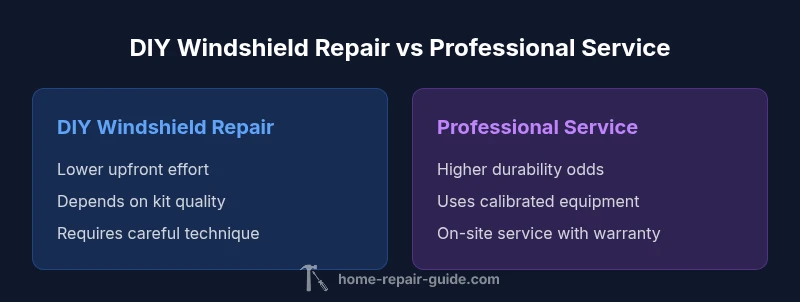
DIY windshield repair kits offer a quick, low-cost entry into minor repairs, but results vary with kit quality and user skill. Professional services bring calibrated equipment, controlled environments, and technicians trained to assess damage patterns. The differences affect outcomes, warranties, and how quickly you can regain full visibility. When you’re deciding between do-it-yourself and professional repair, frame the choice around damage type, time sensitivity, and your comfort with risk. The following sections translate those factors into practical guidance and scenarios.
When a Repair Makes Sense (Chip and Minor Cracks)
For small, contained damage located away from the driver’s line of sight, repair is often worth considering. The key question is whether the crack is likely to spread or compromise the windshield’s integrity under normal driving conditions. If the damage is clearly isolated and not in the central field of view, a professional repair can restore structural integrity and appearance without needing a full replacement. DIY options can work for enthusiasts who want hands-on control, provided they follow clear instructions and choose reputable kits. The overarching rule is: act quickly, limit exposure to moisture, and avoid using abrasive cleaners near the repair site to prevent interference with resin curing.
When Replacement Is the Safer Choice
Cracks that traverse the windshield, extend to the edges, or originate from impact points near the edge are high-risk candidates for replacement. If the crack shows signs of growth after any attempt at repair, or if there are multiple cracks, replacement becomes the safer option to restore strength and ensure driver visibility. In addition, windshield integrity is tied to safety systems and airbags; improper repairs can undermine these features. If you rely on frequent long drives or unusual weather patterns, replacement may be the most reliable long-term solution.
Costs and Insurance Considerations
Costs for windshield repairs and replacements vary with damage type, vehicle, and service region. In many cases, insurance plans offer coverage for windshield repair to prevent more costly replacements, potentially with little or no out-of-pocket expense. Even when insurance does not cover the repair, acting quickly can reduce the likelihood of a larger repair or replacement later. When evaluating options, contact your insurer to confirm coverage, deductible terms, and whether the repair must be performed by an approved network for full benefits.
Safety, Legal, and Warranty Considerations
Windshield repairs should meet professional standards to ensure continued safety, visibility, and airbag performance. Some repair products are designed to restore structural integrity, while others simply conceal damage. Warranties may vary by provider and by whether the repair was performed by a certified technician. If your vehicle is under lease or financed, check lease-return guidelines and insurer requirements for repairs to avoid conflicts. Always verify that the chosen method preserves the windshield’s integrity and complies with local regulations.
How Professional Windshield Repair Works
A professional repair involves a structured assessment, then cleaning and preparing the surface before resin injection. The resin fills the damage cavity, bonding with the glass to restore strength and clarity. Curing and finishing steps ensure a smooth, flush surface. Technicians often perform multiple checks to assess whether the repair is stable and whether visibility is maintained. The process is generally quick, with most repairs completed within a standard service visit, minimizing downtime and maintaining vehicle safety.
DIY Windshield Repair: Tools, Techniques, and Risks
DIY repair kits typically include resin, an injection device, a curing light, and surface prep materials. When used correctly, these kits can address small chips or cracks that are clean and well-contained. However, misapplication can trap air, seal in moisture, or fail to fill the crack properly, leaving it susceptible to later growth. DIY repairs also commonly interfere with visibility or leave a blemish that affects aesthetics and resale value. If you choose a DIY approach, follow the kit instructions to the letter and consider a professional inspection afterward.
Evaluating Providers: What to Look For
When selecting a windshield repair provider, prioritize credentials, warranties, and transparent pricing. Look for technicians with recognized certifications and evidence of ongoing training. A clear assessment prior to any work helps you understand the expected outcome and whether a repair is feasible. Request a written warranty on both the repair work and any components used, and verify whether service includes a post-repair inspection to confirm success. If you have an active insurance policy, verify that repairs performed by the chosen provider are eligible for coverage.
DIY vs Pro: Real-world Scenarios
In real-world decisions, you’ll consider the damage’s location, size, and potential for propagation. For minor chips in non-critical zones, a DIY approach may be acceptable for those who value control and convenience. For central or edge-located damage, or if there’s any doubt about repair viability, a professional assessment greatly reduces risk. In all cases, do not delay action—once a chip or crack is present, small changes in weather or temperature can influence growth and repair success.
Long-Term Considerations: Durability and Resale Value
Durability after repair depends on proper technique and the nature of the damage; a high-quality repair can maintain clarity and structural integrity, helping with resale value. Sub-par repairs or noticeable blemishes can raise concerns for prospective buyers and may prompt negotiations on price. If you expect frequent driving in challenging conditions, prioritize a robust repair from a certified professional and consider whether replacement might offer a longer lifespan and steadier performance.
Making the Decision: Step-by-Step Checklist
Use this practical checklist to decide whether to repair or replace: (1) assess damage size and location; (2) determine if the crack is likely to spread; (3) confirm availability and cost of repair vs replacement; (4) check insurance coverage; (5) consider warranties and the vehicle’s use in the near term; (6) consult a certified technician for an objective assessment. This structured approach helps you avoid rushed judgments and aligns the choice with safety and value.
Closing Thoughts: A Balanced View on Value
When evaluating whether windshield repair is worth it, balance short-term savings against long-term safety and reliability. A well-executed repair preserves visibility, reduces downtime, and can protect the value of your vehicle. That said, not every crack or chip can be repaired, and attempting a repair beyond a technician's guidance can backfire. The goal is to secure a safe, clear windshield without unnecessary costs or risk, using a principled, evidence-based approach.
Comparison
| Feature | DIY Windshield Repair Kit | Professional Windshield Repair Service |
|---|---|---|
| Cost and Time | Lower upfront effort and cost with a DIY kit | Professional service offers on-site work with a clear timeline |
| Repair Quality and Durability | Results depend on kit quality and user skill | Higher likelihood of durable repair with calibrated equipment |
| Warranty and Insurance Impact | Warranty implications vary by DIY kit and policy | Warranty and insurance coverage more predictable with pros |
| Tools and Setup | Basic tools and workspace required | Specialized equipment and controlled environment provided |
| Best For | Minor, contained damage you can accurately address yourself | Uncertain or larger damage best handled by professionals |
Upsides
- DIY repair can be cheaper upfront
- Quick action for small, contained damage
- Educational experience for homeowners
- Convenience if you can perform it with confidence
Disadvantages
- Risk of improper repair leading to safety issues
- Limited effectiveness for larger or complex damage
- Potential warranty or insurance complications
- Quality depends on user skill and kit quality
Professional repair is generally recommended for most drivers
For small, contained damage, a DIY approach can be viable with caution. In cases of larger, edge, or spreading cracks, or when safety is a priority, professional repair offers better reliability and peace of mind.
FAQ
What counts as repairable windshield damage?
Repairable damage is typically small, contained, and not in the driver’s direct line of sight. If a crack is likely to spread or reaches the edge, replacement is usually the safer option.
Repairable damage is small and contained; if it could spread or reaches the edge, replacement is safer.
Will repairing a windshield affect my insurance?
Insurance coverage for windshield repairs varies by policy. Some plans cover repairs to avoid replacement, while others may require a deductible or network constraints.
Insurance coverage varies; many plans cover repairs to prevent replacement.
How long does a professional repair take?
Professional repair is typically completed within a single service visit, often leaving the windshield ready for normal driving soon after.
Most repairs are done in a single visit and are ready quickly.
Can DIY windshield repair fix any crack?
DIY kits work best for small chips or cracks that are well-contained. Complex damage, edge cracks, or spreading cracks usually require professional repair or replacement.
DIY works for small chips; larger or complicated cracks require a pro.
What should I look for when choosing a repair provider?
Look for technician certifications, transparent pricing, written warranties, and a clear assessment process before any work begins.
Seek certified technicians, clear pricing, and a warranty.
Is replacement ever preferred after a repair?
Replacement is preferred when the damage compromises safety, extends to the edges, or shows rapid growth after any repair attempt.
If safety is compromised or growth occurs, replacement is better.
Key Takeaways
- Assess damage early and accurately
- DIY is best for small, contained chips only
- Check insurance coverage before proceeding
- Safety and warranty matter; don’t shortcut a critical repair
- Choose a certified professional when in doubt