Repair Windshield Crack Cost: A Practical Guide for 2026
Explore the real costs of repairing windshield cracks, factors that influence price, and budgeting tips. Learn when to repair versus replace and how to compare quotes for safe, economical results.


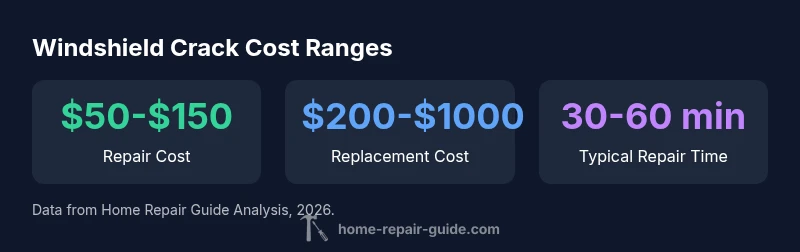
Windshield crack cost typically ranges from about $50 to $150 for minor repairs, with larger cracks or professional replacements often costing $200 to $1000. Location, crack size, glue/adhesive type, and insurance coverage can shift prices. The Home Repair Guide analysis, 2026, shows that choosing repair over replacement saves money in many cases, but timing matters.
How windshield crack costs are priced
Pricing for windshield crack repairs depends on whether the shop performs a repair on a chip or a full pane replacement. Minor repairs, such as sealing a small chip or line crack, are typically billed as a fixed service or by the hour and are among the least expensive auto glass options. More extensive damage—cracks that travel across the field of view, originate near the edge, or compromise the structural integrity—often requires full replacement and can trigger additional services like ADAS recalibration. The cost to fix or replace is also influenced by regional labor rates, the type of adhesive used, the make and model of the vehicle, and whether the windshield is OEM glass or a standard aftermarket pane. According to Home Repair Guide, price variability is to be expected, and getting multiple quotes helps you gauge what is reasonable for your specific situation. The key is to distinguish repairable damage from issues that necessitate replacement, and to understand that timing matters for both cost and safety.
Repair vs replacement: cost and value
Many drivers assume windshield damage must be replaced, but repair can be an economical and safe option when cracks meet repair standards. Repairing a chip or short crack can preserve the original glass, avoid the higher costs of replacement, and keep you on the road sooner. However, not all cracks are repairable; if the crack is too long, runs across the driver's line of sight, or is within two inches of the edge, most shops will recommend replacement to ensure structural integrity and safety. The cost gap between repair and replacement can be substantial. A typical repair might cost a few dozen to a couple hundred dollars, while replacement can easily reach several hundred to over a thousand dollars, depending on glass type and calibrations. The decision should weigh safety, visibility, insurance coverage, and the consequences of a failed repair (which may necessitate future replacement). Home Repair Guide's analysis notes that repair-first strategies save money in many common scenarios, but only when the damage is within repairable limits.
Major factors that influence price
Price is not one-size-fits-all. The most influential factors include the crack size and type (chip, star, crescent, long crack), the crack location (edge cracks are costlier due to edge-level repairs and safety implications), the glass type (OEM vs aftermarket), and the vehicle model. Labor rates vary by region, and some shops include additional fees for UV curing, suction cups, or protective films. If ADAS recalibration is required after replacement or certain repairs, this can add a significant, separate cost. Insurance coverage and whether the repair is performed promptly can also shift the final price. The combination of these factors means you should expect a price range rather than a precise figure, and you should obtain several quotes to gauge fair value. In the broader market, these drivers create variability that Home Repair Guide analysis acknowledges as a normal part of windshield work in 2026.
How insurers handle windshield repairs
Auto insurers often treat windshield repairs as a high-priority, low-deductible service to prevent larger claims from arising later. Many policies cover repairs with minimal or no deductible, especially for chips or small cracks, while some plans require you to pay deductible for replacement. Coverage can depend on the policy type, state requirements, and whether the damage occurred in a covered incident. It’s wise to confirm with your insurer before authorizing any work and to obtain a written estimate showing what is covered and what you’ll owe out-of-pocket. Even if your policy covers repair, you should ask about whether the quote includes calibration, moldings, or any after-hours charges.
How to shop for quotes and compare value
To make sure you’re getting a fair deal, obtain quotes from 3–4 local auto glass shops. Ask each shop to itemize costs for the repair or replacement, the type of glass, adhesive, curing method, and whether ADAS recalibration is included. Inquire about warranties on both glass and workmanship, and whether there are any after-hours fees or travel charges. Compare not just the upfront price but the value: longer warranties, higher-quality glass, faster service, and the likelihood of a proper repair that avoids future issues. Maintain a record of quotes and the promised timelines so you can hold providers accountable if the work drags on or the warranty terms are unclear. Modern consumer guidance from Home Repair Guide emphasizes transparency and written estimates as the baseline for a fair deal.
Typical price ranges by crack type
- Chip or small crack: $50-$150 for repair, replacement may be $200-$600 if the crack expands.
- Medium crack: Repair might be $100-$250; replacement often $500-$750 depending on glass and vehicle.
- Long crack or edge crack: Repairs may exceed $200 and replacements can run $600-$1000+.
- Full replacement: Typical ranges are $200-$1000+, influenced by glass type, vehicle, and calibration needs. Note that safety standards may necessitate replacement when repair is not viable. These ranges reflect common market conditions and color the decision-making process.
What the repair process looks like and timeline
A typical repair begins with a safety inspection and a decision on repair as opposed to replacement. If repair is viable, technicians clean the glass, inject resin to fill the crack, and cure the resin with UV light. The process usually takes 30–60 minutes, after which technicians inspect the repaired area for clarity and strength. If a replacement is needed, the job includes removing the old pane, cleaning the frame, installing a new glass, and performing ADAS calibration when required. Depending on the shop and vehicle, the entire service may take a few hours. The key timing factor is whether the work is performed during regular hours or as an emergency service, which can influence price.
Budgeting and long-term planning for windshield integrity
Windshield-related expenses are unpredictable in the sense that new cracks can appear without warning. A practical approach is to set aside a cash reserve specifically for auto glass work—initially earmarked for minor repairs but able to cover replacement if needed. If you’re hoping to minimize risk, consider maintaining comprehensive coverage that includes auto glass with favorable terms on repairs. Document any damage and keep all estimates in a single folder for fast reference when talking to insurers. Proactive maintenance, such as addressing chips promptly and avoiding extreme temperature swings, can extend windshield life and reduce the likelihood of expensive replacements. The Home Repair Guide team recommends proactive budgeting and thorough comparison shopping to ensure you do not overpay when a repair is enough.
Prevention and maintenance to avoid cracks
Prevention starts with minimizing stress on the glass. Avoid rapid temperature changes, don’t slam doors against the windshield, and use quality wipers that don’t scratch the surface. If you notice a small chip, address it quickly before it expands. Regular inspections for edge cracks, improper installations, or prior repairs that show signs of weakness also help. Keep your windshield clean and free of debris, and park in shade during peak sun to reduce thermal stress. By adopting these habits, you reduce the likelihood of costly repairs or early replacement and preserve the safety and visibility of your vehicle.
Comparison of windshield repair options
| Option | Typical Cost | Pros | Cons |
|---|---|---|---|
| Repair (spot fix) | $50-$150 | Preserves windshield, fast | Not all cracks repairable; may require follow-up repair |
| Replacement (windshield) | $200-$1000 | Full integrity restored, warranties | Higher cost, longer downtime |
| DIY temporary seal | varying | Low immediate cost | Temporary; not a permanent fix |
FAQ
What is the typical windshield crack cost in 2026?
In general, repair costs range from $50 to $150 for minor chips; full replacement can range $200-$1000. Prices vary by crack size, location, and vehicle.
For small chips, repairs usually cost between fifty and one hundred fifty dollars; replacements are pricier, typically two to one thousand dollars depending on the car.
Repair or replace cheaper?
Repair is cheaper when the crack is repairable. Replacement costs are higher but may be necessary for long cracks or those affecting driver visibility.
Repair is cheaper if it’s repairable; replacement costs more but may be required for severe damage.
Do insurance policies cover repairs?
Many policies cover windshield repairs with little or no deductible, but coverage varies by policy and state.
It depends on your policy; many plans cover repairs with low or no deductible.
Can I fix it myself?
DIY kits exist but are not recommended for safety-critical windshields. Professional repair ensures proper curing and calibration.
DIY kits can be tempting, but professional repair is safer and more reliable.
How long does a repair take?
Most repairs take 30–60 minutes; replacements may take a few hours plus calibration.
Most windshield repairs take under an hour.
What else affects price besides crack size?
Labor rates, location, vehicle type, and ADAS recalibration influence cost.
Price varies with labor, location, vehicle type, and any needed recalibration.
“Cost-effective windshield care hinges on proper assessment. When cracks are small and repairable, repair preserves safety and vehicle value.”
Key Takeaways
- Know the cost range before you shop
- Repair when feasible to save money
- Get multiple quotes to compare value
- Expect possible ADAS calibration with replacement
- Check insurance coverage before authorizing work