How Long Does It Take to Repair Credit?
Explore realistic timelines for credit repair, the factors that influence speed, and actionable steps to plan your credit-improvement journey with Home Repair Guide.


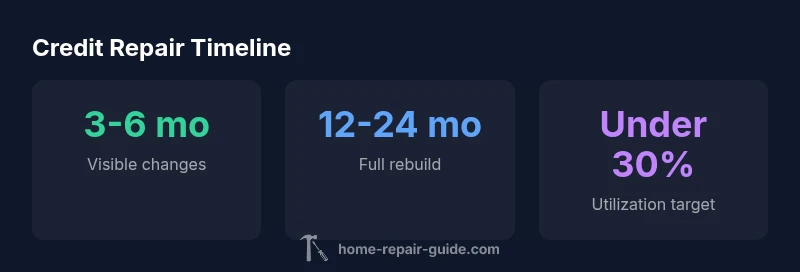
Repairing credit unfolds in stages, and timelines vary by score, history, and actions taken. Most readers notice meaningful changes within 3-6 months with consistent on-time payments, lower credit utilization, and accurate reporting. A full rebuild can take 12-24 months depending on severity of delinquencies, aging of negative items, and whether new accounts are opened strategically. Older items generally fall off after seven years, shortening the path toward a healthier score.
What Affects How Long Credit Repair Takes
Credit repair timelines hinge on where you start and the steps you take next. Your starting credit score, the age and type of negative items, and whether errors exist on your reports all influence how long progress will take. The credit reporting ecosystem updates on a rolling basis, with certain updates appearing within 1–2 billing cycles, while credit score changes can lag behind real-world activity. Actionable steps—such as paying on time, reducing credit utilization, and correcting report inaccuracies—compound over time, creating a steady climb toward a healthier score.
Typical Timelines by Issue Type
We're talking ranges here because every situation is different. Minor inaccuracies or outdated information may show improvement in 1-2 months after a dispute is resolved. Late payments within the last year can start to reflect positively in 3-6 months if you bring current and maintain good payment behavior. Collections and charge-offs often require 6-12 months of persistent effort. Major delinquencies like bankruptcies or foreclosures may take 12-24 months before a meaningful shift in score appears, depending on overall profile and new positive activity.
The Role of Disputes and Reporting Cycles
Disputes can remove or correct errors, which can unlock faster improvements if the item was inaccurately reported. The bureaus typically investigate disputes within 30 days, but results can take longer during high volumes. Even after a dispute is resolved, the ongoing pattern of on-time payments and prudent utilization determines how quickly your score moves. Remember that updated reports may take one or two cycles to reflect changes in your credit score.
Practical Steps to Accelerate Progress
- Pull your free annual credit reports and check for errors.
- Dispute inaccuracies with clear evidence and documentation.
- Pay all bills on time; automate payments where possible.
- Aim to keep balances well below 30% of limits; lower is better.
- Consider adding a secured card or credit-builder loan to build positive history.
- Avoid opening new credit accounts unless needed and well-planned.
- Request goodwill adjustments if you have a good payment history.
- Monitor your progress monthly using a trusted score and report.
Common Pitfalls That Slow Progress
- Missing disputes or letting errors persist for months.
- Reaching for new credit when you are not ready or underutilizing existing lines.
- Co-signing or taking on new debt without a long-term plan.
- Ignoring changes in utilization after paying down debt.
- Relying on a single score instead of reviewing all three major reports.
- Expecting overnight results; credit repair is a gradual process that builds momentum.
Setting Realistic Expectations and Tracking Progress
Set monthly milestones (e.g., report corrections completed, utilization under 30%, on-time payments for 6 consecutive months). Track changes by pulling your reports quarterly or after major updates. Celebrate small wins, such as resolved inaccuracies, while keeping an eye on longer-term goals. If progress stalls, revisit a growth plan: adjust utilization, negotiate goodwill, or seek professional guidance.
Credit repair timeline stages
| Stage | Typical Timeframe | What It Takes to Advance | Common Obstacles |
|---|---|---|---|
| Initial Assessment | 1-4 weeks | Pull credit reports, identify errors, set goals | Incorrect data, missing accounts |
| Active Repair | 3-6 months | Dispute errors, reduce utilization, establish on-time payments | New late payments, high utilization |
| Rebuild Phase | 6-24 months | Diversify credit, maintain low utilization, avoid new debt | Major delinquencies still reporting |
FAQ
What factors influence how long credit repair takes?
Several factors drive duration: starting score, age of negative items, types of derogatories, and how promptly you address errors. The pace also depends on how quickly bureaus update reporting cycles and how well you maintain positive behavior afterward.
Several factors influence the timeline, including your starting score and the age of negatives. Regular, positive actions shorten the path.
Is it possible to repair credit in less than six months?
Yes for minor issues or quickly corrected errors, but major delinquencies typically require longer—often several months to a couple of years depending on the overall profile.
Yes, for small problems you can see changes in under six months, but major delinquencies take longer.
Do disputes always lead to faster credit improvement?
Disputes can fix reporting errors, which may accelerate improvement. The overall pace still rests on ongoing payment behavior and utilization.
Disputes help when errors exist, but progress depends on your ongoing financial habits.
What daily habits support faster credit repair?
Pay on time, keep balances low, avoid unnecessary new debt, and review reports regularly to catch errors early.
Pay on time, keep balances low, and check reports regularly.
Can negotiating goodwill adjustments speed up improvements?
Goodwill requests can help remove or reduce negative marks if you have a history of reliable payments and a good relationship with creditors.
Goodwill can help in some cases if you have a solid payment history.
“Credit repair is a gradual process that rewards consistency over quick fixes. Small, steady wins compound into meaningful long-term gains.”
Key Takeaways
- Pull reports and dispute obvious errors.
- Keep utilization under 30% for best results.
- Make on-time payments every month.
- Expect improvements within 3-6 months; full repair in 12-24 months.
- Avoid opening new accounts unless strategically needed.