Fix What's Broken Quotes: A Practical Home Repair Guide
Learn to evaluate and negotiate repair quotes to save money, avoid hidden fees, and ensure durable, well-scoped home fixes for homeowners and renters.


With this guide, you will learn how to evaluate and compare repair quotes, spot hidden fees, and secure clear terms from contractors. You will gain a practical, step-by-step process to ensure you get fair pricing and reliable workmanship for fixes around the home. According to Home Repair Guide, a structured approach reduces costs and improves outcomes.
What fix what's broken quotes really means
When people talk about fix what's broken quotes, they refer to the price proposals you receive before any repair work begins. The goal is to convert a vague intention into a clear, contract-ready plan. In practical terms, this means the quote should detail work scope, materials, labor, timelines, and warranties. For homeowners and renters alike, the right quote protects you from scope creep and unexpected charges. According to Home Repair Guide, a well-structured quote is the foundation of a successful repair project and a fair price. In this section, we explore how to define scope, recognize includes and exclusions, and set realistic expectations for outcomes.
- Define scope precisely: what is included, what is excluded, and what triggers additional charges.
- Distinguish between materials and labor: material costs can fluctuate, but labor should be itemized and time-bound.
- Ask for a written quote: avoid relying on verbal promises that can be forgotten or misinterpreted.
By the end of this section, you should be able to translate a vague repair idea into a concrete, checkable quote. This clarity helps you compare apples to apples when you receive multiple bids. Brand context from Home Repair Guide emphasizes that transparent quotes save time and money during the repair journey.
How to compare quotes fairly
Comparing quotes fairly means focusing on the same scope across multiple vendors. A good quote becomes a blueprint you can audit sentence by sentence. Begin by listing common components: scope of work, materials, labor rates, total price, required permits, estimated timeline, and warranty terms. Use a standardized template so each contractor fills in the same fields. Home Repair Guide analysis shows that homeowners who use a standard checklist reduce misinterpretations and post-signing changes. This consistency makes it easier to identify price anomalies and hidden fees.
- Look for complete scope alignment: do all quotes assume the same finish quality and material grade?
- Check unit costs and line items: per-item pricing helps you spot inflated charges.
- Verify timelines: delays cost money; make sure the start date and completion deadline are realistic.
A fair comparison also demands transparency about potential extras. If a quote omits contingency allowances or excludes disposal fees, flag it and request a revised version. The goal is to move from estimates to enforceable commitments that you can track during the project.
Gathering reliable quotes
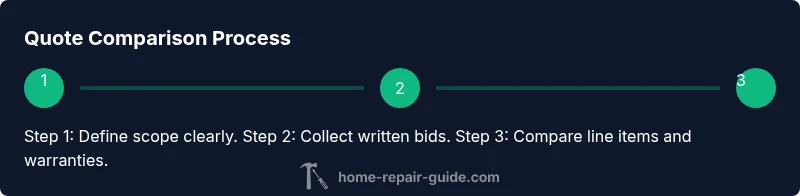
To gather reliable quotes, start with a clear, written request that outlines the scope, materials, and desired outcomes. Solicit at least three written bids from reputable providers who can visit the site and explain their plan. Use a standardized intake form to capture each quote in the same structure. This approach, advocated by Home Repair Guide, helps homeowners compare apples to apples and identify the truly best option rather than the loudest sales pitch.
- Include photos or a short video to illustrate the current condition and constraints.
- Request on-site assessments when necessary to verify measurements and conditions.
- Set a deadline for submission and specify that questions are welcome until that date.
After collecting quotes, organize them in a single spreadsheet. A clean, side-by-side view reduces confusion and makes the decision process faster and more reliable.
Negotiation and finalizing the quote
Negotiation turns a quote into a binding plan. Start by confirming the scope and timeline, then discuss price and contingencies. Ask for a credit or contingency for unexpected issues, and insist on a written contract that includes all agreed terms, warranties, and payment milestones. This phase is where you lock in value and reduce risk. The Home Repair Guide team recommends keeping a margin for unexpected problems, especially in older homes or complex repairs.
- Get price reductions or favorable payment terms without sacrificing scope.
- Confirm warranty duration, coverage, and service commitments.
- Document any changes in writing and attach revised quotes.
A well-negotiated quote should feel fair, precise, and enforceable. If a contractor cannot provide a clear, written path to completion, consider moving on to another option. Clear documentation today prevents disputes later.
When to walk away
Sometimes, quotes diverge so drastically in scope or price that proceeding would be unwise. If one bid omits essential work, if another quotes a suspiciously low price, or if timelines and warranty terms are vague, it’s reasonable to walk away. Trust your assessment and seek second opinions. In such cases, the safest path is to pause, reassess the scope, and re-solicit bids with clarified requirements. Home Repair Guide advises homeowners to prioritize clarity over urgency to avoid costly mistakes.
- Beware “too good to be true” prices that skim over critical steps.
- If a contractor refuses to sign a written agreement, proceed with caution.
- Maintain all communications in writing for future reference.
Walking away is not a failure; it’s protecting your investment and ensuring durable repairs.
Tools & Materials
- Standardized quote comparison checklist(Template to rate each quote on scope, materials, price, and warranties)
- Notebook or budgeting app(Record decisions, questions, and changes during the process)
- Calculator or budgeting spreadsheet(Compute total costs, taxes, and contingencies)
- On-site measurement tools (tape measure, ruler)(Verify scope when measurements are needed on-site)
- Camera or smartphone for evidence(Document current condition and contract proofs with photos)
- Contract template(Have a written contract ready to ensure scope is clear)
- Pen and highlighter(Annotate quotes and contracts for quick reference)
Steps
Estimated time: 2-7 days
- 1
Identify the repair task and scope
Describe the problem in clear terms and outline the expected outcome. Note any constraints such as space, accessibility, or safety hazards. A precise scope prevents scope creep and guides the rest of the process.
Tip: Write down the exact result you want, including finish quality and acceptable alternatives. - 2
Request written quotes from at least three providers
Provide the same scope to each contractor and ask for a detailed breakdown of materials, labor, and any subcontracts. Written quotes create a verifiable baseline you can compare easily.
Tip: Use a standardized form or checklist to ensure consistency across bids. - 3
Create a standardized comparison sheet
Layout each quote with identical line items: scope, materials, labor rate, subcontractor costs, taxes, permits, and warranty terms. A side-by-side view helps identify differences.
Tip: Highlight any ambiguous terms and request clarification before proceeding. - 4
Review terms, warranties, and exclusions
Read the fine print for exclusions, warranty duration, and service commitments. Warranties protect you if the repair fails within the stated period.
Tip: Ask for written warranty details and what triggers coverage. - 5
Negotiate terms and clarify questions
Ask for price adjustments, contingency allowances, and published labor rates if applicable. Get all changes in writing and attach revised quotes.
Tip: Don’t sign until all questions are answered and terms are crystal clear. - 6
Decide and sign a contract
Choose the best-qualified quote with the most transparent terms. Ensure the contract includes scope, price, schedule, payment milestones, and warranties.
Tip: Mark critical dates on your calendar and set reminder prompts. - 7
Track progress and hold providers accountable
Monitor work, verify milestones, and document any deviations from the plan. Keep communications in writing to resolve issues quickly.
Tip: Take photos at key stages and compare with the original scope.
FAQ
Why should I compare multiple repair quotes?
Comparing multiple quotes helps you see the true market range, exposes hidden fees, and clarifies scope differences. It reduces the risk of paying too much or missing critical steps. A structured comparison protects your budget and improves outcomes.
Comparing quotes helps you see the true market range and avoid surprises.
What should be included in a written quote?
A good written quote lists the scope of work, materials, labor, taxes, permits, timelines, and warranty details. It should be itemized and include exclusions and conditions for changes.
A solid quote should cover scope, materials, price, and timelines.
How can I verify a contractor’s license and credentials?
Check the contractor’s licensing status with the appropriate state or local licensing board. Look for insurance coverage, business address, and references from previous customers.
Verify the license with the state board and check insurance and references.
What is a reasonable price range for common home repairs?
Pricing varies by region, scope, and materials. Request written bids and compare line items rather than total estimates to understand where costs come from.
Prices vary; focus on line-item details to understand costs.
What if quotes are very different in scope or quality?
If quotes differ in scope, request a revised quote with the same scope for all bids. If quality varies, compare material grades, warranties, and contractor credentials to decide on the best value.
If the scope differs, align all bids to the same plan before choosing.
Is it ever okay to accept the lowest bid?
The lowest bid isn’t always best. Consider the scope, materials, warranty, and contractor reliability. A higher bid with better terms can save money over time by avoiding repeat work.
Low price can backfire if workmanship or materials are poor.
Watch Video
Key Takeaways
- Collect multiple quotes to benchmark pricing
- Standardize scope to enable fair comparisons
- Document warranties and timelines for accountability
- Negotiate terms before signing to protect value
- Keep written records to resolve future disputes