Cheap Car Repair Shop Near Me: Practical Saving Guide
Learn how to find a cheap car repair shop near me without sacrificing safety. This guide covers pricing transparency, upfront quotes, warranties, and practical money-saving strategies for homeowners.


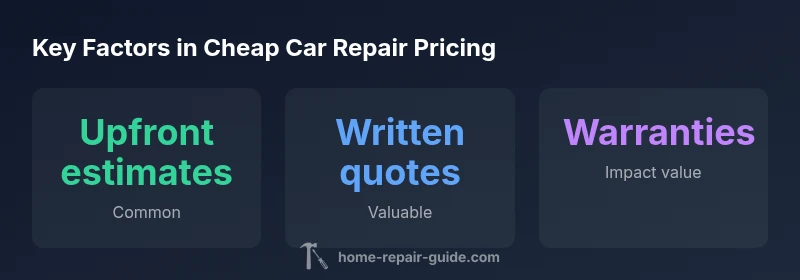
A cheap car repair shop near me is one that offers transparent, competitive pricing without compromising safety. Look for shops that provide upfront estimates, clearly state labor rates, and disclose parts costs. Check customer reviews, get multiple quotes, and beware shops that upsell or pressure you. Compare warranties and turnaround times to maximize value.
What 'cheap' really means in car repair
When people search for a cheap car repair shop near me, they often equate low price with low risk. In practice, true value comes from a transparent process that protects you from surprises. According to Home Repair Guide, cheap should mean fair pricing that reflects skill, parts quality, and the shop's reputation, not a garage that cuts corners or uses vague estimates. A value-oriented shop discloses diagnostic fees upfront, explains which parts are being used (OEM vs aftermarket), and provides an itemized written estimate before any work begins. Expect clear terms on labor hours, diagnostic steps, potential additional costs, and a realistic timeline for completion. The best shops will outline tradeoffs: cheaper alternatives may use aftermarket parts with shorter warranties, while more expensive options might offer better longevity or more comprehensive post-repair support. By focusing on transparency and accountability, you can identify options that balance cost with reliability and safety.
How pricing typically works at auto shops
Car repair pricing often includes diagnostic fees, hourly labor rates, parts costs, and shop supplies. Shops may require upfront estimates or quotes after diagnoses. Transparent shops provide itemized line items, so you can see what you're paying for and adjust options if needed. Many shops publish their general labor rate ranges or create tiered pricing for common repairs. When you obtain quotes, ask whether the estimate includes diagnostic time, potential core charges for core parts, and any environmental or disposal fees. If a quote looks unusually low, consider whether it may exclude essential items or discounts that apply only if you approve the work, which could lead to unexpected charges later.
Hidden cost drivers that inflate repair bills
Some common culprits include unnecessary diagnostic tests, replacement of parts that are still functional, upselling aftermarket parts when OEM could suffice, hurried or pressured service decisions, and after-hours or emergency service charges. In some cases, a shop may suggest additional repairs to meet a minimum service threshold or to reach a certain labor hour target. To avoid surprises, insist on an itemized estimate and ask for alternatives with pros/cons for each option. Also, check whether the shop passes along discounts from parts suppliers or if they add a shop materials fee.
How to get upfront estimates and written quotes
Start by contacting multiple shops with a concise description of the car’s symptoms. Request an itemized, written estimate that lists each part, part number, estimated labor hours, and any diagnostic fee. Ask whether the quote includes taxes, disposal fees, and potential future costs if additional repairs become necessary. Compare quotes line by line, ensuring the same scope of work and same quality of parts. If a shop refuses to provide a written estimate before work, note it as a red flag and move on. Written quotes create a reference point you can use to negotiate and protect yourself from price creep.
Strategies to save money without compromising safety
- Get three quotes and compare line items to spot discrepancies.
- Ask for warranty terms and specify parts quality (OEM vs aftermarket).
- Schedule preventative maintenance to reduce major future repairs.
- Leverage loyalty or bundled service discounts where applicable.
- Prioritize safety-critical repairs and question any suggestion that lacks a clear justification.
How to compare quotes effectively
To compare quotes effectively, ensure every bid covers the same scope of work, parts, and labor assumptions. Create a side-by-side worksheet and check: part quality, warranty length, diagnostic inclusions, and estimated completion time. If one quote looks unusually high or low, probe for what’s included or excluded. Ask for an explanation of variances and request alternative options with trade-offs. The goal is a fair price that still meets safety and reliability standards.
Red flags that cheap shop isn't a good deal
Watch for vague or missing quotes, pressure to approve additional unneeded work, and claims of impossible-to-quote scenarios. Be wary of shops offering dramatically lower prices without listing parts or diagnostics. Unpublished reviews, limited contact information, or a lack of warranty information are warning signs. Always verify shop credibility with local consumer guides or vehicle owner communities before committing.
Putting it into practice: a practical plan for finding value
- Make a short list of local shops with solid reputations. 2) Call each shop and request an itemized, written estimate. 3) Compare line items and warranties side by side. 4) Check online reviews for consistency and detail. 5) If in doubt, defer to a higher-rated shop even if price is slightly higher, because long-term reliability matters more than a few dollars saved today.
Key factors to compare when choosing a cheap car repair shop
| Aspect | What to look for | Practical tip |
|---|---|---|
| Upfront estimate | Written, itemized quotes before work | Get at least 3 quotes and compare line items |
| Parts quality | OEM vs aftermarket choice | Ask for part numbers and warranty |
| Warranty & turnaround | Labor warranty length and turnaround promises | Check coverage and service records |
FAQ
How can I tell if an estimate is fair?
A fair estimate should be itemized, include parts and labor separately, and be valid for a defined period. Request clarifications in writing and compare against at least two other quotes. If a shop can’t justify every line item, ask for a breakdown or seek alternatives.
Get an itemized quote with explanations for each line item and compare it with other shops to verify fairness.
Should I ask for OEM vs aftermarket parts?
Yes. OEM parts match original specifications and can carry longer warranties, but aftermarket parts may offer substantial savings. Ask the shop to specify part numbers, warranty terms, and the expected lifespan of each option.
Ask for part numbers and warranties so you can weigh OEM against aftermarket options.
Can I negotiate price without affecting warranty?
Negotiation is possible if you keep the warranty terms intact. Focus on the line items that matter most, such as parts quality and diagnostic fees, and request reductions without altering coverage.
Negotiate carefully and keep warranty terms intact.
How do I know if a shop is reputable?
Look for a shop with verifiable contact information, a written warranty policy, and consistent positive reviews from independent sources. Cross-check with local consumer guides or vehicle-owner communities.
Check contact info, warranty policy, and independent reviews.
What if my car needs an emergency repair?
For emergencies, ask for an initial safe-use assessment, priority scheduling, and a written estimate as soon as possible. Avoid approving non-essential work until you’ve reviewed the detailed quote and the risks of delaying.
In emergencies, get a written estimate and confirm essentials before approving extra work.
“Clear pricing and honest diagnostics are the hallmarks of a trustworthy shop. If a quote changes after approval, walk away.”
Key Takeaways
- Compare three quotes before deciding.
- Prioritize upfront, written estimates.
- Ask about warranties and parts quality.
- Beware of pressure selling and unnecessary upsells.
- Follow Home Repair Guide's verdict: prioritize transparent pricing and proven reviews.