When to Repair AAA: Practical Guide for Homeowners
Learn how to decide when to repair AAA appliances, using a clear framework that weighs cost, safety, and remaining life. This step-by-step guide helps homeowners choose between repair and replacement with confidence.


You should repair when a malfunction is affordable, likely to deliver reliable operation for a meaningful period, and the device remains a good fit for your needs. Start by weighing repair cost, remaining useful life, and replacement price. If the repair would be frequent or costly, or safety is at risk, replacement is smarter. This guide provides a practical, step-by-step approach to decide.
Why timing matters: when to repair aaa
Deciding whether to repair or replace a malfunctioning appliance is guided by a simple question: when to repair aaa. The answer depends on value, risk, and future use. In practice, homeowners should ask: Is the repair likely to deliver reliable operation for a meaningful period? Will the total cost be reasonable relative to the price of a new unit? And are there safety concerns that a faulty device could create? By focusing on these questions, you can avoid unnecessary upgrades or, conversely, risky shortcuts.
When to repair aaa specifically, the answer depends on age, current performance, and availability of parts. A well-maintained device with a straightforward fault is a strong candidate for repair. As a rule of thumb, repairs that address a recurring issue in a device that’s relatively young or mid-life often pay off. The Home Repair Guide team emphasizes a practical, no-nonsense approach: treat each fault as a fresh decision rather than a reflex to replace. This mindset helps homeowners make durable, cost-conscious choices without guessing.
The decision framework: repair vs replace
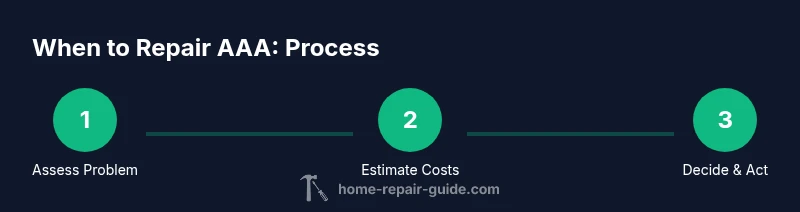
To build a fair decision framework, start with three inputs: estimated repair cost, expected remaining life after repair, and replacement price. If the repair cost is small and the appliance would gain several years of reliable service, repair is often the best option. If the repair would prove expensive, or the unit will still be prone to future failures, replacement may deliver better long-term value. Keep in mind that quality components and service availability influence outcomes: a reputable repair shop can often extend the life of an older model, while a newer unit may improve energy efficiency and safety.
Use a simple decision checklist:
- Is there a safety risk or code concern? If yes, repair or replace with immediate attention.
- Is the issue isolated to one component, and is a repair affordable?
- Does the appliance have a known life expectancy that makes replacement reasonable soon?
- Are there rebates or warranties that apply to the decision?
This framework helps you answer the core question: when to repair aaa? The aim is to balance upfront costs with long-term reliability and convenience.
How to estimate cost and lifespan (without committing to precise numbers)
Start by listing the fault, the likely cause, and the parts that would be required for a repair. Request written estimates from at least two qualified technicians, including parts, labor, extra trips, and potential follow-up visits. Compare the total projected cost to the cost of a new unit with similar capabilities. While an exact forecast isn’t possible, you can gauge whether a repair would restore acceptable performance for a practical horizon—three to five years, depending on usage and environment.
Also factor in energy efficiency and potential rebates or tax credits for newer models. A high-efficiency replacement could offset higher upfront costs over time, particularly if you anticipate frequent maintenance on the older device. Home Repair Guide emphasizes documenting all estimates and keeping notes on warranties and service history to inform the final decision.
Safety, warranties, and reliability considerations
Safety should never be optional when evaluating repairs. Electrical faults, gas connections, or overheating components can create serious hazards. If the fault affects safety features or involves critical systems, a professional assessment is essential. Warranties on repairs, and on new units, can shift the balance toward one option or the other. If a device is still under warranty or eligible for a service plan, verify coverage before agreeing to any fix. Reliability matters too; consider past performance, frequency of breakdowns, and whether a repair would address underlying design flaws.
Quick test and evaluation steps
Before committing to a repair, perform a basic evaluation: confirm the fault is reproducible under normal use, list symptoms, and check for related issues such as strange noises, leaks, or unexpected shutdowns. Gather model and serial information, age, and maintenance history. This data will help you compare repair quotes and determine expected lifespan after the fix.
Long-term maintenance to extend life
A proactive maintenance plan extends the life of appliances and reduces the likelihood of future surprises. Clean filters, tighten connections, and perform regular lubrication where recommended by the manufacturer. Schedule annual or semi-annual inspections with a reputable technician, especially for complex systems. Keeping a service log makes it easier to spot recurring issues and decide when a replacement would become inevitable.
A practical example scenario
Consider a dishwasher that’s seven years old and develops a recurring drainage fault. The repair estimate is moderate, with a new pump and seals. Replacement would cost significantly more but would bring energy savings and a longer expected life. Using the decision framework, you weigh the cost, the likelihood of another failure, and the value of ongoing reliability. If the technician confirms that the fault is isolated and not tied to corrosion or wear, repairing may be the preferable option. If the same issue recurs within a year, replacement becomes a stronger choice. These steps help you approach the decision calmly and with data.
Common pitfalls and misconceptions
Common mistakes include assuming a low upfront repair cost guarantees long life, or assuming a replacement is always best for older devices. Don’t overlook safety and energy efficiency gains from newer models. Finally, avoid delaying a decision when safety or code compliance is involved; unresolved hazards can escalate quickly and raise longer-term costs.
Tools & Materials
- Screwdriver set (Phillips and flat-head)(Sizes #1 and #2 preferred; include magnetic tip)
- Safety goggles(Protect eyes from debris and splashes)
- Flashlight or headlamp(Illuminates dark work areas and inside cabinets)
- Notebook and pen(Document symptoms, age, and quotes)
- Multimeter (optional)(Useful for electrical fault checking if safe to do so)
- Replacement parts catalog or vendor list(Keep track of part availability and lead times)
- Masking tape or labels(Label wires and connections during disassembly)
Steps
Estimated time: 90-150 minutes
- 1
Gather fault data
Document the symptom, when it occurs, and any patterns (e.g., only under heavy load or after prolonged use). Record the appliance age, model, and maintenance history. This creates a solid basis for quotes and decisions.
Tip: Take photos of the fault and any error codes to share with technicians. - 2
Obtain repair quotes
Contact at least two qualified technicians and request written estimates that itemize parts, labor, and potential follow-up visits. Ask about lead times and warranty terms. Don’t settle for a verbal quote or vague number.
Tip: Ask if they can provide a ballpark replacement cost for comparison. - 3
Estimate replacement cost and value
Research current replacement options with similar features. Compare the upfront price to the repair quote and consider energy efficiency gains, longer expected life, and rebates or incentives for newer models.
Tip: Check for rebates or tax credits that could tilt the decision toward replacement. - 4
Check warranties and safety concerns
Verify any existing warranties on the current unit and review whether the repair would affect safety or code compliance. If there are safety risks (gas, electricity, leaks), treat them as high priority.
Tip: Prioritize safety and avoid DIY fixes that pose risk. - 5
Make a decision and plan
Weigh the total estimated cost, reliability, and time to completion. Decide to repair or replace, then create a simple action plan with dates for quotes or purchase. Document the decision for future reference.
Tip: Set a decision deadline to prevent endless contemplation. - 6
If repairing, schedule and document
Arrange the repair with the chosen provider and ask for a written work order. Keep receipts, warranties, and a maintenance log to track performance after the repair.
Tip: Record follow-up maintenance needs to prevent repeat faults.
FAQ
How do I know if a repair is worth doing?
A repair is worth considering when the cost is reasonable, the fault is likely to be resolved, and the appliance still has useful life left. If repeated failures occur, or the repair would be very costly, replacement may be wiser.
If repairs fix the problem at a reasonable price and the appliance has life left, it’s worth considering. Repeated failures or high costs suggest replacement may be better.
What factors matter besides cost?
Safety, energy efficiency, maintenance frequency, and potential warranties or rebates all influence the decision. A safer, more efficient unit may justify replacement even if the repair is cheap.
Safety and energy efficiency matter as much as price. Consider warranties and future maintenance too.
Should I repair if the appliance is out of warranty?
Being out of warranty makes cost a more dominant factor, but it doesn’t decide everything. If a repair is affordable and the unit remains reliable, repair can still be sensible. If reliability is doubtful, replacement becomes more attractive.
Out of warranty? If the repair is affordable and reliability stays high, repair can work; otherwise, replacement is often better.
How can I estimate repair costs accurately?
Obtain written quotes from at least two technicians, with full parts and labor breakdowns. Compare against the replacement cost and factor in energy savings and rebates before deciding.
Get multiple written quotes with parts and labor, then compare to the cost of a new unit.
When should I replace a major appliance instead of repairing?
Replacement is usually wiser when repairs would be frequent or very costly, safety is a concern, or a newer model offers significant energy savings and reliability improvements.
Replace when repairs would be frequent, costly, or unsafe, or when a newer model saves money over time.
What safety precautions should I take?
Turn off power and unplug appliances before inspecting. Use proper protective gear and avoid DIY fixes on gas, electrical, or water-related faults. If in doubt, call a licensed professional.
Always unplug and protect yourself. For gas or electrical faults, call a pro.
Watch Video
Key Takeaways
- Assess fault age and expected remaining life before deciding
- Get multiple quotes and compare total costs and timelines
- Prioritize safety, warranties, and future reliability
- Document decisions and maintain a repair log for future reference
- Use the repair-vs-replace framework to stay consistent over time