Is It Better to Repair or Replace a Washing Machine? A Practical Guide
A practical guide to decide whether to repair or replace your washing machine, weighing upfront costs, long-term reliability, energy efficiency, and environmental impact for homeowners and renters.


When your washing machine breaks, the quick answer is: repair if the issue is minor, the machine is still relatively young, and repair costs stay well below the cost of a new unit. Replace if the fault is major, the machine is old, or repairs would be frequent and costly.
Understanding the Core Question: Repair vs Replace
Is it better to repair or replace a washing machine? This question commonly drives homeowner decisions and can impact monthly costs for years. According to Home Repair Guide, the best way to approach it is to balance immediate repair feasibility with long-term value. The central idea is simple: fix what is economical to fix and replace what costs too much or will likely fail again soon. The decision hinges on machine age, fault type, and potential energy savings. If you're asking is it better to repair or replace a washing machine, you’re weighing short-term disruption against long-term reliability. The Home Repair Guide team found that many households overestimate the value of a quick, cheap fix when the machine is near the end of its life; in those cases, replacement often saves time and money in the long run.
Quick Context: What Typically Triggers the Decision
Common faults include persistent drainage issues, failure to agitate, or unusual noises. For newer models with minor faults, repair tends to preserve resale value and reduce waste. For older models, the cumulative impact of repairs, the likelihood of further breakdowns, and the cost of replacement parts make a strong case for swapping in a newer unit. This framework helps homeowners move from reaction to a structured decision based on observable signals and practical cost thinking.
The Hidden Costs You Need to Consider
Beyond the obvious price tag, repairs can involve associated costs like diagnostic fees, labor rates, and the price of replacement parts. Replacement introduces its own costs—delivery, installation, and sometimes disposal of the old unit. You should also weigh the ongoing operating costs: newer machines are typically more energy- and water-efficient, which can lower utility bills over time. The Home Repair Guide analysis shows that long-term operating expenses sometimes outweigh initial repair costs, especially when energy efficiency is a priority.
Comparison
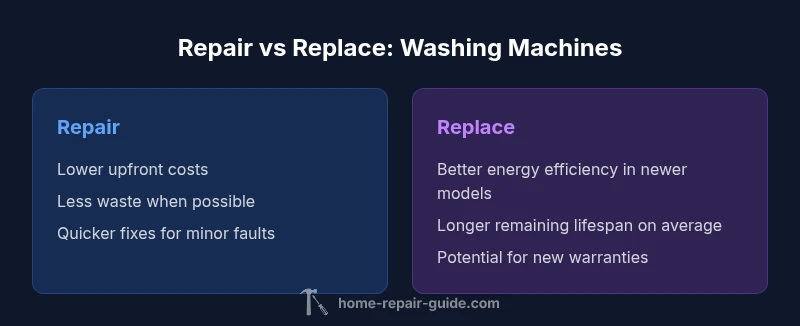
| Feature | Repair | Replace |
|---|---|---|
| Upfront cost | Lower upfront cost for a targeted repair | Higher upfront cost for a new unit |
| Lifespan after action | Can extend remaining life with a targeted fix | Typically longer remaining life on a newer model |
| Energy efficiency impact | Maintains current efficiency if the core components are healthy | Often improves efficiency with newer motor and controls |
| Time to complete | Often same day or a few hours for simple repairs | Delivery and installation can take several days |
| Reliability after service | Reliability depends on part availability and scope of repair | New units come with a fresh warranty and updated technology |
| Environmental impact | Repairs reduce waste by extending life of existing machine | Replacement creates waste unless recycled; newer machines reduce waste over time |
| Best for | Minor faults on relatively new machines | Major failures or devices nearing end of life |
Upsides
- Lower upfront cost and faster resolution for minor faults
- Keeps a familiar machine in service
- Reduces waste by reusing the existing unit
- Quicker path to operation when parts are in stock
Disadvantages
- Uncertain long-term reliability if age or design is unfavorable
- Possible recurring repairs if the unit is aging
- Missed opportunities for energy efficiency upgrades
Repair is often the prudent first option for relatively new or simple faults; replace when the machine is old, costly to repair, or prone to repeat failures.
In most cases, assess age and repair cost against replacement value. If the repair restores reasonable reliability and energy efficiency, fix it; otherwise, plan for a replacement to maximize long-term value.
FAQ
Is it cheaper to repair or replace a washing machine?
Costs vary with age and fault. For a relatively new or simple issue, repair is often cheaper; for an older unit or complex failures, replacement may offer better long-term value.
Repair is usually cheaper for newer or simple faults; replacement may be wiser for older units or frequent failures.
How do I know when a repair isn't worth it?
If the repair requires multiple parts or the same problem recurs, consider replacement. Also weigh how close the machine is to the end of its expected life.
If repairs keep failing or cost more than a reasonable portion of a new unit, replacement is often the smarter move.
Should I consider a newer, energy-efficient model?
Yes. A newer model can offer better energy and water efficiency, lower operating costs, and improved reliability, which can offset a higher upfront price over time.
Upgrading to a newer energy-efficient model can save money on utilities over time.
Does a repair affect warranty coverage?
Repairs may or may not restore original warranty on affected parts; check with the technician and manufacturer. Replacements typically come with a new warranty on the unit and major components.
Repairs might not restore warranty; a replacement usually comes with a fresh warranty.
How long does a typical repair take?
Most repairs can be completed in a few hours to a day, depending on parts availability and the fault. Replacements require ordering new units and delivery time.
Repairs are usually quick; replacements take longer due to delivery.
What maintenance helps extend life after repair or replacement?
Regular cleaning, proper loading, using the correct detergent, and annual service checkups help keep a repaired or new machine reliable and efficient.
Keep up with cleaning and service checks to extend life.
Key Takeaways
- Assess age and repair cost before deciding
- Fix minor faults on newer models when feasible
- Watch for recurring issues that signal replacement
- Consider energy efficiency gains from newer models
- Pair repair or replacement with a maintenance plan