Cost Washing Machine Repair: A Practical Guide for Homeowners
Explore typical costs for washing machine repair in 2026, factors that affect price, and practical budgeting tips to save without sacrificing reliability.


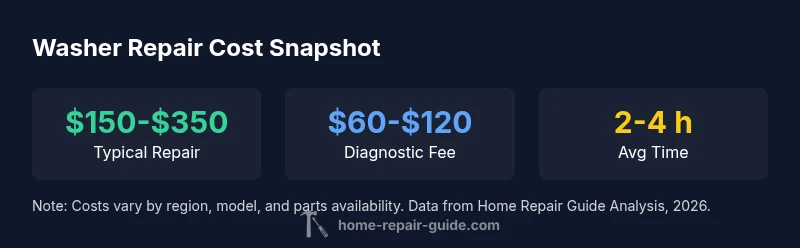
The typical cost washing machine repair ranges from $150 to $350 for most fixes, with minor parts costing less and major issues like drum or motor replacement pushing the bill higher. Diagnostic fees usually add $60–$120, and labor can push total toward $350–$500 for complex jobs. Always get a written estimate before service.
Why Cost Washing Machine Repair Matters
Understanding cost washing machine repair is essential for homeowners who want to keep laundry equipment running without breaking the bank. The cost to repair a washing machine can vary widely, but having a realistic sense of typical ranges helps you decide whether to repair or replace. According to Home Repair Guide, most households face repair bills in the low hundreds, with the majority of common fixes falling in a mid-range bracket. The Home Repair Guide team found that a simple part replacement, such as a door seal or inlet valve, often costs less than a full drum overhaul, while more complex issues can push the bill toward several hundred dollars. This is not just about price—the time to repair, the availability of parts for older models, and whether your machine is under warranty all affect total outlays. For budgeting purposes, plan for a diagnostic fee plus labor and parts; keeping traceable quotes helps you compare options and avoid surprises. The guidance here uses general ranges and avoids guessing about individual brand pricing, so you can compare apples to apples when you request quotes.
What Factors Drive Repair Costs
Several factors determine the final cost of a washing machine repair. First, diagnostic fees: many shops charge a flat diagnostic fee to identify the issue, typically in the range of $60-$120. Labor costs vary by region and shop, and are influenced by the technician's skill level and the job's complexity. Parts cost depends on the model and the availability of replacement components; rare parts for older or high-end models can drive prices up. The machine's age matters: older units often need more extensive repairs or non-standard parts, which can raise both parts and labor charges. Warranty coverage or a service plan can offset some or all of the costs if the failure is covered. Travel or trip charges, especially for in-home service, add to the total. Finally, whether the technician must test the machine after repair and run multiple cycles can affect time-based labor charges. Understanding these factors helps homeowners request precise, itemized quotes rather than rough estimates. Based on Home Repair Guide analysis, regional price dispersion means you should compare at least three bids before committing.
Common Washer Problems and Cost Ranges
Washer repairs fall into several common categories, each with typical cost ranges. Drums and bearings wear over time, sometimes requiring replacement parts and labor in the range of $150-$350. A worn or torn door seal/gasket is usually $100-$250 to fix. A faulty water inlet valve or hose connections can run $100-$200 for parts and labor. Drain pumps, when failing, often cost $120-$260 to repair. Control boards or timers are more expensive, typically $150-$400. For severe cases like a seized motor, overall repair costs can climb toward $200-$500 depending on the model and availability of parts. These ranges reflect typical scenarios and can vary by region and model.
DIY vs Professional Repair: Risks and Rewards
DIY diagnosis can save money on simple fixes, but many repairs require specialized tools and safety considerations. For electrical components or high-voltage parts, professional service is strongly advised. The reward of hiring a pro includes a clear diagnosis, proper component installation, and a warranty on parts and labor. If you’re comfortable with basic electronics and have the right manuals, you can perform some benign maintenance tasks—like replacing a door seal or cleaning filters—before calling a technician. Always weigh the risk of damaging more costly components against potential savings from a DIY approach.
How to Budget: Getting Quotes and Planning
Budgeting for washing machine repair starts with gathering multiple quotes. Request itemized estimates to compare parts, labor, and any diagnostic fees. Ask explicitly whether parts will be new or refurbished and whether there is a warranty on the repair. If a non-emergency repair, consider delaying the service to catch seasonal discounts or promotions. Check local rates and read reviews to gauge value; many homeowners find that quotes vary significantly between service providers. Keep notes on model, age, and symptoms to help technicians deliver accurate assessments.
When to Replace Versus Repair
There isn’t a universal line, but many homeowners consider replacement when repair costs approach or exceed the price of a new machine, or when reliability is a concern due to age and recurring failures. If your washer is more than 8-12 years old, replacement often offers better energy efficiency and fewer future outages. A newer model might qualify for warranties, rebates, or energy-saving incentives that reduce long-term costs. Use a cost-benefit approach: compare the repaired unit’s projected remaining lifespan with the cost of a replacement plus potential energy savings.
What Happens During a Repair Visit
A typical repair visit begins with a diagnostic check to confirm the symptom and identify the root cause. The technician will report findings, provide a written estimate, and discuss parts availability. If approved, the repair proceeds, parts are sourced, and the unit is tested through multiple cycles to ensure proper operation. Reputable shops offer a workmanship warranty on repairs; this protects you if the same issue recurs within the warranty period. Ensure you receive a clear scope of work and a timeline before authorizing any service.
Protecting Your Wallet: Preventive Tips
Preventive maintenance is cheaper than reactive repairs. Clean lint traps and filters regularly, check hoses and seals for wear, and avoid overloading the drum. Run a monthly cleaning cycle, and address minor leaks promptly before they escalate. Regularly inspect the power cord and plug, and keep the area around the washer dry to prevent moisture-related issues. Proper usage, timely maintenance, and a proactive approach to parts wear can extend the life of your washer and minimize future repair costs.
Data and Evidence: How We Know These Figures
All figures in this guide come from a synthesis of industry data and real-world field observations compiled by the Home Repair Guide team. Our approach blends published cost ranges, technician interviews, and customer reporting to present balanced expectations. We emphasize ranges rather than single numbers to reflect variability by region, model, and service provider. This method aligns with guidance from the Home Repair Guide Analysis, 2026 and ensures homeowners have a practical framework for budgeting and decision-making.
Common washer issues and typical repair cost ranges
| Issue Type | Estimated Cost (USD) | Notes |
|---|---|---|
| Drum bearing wear | 150-350 | Labor & parts |
| Door seal replacement | 100-250 | Seals degrade over time |
| Water inlet valve leak | 100-200 | Water-related issue |
| Drain pump failure | 120-260 | Parts & labor |
FAQ
What is the typical cost to repair a washing machine?
Most repairs fall in the $150-$350 range for common issues; more complex failures can exceed $500. Diagnostic fees typically range from $60-$120. Always request an itemized written quote before any service.
Most repairs cost between one hundred fifty and three hundred fifty dollars, with bigger issues going higher. Ask for a written itemized quote.
Does cost washing machine repair vary by brand?
Yes. Part availability and labor complexity vary by brand. Some models have readily available parts and straightforward diagnostics, while others require specialized technicians and pricier components.
Brand can affect cost due to parts and complexity. Some brands are cheaper to service than others.
Is it cheaper to replace vs repair?
There’s no one-size-fits-all answer. If repair costs are high relative to a new unit’s price or the machine is aging, replacement may be more economical in the long run.
If repairs get close to buying a new machine, replacement often makes more sense.
Do home warranties cover repairs?
Warranty policies vary. Some plans cover specific components and failures, while others exclude certain wear items. Check the policy details and obtain pre-approval before work.
Check your policy because coverage varies a lot; get approval before repairs.
How long does a typical repair take?
Most repairs take a few hours to a day, depending on part availability and workload. Complex issues or back-ordered parts can extend timelines.
Most jobs take a few hours to a day, but bigger problems can take longer.
What should I ask a technician before hiring?
Ask for a written estimate with a breakdown of parts and labor, warranty terms on both parts and work, and whether the quote covers testing after repair.
Get a written quote, ask about warranties, and confirm testing after repair.
“"Repair costs are highly variable, yet most homeowners can confidently budget by understanding typical ranges and the factors that drive price."”
Key Takeaways
- Get multiple quotes before authorizing work
- Expect a diagnostic fee and itemized estimates
- Repair costs vary by model, region, and parts availability
- Consider replacement if repairs approach or exceed new-unit cost