Washer Repair Services Near Me: Your Practical Guide
Find reliable washer repair services near me with tips to vet technicians, compare costs, and maximize value. Learn how Home Repair Guide analyzes common repair times, costs, and warranties for durable fixes.


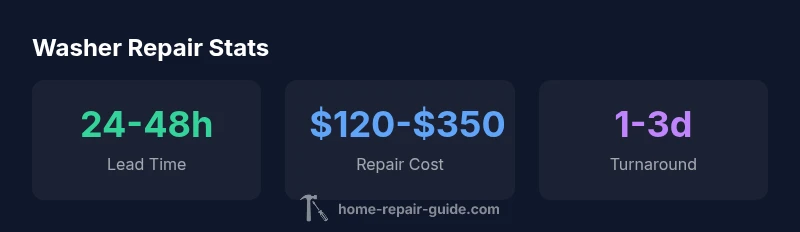
According to Home Repair Guide, the most reliable way to find washer repair services near me is to vet local technicians, confirm warranties, and compare upfront costs. A typical visit runs 1-3 days with a repair cost in the range of $120-$350, depending on the issue and parts needed. This article breaks down what to check, how to verify credentials, and ways to save.
Why washer repair services near me matter
According to Home Repair Guide, selecting a qualified local technician matters for reliability and long-term savings. The phrase washer repair services near me signals a search for proximity and accountability, but proximity alone rarely guarantees quality. A professional who arrives with the right diagnostic tools, transparent pricing, and documented warranties protects you from repeat failures and costly water damage. The Home Repair Guide team found that most consumers who vet licenses and warranty terms before booking report higher satisfaction and fewer callbacks. When issues like leaks, failure to drain, or unusual noises persist, addressing them promptly with a reputable local service reduces energy waste and extends the life of your machine.
In practice, homeowners who schedule service within a day or two of noticing a fault tend to see shorter downtime and less secondary damage. Keeping a record of symptoms, models, and recent maintenance helps the technician diagnose faster and avoid unnecessary part replacements. This is especially important for older appliances where multiple symptoms may mask a single root cause. The takeaway is clear: proximity matters, but credentialed expertise and clear pricing drive real value.
How to evaluate a local service provider
Evaluating washer repair services near you requires a structured approach. Begin by confirming credentials—state licenses where applicable, manufacturer training, and non-expired certifications. Read reviews with a critical eye for detail (whether the technician explains the diagnosis, parts list, and warranty terms). Ask for a written estimate that itemizes labor, parts, diagnostic fees, and any travel or disposal charges. Inquire about warranty terms on both parts and labor, including coverage duration and what’s excluded. Availability matters, especially for urgent leaks or flood risks, so verify response times and scheduling flexibility. Finally, compare two to three options side by side to see which offers transparent communication, realistic timelines, and a clear plan for follow-up if issues recur. The Home Repair Guide approach emphasizes proof of capability and clarity before any work begins.
Common washer issues and diagnostic steps
Washer problems span mechanical and electronic failures. Common issues include failure to drain, drum not spinning, leaks, unusual noises, and odors. A qualified technician will typically inspect the drain pump, lid switch, belt or drum assembly (where applicable), hoses, seals, and the control board. While some basic checks can be done by homeowners (for example, cleaning lint filters or ensuring hoses aren’t kinked), more complex diagnostics require professional testing. Document symptoms—when they started, cycles affected, and any error codes—to help reproduce the issue in the shop. A precise diagnostic minimizes unnecessary part replacements and prevents repeated service calls. If several symptoms vanish after one repair, this increases confidence in a correct fix. Remember: never attempt electrical or high-voltage checks yourself.
What to expect during a repair visit
A reputable shop typically starts with a diagnostic check and a written estimate. You should receive a clear breakdown of labor hours, parts costs, and any disposal or service fees. Technicians often carry a core set of common parts and can order specialty components with a short lead time. After installation, expect functional testing, leak checks, and a complete wash cycle to verify proper operation. If a new issue arises, a trustworthy technician will communicate it transparently and adjust the plan. Many providers offer basic maintenance tips to extend appliance life and reduce the likelihood of future breakdowns. By setting expectations early, you secure a smoother experience and less downtime.
DIY checks vs professional repair: pros and cons
DIY checks can help with simple maintenance tasks, like cleaning filters or inspecting hoses, but more advanced issues—such as motor or control panel faults—typically require a licensed technician. Professional repairs come with parts and workmanship warranties, which can save money and time in the long run. Do-it-yourself approaches may void existing warranties or lead to safety hazards if misapplied. Use DIY strategies for safe, non-technical maintenance and defer diagnostic work and component replacement to trained professionals. A balanced approach often yields the best outcome: perform safe tasks, then rely on qualified technicians for complex problems.
Cost considerations and budgeting for washer repairs
Cost is a central consideration when evaluating repair versus replacement. Typical repair costs vary by issue, parts required, and labor, but a reasonable range is commonly seen in the low hundreds for standard fixes and higher for major part replacements. Always obtain a written quote before any work begins and ask about the warranty on parts and labor. If the price nears or exceeds the cost of a new machine, you may want to weigh replacement against repair. The Home Repair Guide analysis suggests that budgeting for preventive maintenance can reduce total lifetime costs by avoiding recurrent failures and minimizing emergency calls. Consider setting aside a maintenance fund to cover occasional service and part replacement.
How to verify warranties and parts availability
Warranties should specify coverage duration, whether labor or parts are included, and any exclusions. Ensure technicians use genuine or OEM parts when possible, and ask about lead times for specialty components. Keep a record of your appliance’s model and serial numbers, purchase date, and proof of prior repairs to help determine warranty eligibility. If the repair involves energy efficiency improvements, request documentation on expected performance outcomes and any applicable guarantees. Finally, confirm the service provider’s policy on post-repair warranty claims and rework timelines.
Washer repair service models and ranges
| Service model | Typical turnaround | Typical cost per visit | Notes |
|---|---|---|---|
| In-home repair visit | 1-3 days | $120-$350 | Technician visits your home with parts on hand |
| Mobile drop-off/service | 1-2 days | $100-$300 | Customer drops unit at shop; pickup after repair |
| Warranty service | Varies by manufacturer | Free or discounted | Check warranty terms and eligibility |
FAQ
What should I look for when I search for washer repair services near me?
Look for licensed technicians with factory training, transparent pricing, and documented warranties. Read detailed reviews that mention diagnostic explanations and follow-up support. Get at least two quotes to compare scope and cost.
Look for licensed pros who explain the diagnosis and warranty terms, then compare a couple of quotes.
How much do washer repairs typically cost?
Costs vary by issue and parts, but typical ranges fall between $120 and $350 for common fixes. Very large repairs or advanced components can push costs higher, so get a written estimate before any work.
Most repairs are in the low hundreds range; get a written estimate first.
How long does a typical washer repair take?
Most repairs take 1-3 days from diagnostic to completion, depending on parts availability and service scheduling. Urgent leak issues may be prioritized by some providers.
Most repairs take about one to three days, depending on parts.
Repair or replace: when is it worth it?
Compare the repair estimate with the cost of a new machine, expected remaining lifespan, and energy efficiency. If a replacement offers better efficiency or a longer warranty, it may be the better long-term option.
If repairs near the price of a new machine, replacement might be wiser.
Do warranties cover washer repairs?
Warranty coverage varies by manufacturer and service provider. Check whether the repair itself is covered, what parts are included, and how long the coverage lasts.
Warranties vary; verify what is covered and for how long.
Can I perform basic washer maintenance myself?
Yes for safe tasks like cleaning filters, hoses, and seals. Avoid electrical or motor-related work unless you are a trained technician. Regular DIY maintenance can reduce the likelihood of major failures.
You can safely do basic cleaning, but skip electrical repairs yourself.
“Professional washer repairs protect your investment and prevent costly water damage. Always verify licenses and warranties before booking.”
Key Takeaways
- Vet local technicians before booking
- Obtain written estimates with clear warranties
- Understand typical turnaround and cost ranges
- Balance DIY maintenance with professional repairs
- Plan for post-repair testing and follow-up