Washing Machine Repair Cost Guide: 2026
Understand washing machine repair cost ranges, drivers, and budgeting tips to decide between repair or replacement in 2026; learn how diagnostics, parts, and labor influence the final bill.


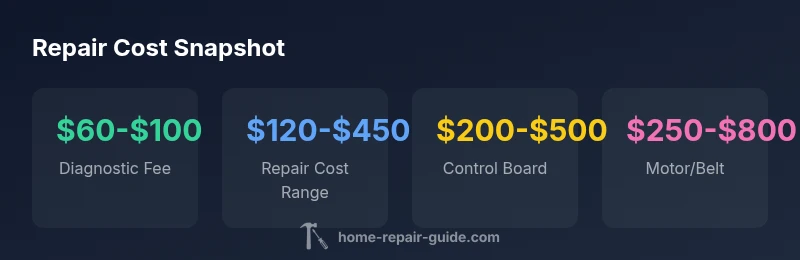
The washing machine repair cost typically ranges from $120 to $450, depending on the fault, labor, and parts needed. Diagnostic fees vary by region, but budgeting for a service call plus potential parts helps prevent sticker shock. This guide breaks down costs, common repairs, and practical tips to decide between repair and replacement.
Understanding the cost landscape of washing machine repairs
Understanding washing machine repair cost helps homeowners budget for service visits, parts, and potential replacements. The total bill typically consists of a diagnostic fee, labor, and the cost of any failed components. According to Home Repair Guide, pricing varies by region and machine age, with older models often costing more to repair due to scarcer parts. This section sets expectations for what drives the final invoice and why two identical appliances in different cities can yield different totals. By grasping these basics, you can plan ahead and avoid sticker shock when a technician arrives.
Key cost drivers in detail
Several factors shape the final price: diagnostic fees, hourly labor rates, and the specific parts required. Diagnostic visits typically range from $60 to $100, while labor rates vary by market. Replacement parts depend on model and whether OEM parts are used versus aftermarket alternatives. Brand, warranty status, and whether the appliance is under service contract also influence the total. Home Repair Guide's 2026 analysis highlights how regional labor costs and supply chain conditions can move the bill year over year. Understanding these drivers helps you interpret a quote and negotiate intelligently.
Common repair scenarios and price ranges
Below are representative ranges for common issues, noting that exact figures depend on model, region, and the technician's policies. Replacement of a failed drain pump often costs in the $120-$350 range, while door seals or gaskets can be $100-$250. Control board replacements are pricier, typically $200-$500. For motor or belt problems, expect $250-$800. If a diagnostic is billed separately, add $60-$100. These ranges provide a practical framework for conversations with service providers and for planning your budget before booking a service.
Getting accurate estimates before service
To avoid surprises, gather model numbers, serials, and a concise description of symptoms before contacting a technician. Ask for an itemized estimate that separates diagnostic fees, parts, and labor. Request labor rates, the exact parts used, and whether returns are possible. Compare at least three quotes, verify warranty coverage on parts, and ask about post-repair testing. Home Repair Guide recommends documenting the appliance's age and prior repairs to support your decision and ensure quotes reflect similar scopes of work.
Practical cost-saving tips and decision framework
Smart budgeting for washing machine repair includes considering the total cost of ownership. If the machine is older (8-12+ years) and the repair would exceed 50-70% of a new unit, replacement may be smarter. Look for coupons, seasonal promotions, and flat-rate service calls. Ask technicians to use remanufactured or compatible parts when possible, and request an itemized bill to compare quotes. Regular maintenance can prevent future issues and reduce long-term costs by catching problems early and extending the machine's life.
Repair vs replacement: a practical decision framework
Use a simple framework to decide: age and reliability, repair cost versus replacement price, anticipated remaining lifespan, energy efficiency, and potential future repairs. If the cost to repair is likely to recur soon or if the unit uses inefficient motors or components, replacement often wins. If the machine is relatively new and in good condition otherwise, repair is usually the better option. The Home Repair Guide team suggests documenting your decision factors to revisit later and to support conversations with inspectors or warranty providers.
Special considerations by model and warranty
Front-loading versus top-loading machines can have different vulnerability points (door seals, drum bearings, and transmission components), which may influence both the likelihood of a repair and the cost. Some models benefit from extended warranties that cover parts for electronic boards or seals, while older units may have limited or no warranty. If you are replacing a unit under a warranty, check what the policy covers to avoid unnecessary out-of-pocket expenses. For newer models, always confirm the model-specific parts availability before authorizing any work.
Typical cost ranges for common washing machine repairs
| Issue | Typical cost range | Notes |
|---|---|---|
| Drain pump replacement | $120-$350 | Labor + parts; availability varies |
| Door seal/gasket replacement | $100-$250 | Common wear; affordable |
| Control board replacement | $200-$500 | Higher complexity and risk |
| Motor or belt repair | $250-$800 | Major repair; consider replacement if machine age is high |
| Diagnostics visit | $60-$100 | If no repair performed, sometimes waived with other work |
FAQ
What is the average washing machine repair cost?
Most repairs fall in the $120-$450 range, depending on fault type, parts, and labor. Diagnostic fees typically add $60-$100. Major repairs like motor or control board can approach the higher end of this spectrum.
Most repairs cost between about $120 and $450, plus any diagnostic fees.
Does warranty cover repair costs?
If the washer is under warranty, the repair may be covered by the manufacturer or retailer. Check the warranty terms and what is excluded. Out-of-warranty repairs are paid by you, unless the service provider offers a goodwill adjustment.
Warranty coverage depends on the policy; check terms and who covers the repair before you agree.
Is it cheaper to repair or replace a washer?
Age and expected remaining life matter. If repair costs approach or exceed a large share of a new unit, or if efficiency is poor, replacement is often smarter. Compare the repair bill to the price of a new machine.
If the machine is old and repairs are costly, replacement is often cheaper in the long run.
Can I perform simple repairs myself?
Some basic maintenance tasks (lint filters, hoses, cleaning) are safe. Internal component work and electrical repairs should be left to a licensed technician.
Some simple tasks you can do safely, but avoid electrocution risks with complex parts.
How should I choose a repair technician?
Verify licensing where required, request a written estimate, and check reviews. Ensure your quote clearly lists parts, labor, and warranty terms.
Look for licensed techs, written estimates, and clear warranty terms.
“Repair costs should be weighed against your machine's age, energy efficiency, and expected remaining life. A thorough cost-benefit analysis helps homeowners decide whether to repair or replace.”
Key Takeaways
- Plan for diagnostic fees and parts when budgeting.
- Compare multiple estimates before authorizing work.
- Weigh repair vs replacement, especially for older machines.
- Ask for itemized invoices to understand costs clearly.