GE Washing Machine Repair: A Practical Step-by-Step Guide
Learn safe, reliable methods to diagnose and fix common GE washing machine issues. This Home Repair Guide tutorial covers essential tools, step-by-step troubleshooting, safety tips, and guidance on when to call a pro.


This guide helps homeowners repair GE washing machines by diagnosing common start, drain, and spin problems through safe, practical steps. You’ll learn a diagnostic checklist, tool basics, and when to replace parts. Built with a safety-first approach, the instructions reference reliable methods from Home Repair Guide and emphasize unplugging, de-energizing controls, and testing components one at a time to avoid unnecessary repairs.
Common GE Washing Machine Issues
GE washing machines handle regular loads, but they develop common failure modes. Symptoms homeowners report include a unit that won’t start, won’t drain, won’t spin, or leaks around the door or drum. Distinguishing between these symptoms lets you identify likely causes without guesswork. According to Home Repair Guide analysis, lid-switch failures and clogged drain pumps are among the frequent GE washer faults. This section explains how to recognize these issues and how they typically originate. We’ll also discuss differences between top-load and front-load models, since component locations (like the lid switch and pump) affect the diagnostic approach. For newcomers, separate symptoms from likely causes and document observations as you go. This discipline speeds repairs and minimizes unnecessary replacements. Finally, consult the model’s manual for quirks and warranty constraints, especially with electronic controls and sensor-based safety interlocks.
Understanding GE-Specific Design and Common Failure Points
GE washing machines share core design principles across model lines, but failures tend to cluster around a few key components: the lid switch or door latch (the safety interlock that prevents operation), the drive belt or direct-drive coupling, the drain pump and hoses, the pressure switch, and the control board or timer. When a washer stops mid-cycle, start with power delivery, then test the lid switch status and door latch. Front-load models often experience clogged drain pumps and filter assemblies that slow or stop drainage, while top-load models may show issues with the agitator mechanism and belt-driven transmissions. Observe wear patterns to reveal whether parts have reached the end of their life. Isolating whether the fault is mechanical (bearings, belt, pulley) or electrical (sensor, control module) is crucial. The Home Repair Guide approach emphasizes a symptom-log and a stepwise testing plan rather than wholesale part replacements, saving money and increasing the odds of a durable fix.
Safety and Preparation Before You Begin
Safety is non-negotiable in home appliance repair. Before you begin any GE washing machine repair, unplug the unit from the outlet and, if accessible, switch off the circuit at the main panel. Avoid energized components by using a non-contact voltage tester if in doubt. If your model uses water lines, shut off hot and cold valves and relieve pressure by running water into a bucket. Create a clean workspace, lay down towels, and organize screws with a magnetic tray or labeled bags. Wear safety glasses and gloves for sharp edges or heavy parts like the drum. Keep children and pets away from the area. For grills or electronic panels, don’t pry without the right tools, and don’t force parts that resist. Check the model’s service manual for safety warnings specific to GE washing machines.
Diagnostic Pathways: Start, Drain, and Spin
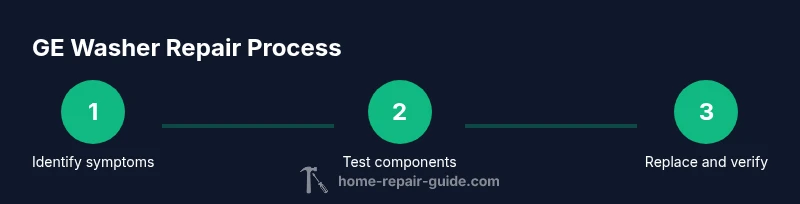
Adopt a checklist-driven diagnostic approach. Begin with simple power tests at the wall outlet and verify the lid switch status with a continuity test. If the unit won’t start, focus on the lid switch, door latch, and control board or timer. For drainage problems, listen for the pump and inspect the drain hose for kinks or clogs; remove any debris from the pump filter if present. If the drum won’t spin, inspect the belt or direct-drive coupling and confirm motor operation. Record observations and test results, cross-check against the wiring diagram for your GE model. If a fault code appears, map it to a probable cause using the manual or Home Repair Guide troubleshooting table. This structured approach minimizes unnecessary replacements and speeds repair.
Replacement Parts and When to Replace
Not every fault necessitates a new part, but some failures justify replacement. Common GE washer parts that fail include lid switches, drain pumps, drive belts, and control boards. Visible wear, cracks, looseness, or burnt smells are strong signals for replacement. Cost considerations matter: compare part prices to the repair labor and the unit’s value. Front-load models may see seal and bearing wear with higher labor costs, which can shift a repair-versus-replacement decision toward replacement if the machine is older. Always verify the exact model number on the data label and use OEM parts for reliability. If unsure, consult a professional or vendor catalogs for compatibility and warranty notes. The Home Repair Guide team notes that many repairs save money when done promptly, but delaying major component work can cause secondary damage.
Maintenance to Prevent Future Breakdowns
Prevention beats repair. After addressing a GE washing machine fault, establish a routine to keep it running smoothly. Clean the pump filter and lint screen regularly, inspect hoses for wear or leaks, and ensure the drain hose is installed correctly with proper height. Run an empty test cycle with mild detergent every few months to remove residue that can affect sensors and performance. Balance the machine to reduce vibration, avoid overloading, and check gaskets for leaks in front-load models. Maintain a simple maintenance log and set reminders for filter changes and inspections. Regular preventative care helps extend the life of your GE washer, and the Home Repair Guide team endorses proactive maintenance as the best long-term strategy.
Authoritative Resources and References
For further guidance, consult authoritative sources on appliance safety and care:
- CPSC (cpsc.gov) provides general safety guidelines and hazard alerts related to home appliances.
- Energy.gov (energy.gov) offers energy efficiency and maintenance tips relevant to washers.
- Extension services (extension.illinois.edu) publish practical, peer-reviewed guidance on appliance care and home repair basics.
These resources support the troubleshooting steps in this guide and help homeowners decide between repairs and replacements.
Tools & Materials
- Multimeter(for checking continuity and voltage on safety-critical components)
- Screwdrivers (Phillips and flathead)(various sizes; used to remove access panels and fasteners)
- Nut driver set(helps with water pump hose clamps and belt pulleys)
- Pliers (needle-nose)(for hose clamps and small fittings)
- Wrench set(optional for stubborn components or water inlet fittings)
- Towels or absorbent rags(to manage leaks and spills)
- flashlight/headlamp(for better visibility inside the cabinet)
- Safety gear (gloves, goggles)(protect hands and eyes during repair)
- Model-specific service manual(consult for wiring diagrams and torque specs)
Steps
Estimated time: 60-120 minutes
- 1
Disconnect power and access cabinet
Unplug the washer from the wall outlet and disable the circuit at the main panel to ensure no current can reach the machine while you inspect. Open the access panel per the owner’s manual to reach the key components. Do not proceed if you cannot safely reach the plug without standing water or loose cords.
Tip: If you can’t locate the plug, use a non-contact voltage tester before touching any wires. - 2
Check lid switch and door latch
Test the lid switch with a multimeter for continuity when the lid is closed. A faulty switch can prevent start or interrupt cycles. Replace the switch if continuity is absent or readings are inconsistent.
Tip: Some GE models have a recessed switch; gently press with a plastic instrument to avoid internal damage. - 3
Inspect drive belt or pulley
For belt-driven models, inspect the belt for cracks, fraying, or significant wear and replace if necessary. In direct-drive units, check the coupling for wear or looseness and reseat or replace as needed.
Tip: A loose belt can cause slippage and poor spin performance even if the motor runs. - 4
Test drain pump and hoses
With the power off, manually turn the pump pulley or listen for pump operation when the cycle advances. Check hoses for kinks, clogs, or leaks; clear any debris from the pump inlet. Replace a failing pump or damaged hose.
Tip: Ensure hose clamps are tight to prevent leaks after reassembly. - 5
Evaluate control boards and electronics
Look for obvious signs of damage such as burn marks, swollen capacitors, or damaged connectors. Use a multimeter to test power inputs to the control board if you have service manuals. If the board shows damage, replacement is often the safest option.
Tip: Electrical work on control boards carries risk; only proceed if you’re confident in testing and wiring diagrams. - 6
Reassemble and run a test cycle
Reassemble panels, reconnect power, and run a short, empty cycle to observe operation. Listen for abnormal sounds, check for leaks, and verify that the drum spins evenly. If issues recur, reassess earlier steps or seek professional help.
Tip: Keep a log of symptoms and tests to guide future repairs or parts purchases.
FAQ
What are the most common GE washer problems?
Most frequent GE washer problems involve the lid switch or door latch, drainage clogs or pump failure, and spin or agitation failures. Observing symptom patterns helps pinpoint a likely cause and avoid unnecessary part changes.
Common GE washer problems include lid switch failures, clogged drains, and spin issues. Start with the safety and drain checks before replacing major parts.
Can I fix a GE washer that won't start myself?
Yes, many start failures come from a faulty lid switch, a tripped circuit, or a problematic control board. Start by unplugging, testing the lid switch, and confirming power at the outlet. If the issue persists, consult the service manual.
If it won't start, check the lid switch and power first, then consult the manual for codes.
Why is my GE washer not draining?
Drainage issues typically come from a clogged pump, kinked hose, or a blocked filter. Clear debris from the pump and hoses, and ensure the pump operates when the cycle calls for draining.
Drain problems usually stem from a clog or a failing pump; check the hoses and the pump first.
Is it safe to repair a GE washer myself?
Basic repairs focused on outages, leaks, or clogged lines are generally safe if you follow safety guidelines. For electrical or control-board work, if you’re unsure, seek professional help.
Basic fixes can be safe if you unplug and follow the manual, but for electronics work, hire a pro if unsure.
When should I replace instead of repair a GE washer?
If the unit is old, has frequent failures, or repair costs exceed the value of the machine, replacement is often the smarter choice. Consider age, repair history, and availability of parts.
If repairs cost more than the machine is worth or it keeps failing, replacement is usually better.
Watch Video
Key Takeaways
- Diagnose by symptoms, not parts.
- Unplug and test safety-critical components first.
- Document observations and use model diagrams for accuracy.
- Use OEM parts for reliability when replacement is needed.
- Seek professional help for complex electronics repairs.