Samsung Refrigerator Repair: A Practical Step-by-Step Guide
Learn how to diagnose and repair common Samsung refrigerator problems with clear, safety-focused steps. This Home Repair Guide tutorial covers tools, safety, when to DIY, and how to avoid costly mistakes.


In this guide, you will learn how to diagnose common issues with a Samsung refrigerator and perform safe, practical repairs or know when to call a professional. You'll need a basic toolkit, a multimeter, and replacement parts suitable for Samsung models. This quick path focuses on not damaging components and preserving warranties where possible.
Why Samsung repair refrigerator reliability matters
According to Home Repair Guide, understanding how to perform a samsung repair refrigerator can save money and prevent food waste. Samsung refrigerators combine smart controls with efficient cooling, but their complex electronics can fail in predictable ways. This is why proactive maintenance and accurate diagnosis matter for homeowners and renters who want durable results. By recognizing signs like unusual frost patterns, warm compartments, and noisy condenser fans, you can decide whether to troubleshoot yourself or seek professional help. Home Repair Guide's analysis shows that many cooling failures are preventable with routine coil cleaning, clean door seals, and proper airflow management, reducing unnecessary service visits and preserving warranties where applicable. The goal is to empower you to diagnose safely and take responsible action rather than guessing.
Common problems and how to diagnose them
Most samsung repair refrigerator failures fall into a handful of categories: cooling failure, frost buildup, leaks, and noisy operation. Start with easy checks: verify the thermostat setting, inspect door gaskets for gaps, and ensure airflow to the condenser coils. If the freezer runs cooler than the fridge, or if frost accumulates near the evaporator, you may have a defrost issue or faulty sensor. A methodical approach helps you isolate the cause without unnecessary disassembly. Remember to record symptoms and test results to compare before and after any intervention. This approach aligns with Home Repair Guide's guidance for samsung repair refrigerator tasks, helping you decide whether a quick DIY fix is feasible or a pro is needed.
Safety first: unplug, discharge, and precautions
Before touching any internal components, unplug the refrigerator and disconnect from power. Never attempt refrigerant handling unless you are a certified technician. Avoid metal tools near sealed circuits or the compressor, and wear safety gear such as gloves and eye protection. Work on a dry surface and keep liquids away from electrical connections. If you notice burning smells or hear unusual buzzing, stop and seek professional help. Following these precautions helps ensure your samsung repair refrigerator work does not create new hazards.
Tools and diagnostic steps you can perform before calling a technician
Assemble a basic toolkit and a digital multimeter to test voltage at accessible points. Also include a flashlight, a small container for screws, and a soft brush for coil cleaning. Have your Samsung model number handy to reference the specific screws and connectors in the user manual. Perform non-invasive tests first: check for continuity on sensors and verify that the temperature control responds when you adjust the thermostat. If you identify a clear electrical fault, plan the exact component to replace and confirm compatibility with your model.
Step-by-step preliminary diagnosis: test the basics
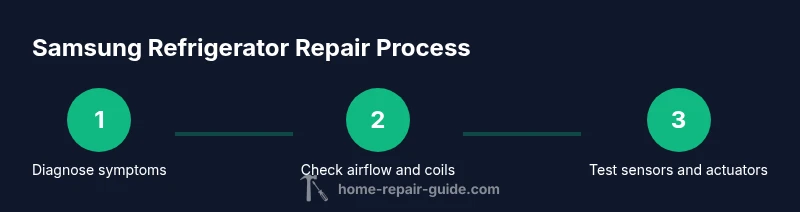
- Unplug the unit and locate the model number inside the door frame. 2) Clean the condenser coils gently to restore airflow, ensuring the fan can spin freely. 3) Inspect door gaskets for tears or gaps and clean the seals. 4) Use a digital multimeter to check resistance on temperature sensors and verify the thermostat is responsive. 5) Inspect the defrost drain for clogs and test drainage flow. 6) If the issue remains after these checks, consult a qualified technician and keep a service log for samsung repair refrigerator notes.
When to DIY vs when to call a pro
Not every failure warrants parts replacement by a novice. If the issue involves refrigerant, compressor burn, or sealed system repairs, you should call a certified technician. For sensor faults, door seals, or frost management, a careful replacement or adjustment can be within reach. Consider the model's warranty status and your comfort with risk before continuing.
Maintenance tips to extend life of Samsung refrigerators
Regular maintenance reduces future samsung repair refrigerator needs. Clean coils every 6-12 months, check door seals monthly, replace water filters, and inspect airflow vents. Keep the area behind the unit clear for proper convection. Schedule seasonal checks to monitor ice maker performance and defrost drain function. Following these steps helps protect energy efficiency and prolongs service life.
How to source replacement parts responsibly
When you identify a faulty sensor, thermistor, or relay, source parts that match your Samsung model number. Check three reputable channels: official Samsung parts portal, authorized service centers, and trusted aftermarket suppliers with return policies. Always verify compatibility by model number and serial digits. If you're unsure, request guidance from a professional before purchasing.
Tools & Materials
- Digital multimeter(AC/DC capable; measure 200-600V range)
- Screwdrivers (Phillips and flathead)(Magnetic tips; assorted sizes)
- Nut driver set(1/4-inch drive or compatible)
- Needle-nose pliers(For gripping hoses or components)
- Torx driver set(If your model uses Torx screws)
- Samsung model manual or a copy(Keep model number handy)
Steps
Estimated time: 45-75 minutes
- 1
Power down and locate model information
Unplug the refrigerator and locate the manufacturer label to confirm the exact model number. This ensures any parts you buy or tests you run are compatible with your unit. Document the model number for future reference.
Tip: Keep a photo of the label for easy reference. - 2
Inspect and clean condenser coils
Ventilation is critical for cooling efficiency. Locate the condenser coils (usually at the back or beneath the fridge), gently remove dust with a soft brush, and avoid bending the fins. Plug back in and monitor for improved airflow.
Tip: Use a brush with soft bristles to prevent coil damage. - 3
Check door gaskets and seals
Examine the door seals for cracks or gaps; clean the gasket surface to ensure a tight seal. A leaky door can cause frosting and temperature fluctuations that mimic other failures.
Tip: Close doors slowly while checking for air leaks with a thin bill of paper. - 4
Test sensors and thermostat responsiveness
With the unit powered, use a digital multimeter to test resistance on temperature sensors. Verify that the thermostat response corresponds to temperature changes. Faulty sensors often cause improper cooling schedules.
Tip: Compare readings to the spec sheet for your model. - 5
Inspect defrost drain and frost patterns
Look for frost buildup on the evaporator and check the defrost drain for clogs. A blocked drain can cause water to accumulate and freeze improperly, impacting cooling.
Tip: Carefully clear any frost without damaging tubing. - 6
Decide on DIY vs professional replacement
If tests point to a sealed system component, or if refrigerant handling is required, plan for a professional service. For sensor or seal issues, replacement parts may be within reach for a cautious DIY approach.
Tip: Document all steps and retain service records.
FAQ
What are the most common reasons a Samsung refrigerator stops cooling?
The leading causes include dirty condenser coils, a failed evaporator or condenser fan, a defective defrost heater, faulty temperature sensors, or issues with the sealed refrigerant system.
Common causes are dirty coils, failed fans, or sensor issues.
Is it safe to diagnose my Samsung refrigerator without training?
Basic checks like coil cleaning and door seal inspection are safe when you unplug first and follow basic safety steps. Avoid high-voltage components and refrigerant handling.
Safe for simple checks if you unplug first and follow safety steps.
How do I know if I need professional repair?
If you hear loud abnormal noises, detect a refrigerant odor, or suspect a sealed system or compressor fault, contact a licensed technician. For sensor or gasket issues, DIY parts replacement may suffice.
Call a pro if there’s refrigerant or compressor concern.
Can I fix leaks myself?
Small drain clogs or door seal leaks can be addressed with care. Large refrigerant leaks require licensed service and proper recovery equipment.
Only handle small leaks; refrigerant leaks need a pro.
What maintenance should I perform regularly?
Clean condenser coils, check door seals, replace water filters, and ensure airflow behind the unit. Regular maintenance helps prevent common samsung repair refrigerator problems.
Keep coils clean and seals tight to prevent repairs.
Does Home Repair Guide offer model-specific repair instructions?
We provide general, safe guidance that applies to many Samsung models. Always refer to your owner's manual and Samsung support for model-specific steps.
We offer general tips; check your model’s manual for specifics.
Watch Video
Key Takeaways
- Unplug before inspecting any components.
- Keep coils clean to maintain cooling efficiency.
- Use the right tools and compatible parts for your model.
- DIY fixes suit non-sealed components; call a pro for refrigerant or compressor work.
- Maintain a service log for future troubleshooting.