Repair Mini Fridge: A Practical DIY Guide
Learn how to diagnose and fix common mini fridge issues with a practical, safety-focused DIY guide from Home Repair Guide. Discover tools, steps, and troubleshooting tips to restore cooling and extend the life of your compact fridge.


According to Home Repair Guide, you can safely diagnose and repair common mini fridge issues with a basic toolkit. This quick guide outlines what to check—temperature settings, door seals, coils, and drainage—and what you’ll need to complete a safe DIY repair. The approach fits most compact models and provides a solid framework to restore cooling.
Common Causes of Mini Fridge Malfunctions
Mini fridges are compact, but they share the same physics as full-size units: heat must move away from a cooled interior, and energy is removed through a cycle of compression and expansion. When things go wrong, symptoms can include warm shelves, frost buildup, loud buzzing, water pooling, or doors that won’t seal. Common culprits include an inexact thermostat setting, a damaged door gasket, dirty condenser coils, a blocked defrost drain, a worn fan, or a failing compressor. Start by listing the symptoms and mapping them to likely causes. For example, if the fridge is cooling poorly but the coils are dusty, cleaning the coils and ensuring proper airflow can often restore performance. In many cases, a simple adjustment or cleaning, as described by Home Repair Guide, fixes the issue without parts replacement.
This section helps you build a diagnostic mindset: observe, hypothesize, and test in a safe, structured way. By understanding typical failure modes, you can postpone unnecessary part purchases and focus on proven, low-cost fixes that reduce downtime and waste. Remember, not every model behaves identically, but the core principles remain the same.
Safety First: Before You Start
Safety is non-negotiable when working with household appliances. Always unplug the unit and disconnect from any power strip before touching electrical components. If you must move the fridge, use proper lifting technique and avoid tilting more than 45 degrees. Wear non-conductive gloves, use insulated tools, and keep a bucket or towels handy for any minor spills. Work in a well-ventilated area and avoid using flammable cleaners near any electrical components. If you smell burning insulation or hear buzzing, stop immediately and seek professional help. This approach aligns with general safety guidance from reputable sources and is reinforced by Home Repair Guide's best practices for DIY repairs.
Diagnostic Checklist and Tools
A methodical approach beats random tinkering. Begin with a simple visual inspection: check the door gasket for cracks, inspect the interior light switch, and listen for the fan when the door is opened. Next, verify the temperature setting and, if available, test the thermostat with a multimeter to ensure it cycles power correctly. Tools you’ll commonly need include a multimeter, a small screwdriver set, a nut driver, and microfiber towels for cleaning. Label any wires you disconnect to avoid mix-ups. If you notice frost on the evaporator coil or a persistent water puddle, note the location and severity. A clean coil and unobstructed drain path often resolve frost and drip issues. Always keep maintenance logs so you can track which fixes worked and when.
Temperature Troubleshooting Guide
Temperature problems show up as warm shelves, uneven cooling, or frost accumulation. First, confirm the unit is not working in a forgotten heat mode; adjust to a normal setting (usually between 37-40°F or 3-4°C). Then inspect the door seal and ensure the door seals tightly; a leaky gasket can let warm air in continuously. If the compressor runs constantly or cycles on and off too quickly, the thermostat or defrost timer may be failing. Use a thermometer to verify actual interior temps and cross-check with the label on the fridge. If you can access the condenser coils, gently clean dust and debris. For frost-free models, defrosting for 24 hours can reset the cycle; recheck afterward. Remember: rapid temperature swings can indicate a refrigerant or sealed system issue that requires professional service.
Common Fixes You Can Try at Home
Start with the easiest, non-invasive fixes before diving into components. Clean or replace the door seal; a simple warm water wipe and light coating of petroleum jelly can improve seal compression. Clean dust from the condenser coils and, if your model allows, vacuum the drain and defrost channel. Re-level the fridge to improve airflow; a tilted unit can trap warm air near the condenser. Check the thermostat setting and, if safe, test the thermostat switch with a multimeter to confirm continuity. If a fan is not spinning, ensure it is not obstructed by ice or debris. For frost buildup, perform a careful defrost; never use sharp metal objects to remove ice. If you suspect a faulty compressor, isolate it with a voltmeter reading at the start winding and contact a pro if readings are inconsistent.
When to Call a Professional
If you’ve ruled out simple fixes, or you encounter refrigerant odors, unusual noises, or the unit still fails to cool after non-destructive steps, professional service is the prudent path. A technician can diagnose sealed-system issues, confirm refrigerant charge levels, and safely handle any required replacements. Costs vary depending on model and parts, but remember that many repairs are uneconomical on very small or older units. In these cases, replacing the unit may be a better long-term investment. The Home Repair Guide team recommends weighing repair vs. replacement carefully and considering energy efficiency upgrades.
Authority Sources and Safety Tips
- Energy.gov – Appliances care and energy efficiency guidance for household refrigerators and other appliances.
- consumer.ftc.gov – Tips for recognizing quality repair services and avoiding scams.
- osha.gov – General safety considerations for DIY home repairs and electrical work.
These sources support a cautious, informed approach to DIY repair and emphasize safety and energy efficiency in every step. Always verify model compatibility and consult the user manual when available. By following reputable guidance, you reduce risk and improve outcomes for your compact refrigerator.
How Home Repair Guide Helps Homeowners
Home Repair Guide provides practical, step-by-step repair guidance tailored for homeowners and renters. The methods emphasize safety, efficiency, and durable fixes rather than quick, temporary workarounds. By combining diagnostic checklists, tool recommendations, and real-world troubleshooting tips, this guide helps you make informed decisions, manage costs, and extend the life of your mini fridge.
Tools & Materials
- Multimeter(Test thermostat and electrical components; set to appropriate voltage range per model.)
- Screwdriver set (Phillips and flathead)(For accessing panels and fasteners on most compact fridges)
- Nut driver set(Used for removing hinges or mounting screws on some models)
- Microfiber cloths and mild cleaning solution(Clean coils, seals, and interior without leaving residues)
- Replacement thermostat (model-matching)(Only if thermostat testing indicates failure)
- Replacement door gasket (model-matching)(Useful if the seal is cracked or warped)
- Drain pan or shallow tray(Place under unit when defrosting to catch condensate)
- Tape or labels for wires(Label connections before removal to avoid mix-ups)
Steps
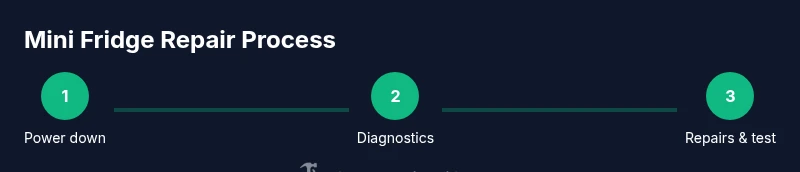
Estimated time: 60-90 minutes
- 1
Power down and unplug
Safely disconnect the fridge from power before touching any components. If the cord is hard to reach, switch off at the wall and wait 1–2 minutes to discharge capacitors. Keep the area dry and place a towel under any damp surfaces.
Tip: Use a flashlight to inspect internal areas without forcing panels. - 2
Empty contents and remove shelves
Take out all food and removable shelves to access interior surfaces. Wipe shelves with a mild cleaner and set aside on a clean towel. This also helps you assess condensation or frost patterns more clearly.
Tip: Photograph shelf placement for easy reassembly. - 3
Inspect door gasket
Check the door seal for cracks, tears, or stiff areas. A worn gasket lets warm air in, causing overworked cooling. Clean the gasket with a damp cloth and apply a light coat of petroleum jelly if the seal appears pliable.
Tip: Close the door on a dollar bill; if it slides out easily, the seal needs attention. - 4
Check condenser coils
Look for dust, lint, or pet hair on the condenser coils (usually on the back or bottom of the unit). If accessible, unplug and gently vacuum or brush the coils. Clean coils improve heat exchange and efficiency.
Tip: Do not use metal tools that could bend delicate fins. - 5
Test thermostat and settings
Verify the thermostat is set to a cold enough level (commonly around 3–4°C / 37–40°F). If you can access a test point with a multimeter, check for continuity when the thermostat is triggered. Replace if readings are inconsistent.
Tip: Document the original setting before adjusting so you can revert if needed. - 6
Check fan and defrost components
Power the unit back on to observe the evaporator fan. If the fan is silent or obstructed by ice, clear any ice buildup and ensure air can circulate. For frost-free models, ensure the defrost drain isn’t clogged.
Tip: If there’s visible ice, perform a safe defrost according to your model’s manual. - 7
Defrost and clean channels
Defrost thoroughly if frost is excessive. Use lukewarm water to melt ice and clear the defrost channel with a flexible tool. Dry all surfaces completely before reassembly.
Tip: Avoid sharp metal tools that can puncture tubing or panels. - 8
Reassemble and test
reinstall shelves, plug in, and monitor for 24–48 hours. Check temperature readings and ensure even cooling throughout the interior. Observe for leaks or unusual noises.
Tip: Keep a maintenance log for future reference. - 9
Document results
Note what worked and what didn’t, including settings and observed symptoms. This helps when deciding whether repair was successful or if professional help is needed.
Tip: Prepare a quick report to share with a technician if you need to escalate.
FAQ
Is it safe to repair a mini fridge by myself?
Many basic issues can be addressed by homeowners, provided safety steps are followed and the unit is unplugged. This guide covers non-destructive diagnostics and common fixes. If you encounter refrigerant concerns or unfamiliar components, seek professional help.
Yes, for many simple issues you can repair it yourself, but always unplug first and know your limits.
What is the typical cost range for mini fridge repairs?
Repair costs vary widely based on parts, model, and labor. Small fixes like gaskets or coils are cheaper, while compressor or sealed-system issues are more expensive. In many cases, compare the repair estimate to the price of a new unit to decide the best long-term value.
Costs depend on parts and labor; compare with replacing the unit for value.
How can I tell if the thermostat is failing?
Unreliable cooling, temperature swings, or a fridge that won’t reach the target temperature often point to a faulty thermostat. Test for continuity with a multimeter and verify the thermostat triggers the compressor. Replace if readings are inconsistent.
If cooling is unreliable and the thermostat test is inconclusive, consider replacement.
Can a frozen evaporator cause ongoing cooling problems?
Yes. Excess frost can obstruct airflow and prevent proper cooling. Defrost and inspect the drain to prevent re-freeze. If the frost recurs, there may be a defrost timer or seal issue requiring professional service.
Frost buildup can block airflow; defrost and test components, call a pro if it reoccurs.
When should I replace rather than repair?
If the unit is old, inefficient, or requires multiple major repairs, replacement might be more economical in the long term. Consider energy efficiency gains from a new model and the cost of ongoing service.
If repairs pile up or energy use is high, replacement is often wiser.
Are replacement parts model-specific?
Yes. Replacement parts like gaskets or thermostats are often model-specific. Check the model number and consult the manual or the retailer before buying parts.
Parts must fit your model; verify compatibility before buying.
Watch Video
Key Takeaways
- Identify likely causes from symptoms
- Prioritize safety and non-destructive fixes
- Use a methodical diagnostic flow
- Know when to call a professional