Fridge Compressor Repair: A Practical Home Guide
Learn to diagnose and safely repair fridge compressor issues at home with a practical, step-by-step guide—covering symptoms, tools, safety, and guidance on replacement versus repair.


With this guide you will learn how to diagnose, safely disassemble, and repair common fridge compressor issues. You’ll inspect electrical components, test relays and overload devices, and determine whether a repair or replacement is needed. Gather basic hand tools and a multimeter, work only with the fridge unplugged, and follow the step-by-step method to protect the sealed refrigerant path and avoid costly damage. Safety first, always.
What is a fridge compressor and why it fails
The fridge compressor is the heart of the cooling system, pumping refrigerant through sealed tubes to remove heat from the interior. When the compressor falters, you may hear banging or humming, notice warmer temperatures, or see frost buildup where it shouldn’t be. According to Home Repair Guide, common failure modes include worn bearings, electrical faults in the start relay or overload protection, overheating windings, and leaks in the refrigerant circuit. Diagnosing requires careful listening, observation of cooling performance, and non-invasive electrical tests. Start by unplugging the appliance and visually inspecting for obvious damage, oil leaks, or burnt smells. Many failures originate in the start relay or overload device, which are inexpensive and easy to swap. If these parts check out but the compressor still won’t start or runs hot, the unit may require a full replacement or professional service. This discussion focuses on safe, practical assessment and decisions you can make as a homeowner while protecting the sealed refrigerant loop.
Safety considerations before you start
Safety comes first when working on a fridge. Always unplug the unit and switch off the circuit breaker before any inspection. If you must move the fridge, drain condensate and unplug; use a helper to avoid injuries. Refrigerants are dangerous and leaking them is illegal in many jurisdictions. Do not puncture or vent lines; if you suspect a leak, contact a licensed technician. Wear eye protection and gloves, and avoid touching hot metal surfaces once the compressor runs. For models with dual doors, carefully remove shelves and doors to access the back panel without bending coils. Keep a clean, dry workspace and never attempt soldering on sealed lines. This ensures that you won't introduce additional hazards while evaluating electrical components.
Diagnosing common compressor symptoms
Common symptoms include loud knocking or rumbling, frequent cycling, or failure to reach the set temperature. If the unit runs but the freezer is cold and the refrigerator section is warm, the compressor or start device may be failing. A humming sound with no cooling may indicate a stuck start relay. A compressor that runs hot near the housing could point to worn windings or an internal fault. Use a multimeter to test power supply and signal lines; verify the start relay resistance and ensure the overload protector isn’t tripping. If you notice oil around the compressor or oil staining on the floor, that could indicate a seal leak. Keep in mind that some noises are normal during startup or shut-down. In short, gather symptoms, test electrical connections, and observe whether cooling improves after a reset.
Tools and parts you may need
Before you start, assemble the essential tools and replacement parts. This includes a multimeter, a full set of screwdrivers (Phillips and flat-head), nut drivers, pliers, a flashlight, and protective gloves. Essential parts to have on hand include a replacement start relay and an overload protector; a replacement compressor is optional and only needed if the diagnosis confirms the unit must be swapped. If you plan to replace components, you may also want dielectric grease, electrical tape, and zip ties to secure wiring. Optional but helpful items: infrared thermometer to check surface temperature, a refrigerant leak detector, and a label maker to document tests for future reference.
Inspect electrical components and start relay
Begin by unplugging the unit and removing the access panel to locate the compressor and its electrical harness. Check for loose or corroded connections, burnt smells, or damaged insulation. Use a multimeter to test voltage at the compressor pins and assess continuity through the start relay and overload protector. Swap a known-good relay if you suspect it is sticking or failing to engage. Clean any corrosion on terminals, re-seat plugs firmly, and recheck resistance values. If tests show a faulty start device but the compressor windings test within normal range, replacement of the relay/overload may restore operation. Always document your findings for future reference.
Checking refrigerant circuits and seals
The refrigerant circuit is a sealed system; do not attempt to open lines or vent refrigerant. If you suspect a leak, you should not attempt a DIY repair. Look for oil traces at seals or around the compressor, which can indicate a leak. Consider using a refrigerant leak detector or dye test in consultation with a pro. If a leak is confirmed or suspected, quote a professional service to recover refrigerant and repair the leak before recharging the system. This protects you and the appliance and complies with regulations regarding refrigerants.
When to repair vs replace the compressor
If the unit is relatively new and the fault is limited to a failed start relay or a single, affordable component, repairing is often cost-effective. If multiple components show wear or if the compressor itself is noisy, hot, or intermittently failing, replacement may be the better long-term option. As Home Repair Guide analysis shows, many refrigerators reach a point where replacement costs are comparable to or exceed the cost of a quality compressor swap; in such cases, replacing the compressor (or the appliance) may be wiser. Always weigh labor costs, energy efficiency, and expected remaining life when making this choice.
How to plan the repair safely: disposal and handling
If you replace the compressor, plan for safe handling and disposal of the old unit. Follow local regulations for recycling and refrigerant recovery, and label any removed components for future service records. Do not leave open circuits or uninsulated wires exposed. Store removed parts in a clean, dry area to avoid corrosion. Document the date of service and summarize the issues found and the actions taken to help future maintenance. A careful plan reduces the risk of additional failures and helps downstream repairs go smoothly.
Common mistakes and how to avoid them
Avoid venting refrigerant or attempting to repair sealed lines yourself. Do not pressurize or force fittings; this can cause leaks and injuries. Never skip safety gear or ignore power-off procedures. Mislabeling wires or reversing connections can damage the compressor and other components. Take time to recheck all connections after any disassembly, and test the system with a proper method before returning the appliance to service.
What to do after the repair: test and monitoring
Reassemble the access panel, restore power, and monitor the system for proper operation. Listen for normal startup sounds, verify the compressor cycles on and off according to the thermostat, and check interior temperatures. After an initial test, allow the unit to operate for several hours and observe temperatures in both compartments. If cooling is inconsistent or the compressor heats up abnormally, stop and reassess the fault. Keep a record of readings and any adjustments for future maintenance.
Tools & Materials
- Multimeter(Essential for voltage, resistance, and continuity tests)
- Screwdrivers (Phillips and flat-head)(Used to remove access panels and fasteners)
- Nut drivers(Needed for compressor mounting bolts)
- Pliers (needle-nose)(Helpful for wiring and clamps)
- Flashlight(Illumination for tight back-panel areas)
- Start relay(Have a spare on hand for testing)
- Overload protector(Replace if test indicates failure)
- Replacement compressor(Only if diagnosis warrants full swap)
- Electrical tape / dielectric grease(Secure connections and prevent corrosion)
- Safety gear (gloves, goggles)(Protect from sharp edges and refrigerant exposure)
- Labeling supplies(Mark wires and connectors for reassembly)
Steps
Estimated time: 2-5 hours
- 1
Power down and access
Unplug the fridge and switch off the circuit breaker. Remove any obstructing panels or shelves to access the back area where the compressor sits. Ensure the area is dry and well-lit before you begin.
Tip: Label wires as you disconnect to simplify reassembly. - 2
Inspect start relay and overload
Locate the start relay and the overload protector. Check for signs of wear, corrosion, or burning. If you have a known-good relay, swap it to test the circuit.
Tip: A simple relay swap can quickly confirm whether the relay is the fault. - 3
Test electrical path
Use the multimeter to test continuity and resistance on the start circuit and main winding. Compare readings to the appliance’s service manual if available.
Tip: Record readings before changing components for reference. - 4
Assess compressor winds
Check resistance across the compressor windings. A reading that is out of the expected range indicates internal winding issues.
Tip: Do not attempt aggressive tests that could puncture or damage the housing. - 5
Check for leaks around seals
Look for oil stains near seals and the compressor body. Oil traces can indicate leaks in the refrigerant circuit, which typically require professional service.
Tip: Do not open sealed lines; refrigerants require licensed handling. - 6
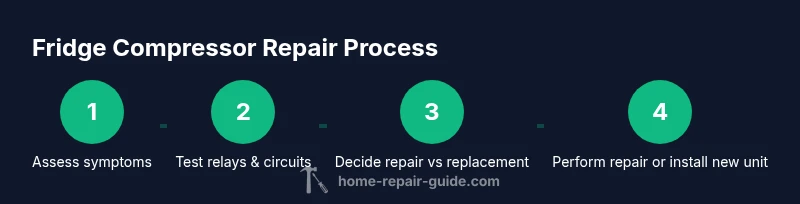
Decide on repair vs replacement
If multiple components show wear and the compressor performs poorly, replacement may be more cost-effective in the long run.
Tip: Weigh labor, energy efficiency, and expected life when deciding. - 7
Plan replacement steps (if needed)
If replacement is chosen, remove the old compressor, install the new unit, and reconnect the harness with secure, labeled connections. Do not vent refrigerant; arrange proper recovery with a licensed pro.
Tip: Follow manufacturer guidelines for torque and wiring color codes. - 8
Reassemble and power test
Reattach all panels, restore power, and run a test cycle. Observe cooling performance and listen for normal startup sounds in both compartments.
Tip: Monitor for at least a few hours to confirm stability.
FAQ
Can I fix a fridge compressor myself?
DIY fixes are possible for simple issues like a faulty start relay or loose connections. However, sealed refrigerant lines require licensed handling, and certain compressor replacements should be performed by a professional.
DIY fixes work for simple relay or wiring problems, but sealed refrigerant work needs a licensed technician.
How long does a fridge compressor last?
A fridge compressor’s life varies by model and usage. In many cases, a compressor can last many years with proper maintenance, but age and wear influence reliability. If multiple components show wear, replacement may be more cost-effective.
Compressors can last many years, but age and wear affect reliability. Consider replacement when several parts show wear.
Is it safe to run a fridge with a noisy compressor?
Noisy operation can indicate an impending failure or misalignment. Continued running increases energy use and the risk of damage. If you hear unusual sounds, unplug and evaluate with the steps in this guide or contact a pro.
Noisy operation isn’t normal. Unplug and assess or call a professional if unsure.
What costs are involved in fridge compressor repair?
Costs vary based on parts and labor. If several components are worn or a full compressor swap is needed, the total cost may be higher than a straightforward repair or replacement of the appliance. Get a professional estimate.
Costs vary; multiple worn parts or a full compressor swap can be costly. Get an estimate from a professional.
Do I need special tools for this repair?
Basic tools and a multimeter are sufficient for many diagnostic steps. Some repairs require replacement parts that are appliance-specific. If you’re unsure, consult the manual or a technician.
A good multimeter and standard tools are often enough for diagnostics; consult a pro for complex parts.
Should I replace or repair the compressor?
If the compressor shows multiple faults or is aging, replacement can be a wiser long-term option. If only one component is failing, a targeted repair may suffice. Consider efficiency and expected remaining life.
Replace if there are multiple faults or the unit is old; otherwise, repair may be enough.
Watch Video
Key Takeaways
- Always prioritize safety and power off before inspecting.
- Start with the relay and electrical tests before replacing the compressor.
- Assess whether repair or replacement offers better value and reliability.
- Do not vent refrigerant; use licensed services for leaks or recovery.
- Document tests and steps to aid future maintenance.